Which garage floor did you choose, or are you leaning toward?
No votes yet. Yours will be the first. · saved on this device
Loading...
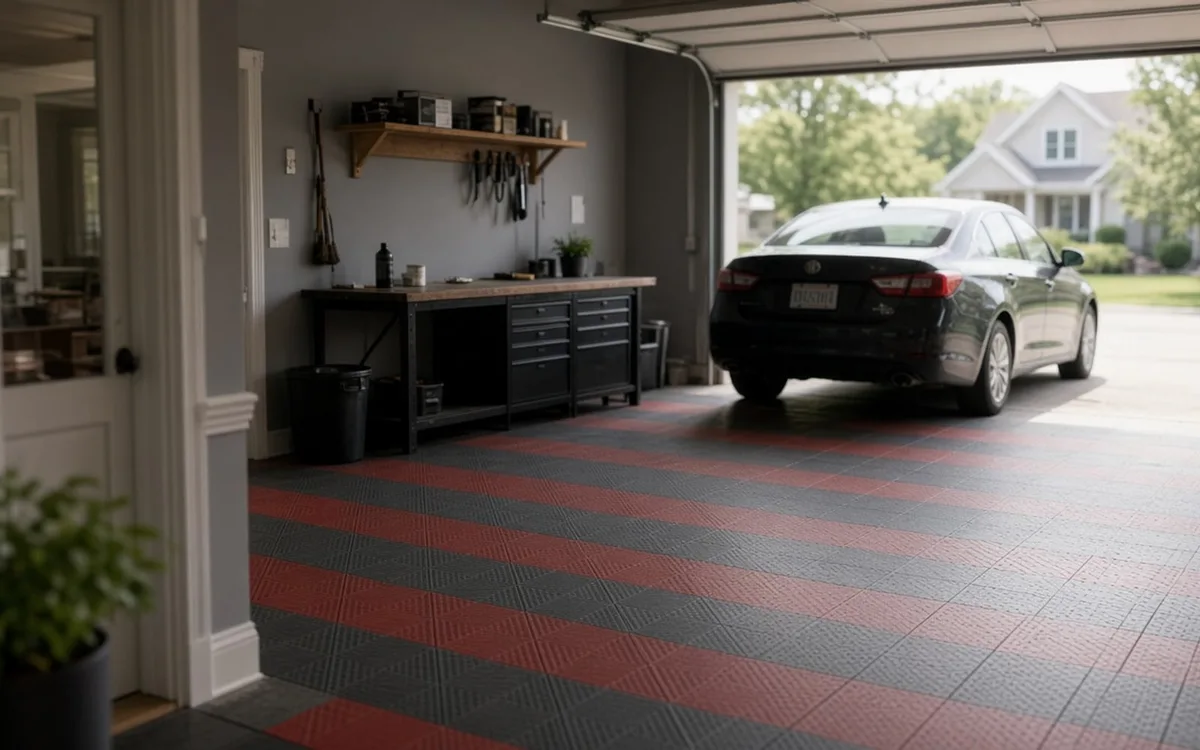
A garage floor that suits cars, storage, and everything else.
Garage Floor Brief helps U.S. homeowners choose between a bonded coating (epoxy or polyaspartic) and a removable tile system, understand what surface preparation really costs, and read a proposal before signing it. Every number here is attributed to a published source, and the request form connects you with independent local professionals for a free written estimate with no obligation.
By the numbers
Every figure links to its published source.
$2,441
National average epoxy garage floor project: $2,441, typical range $1,595–$3,337 (2024)
Bob Vila's 2024 guide reports a $2,441 national average with a typical range of $1,595–$3,337, or $3–$12 per square foot installed. Labor alone runs $4–$7 per square foot or $50–$150 per hour.
Bob Vila, epoxy garage floor cost (2024)$5–$12 per sq ft
Installed polyaspartic garage coating runs $5–$12 per square foot nationally (2026)
Duration Concrete Coatings' 2026 guide puts professionally installed polyaspartic at $5–$12 per square foot versus $3–$7 for epoxy. The premium buys a faster cure and a longer expected service life; the guide is installer-published.
Duration Concrete Coatings, garage floor coating cost guide (2026)3–5 years
Installer estimate: professional epoxy shows problems in 3–5 years; DIY kits in 1–2 (2024)
FloorTek Coatings, a polyaspartic installer, says DIY water-based kits typically show peeling or hot-tire pickup within 1–2 years and professionally installed epoxy within 3–5 years. Treat as an installer's view, but it matches the failure modes homeowners report.
FloorTek Coatings, how long does epoxy last (2024)~1 hr / 24 hr
Polyaspartic takes foot traffic in about an hour and vehicles within 24 hours (2026)
Duration lists epoxy at 12–16 hours before foot traffic and several days before parking, while polyaspartic takes roughly one hour to walk on and 24 hours to drive on. Faster return to use is the main reason installers push polyaspartic for daily-driver garages.
Duration Concrete Coatings, garage floor coating cost guide (2026)A garage floor is the largest single surface in the house that gets driven on, dripped on, and walked across in wet boots, and it usually gets the least attention until the concrete starts dusting or a cheap coating peels under a tire. According to Duration Concrete Coatings' 2026 cost guide, a professionally coated two-car garage runs $1,600–$6,900 nationally, and most of the spread between the low and high end comes from preparation, not the resin.
This site walks through the three decisions that drive that spread: whether the slab can take a bonded coating at all, whether you have the downtime for epoxy or need the fast cure of polyaspartic, and whether a removable tile system fits your use better than either. Use the garage floor cost calculator for a first budget, the side-by-side comparisons to settle the coating-versus-tile question, and the estimate request when you are ready for written proposals.
Garage Floor Brief ran these numbers on the federal government's own household data. You won't find them in a contractor's brochure.
Garage Floor Brief analysis · 2024
95% interval 30.5%–33.5% · about 16.6 million homes · 7,070 survey households
About one in three homes with an attached garage keeps a second refrigerator there. Plan a dedicated outlet, a level pad and a floor coating that tolerates condensation where it will stand.
Source: Garage Floor Brief analysis of 2024 federal household survey data from the U.S. Energy Information Administration. How we calculated it
Garage Floor Brief analysis · 2024
95% interval 51.8%–54.3% · about 27.5 million homes · 7,070 survey households
Just over half of homes with an attached garage report a concrete-slab foundation, the surface every coating or polish goes onto. Moisture testing that slab is the step that decides whether a floor lasts.
Source: Garage Floor Brief analysis of 2024 federal household survey data from the U.S. Energy Information Administration. How we calculated it
Each guide covers what it costs, what fails first, and how to compare written proposals.
 Service guideEpoxy Garage Floor Coating
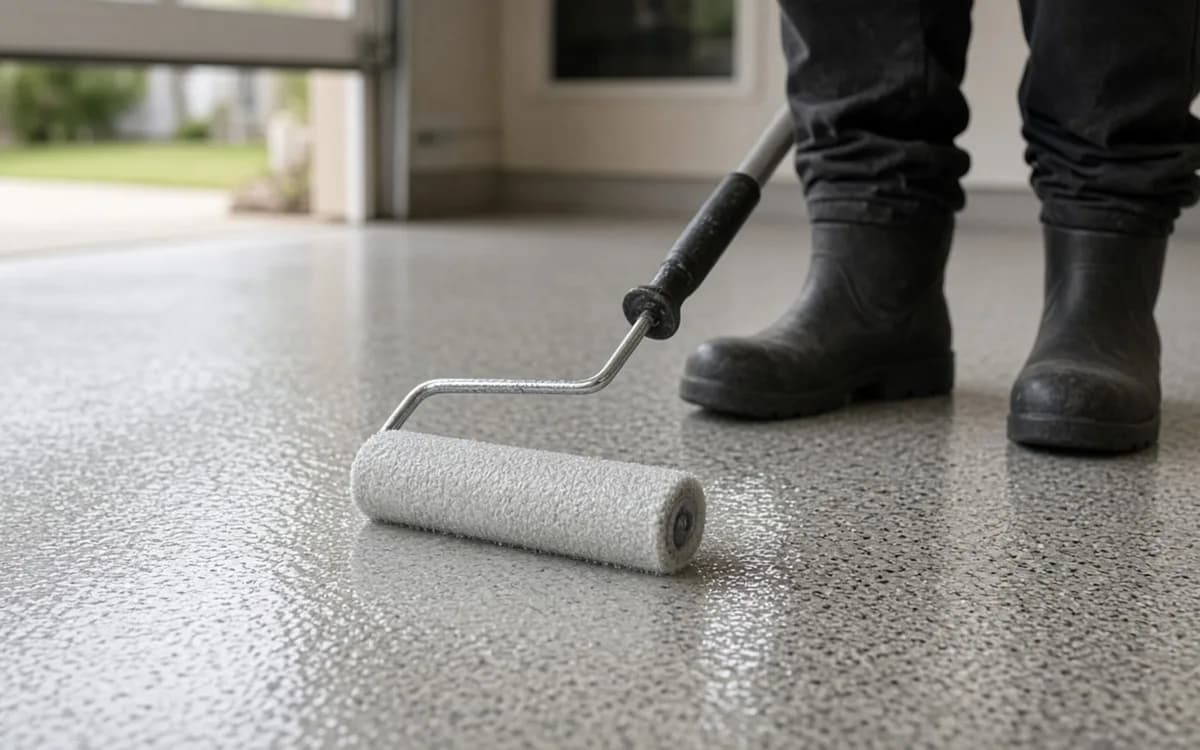
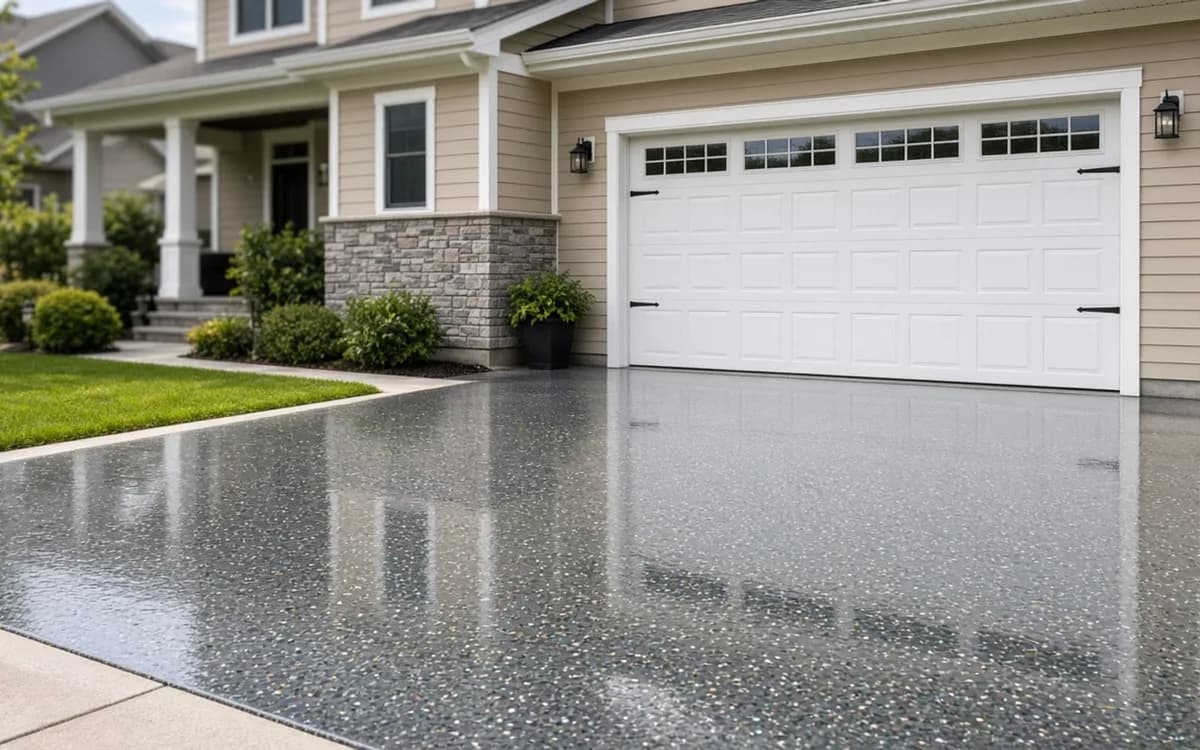
An epoxy garage floor coating is a two-part resin system applied in layers over ground, repaired concrete.
 Service guidePolyaspartic Floor Coating
A polyaspartic floor coating is an aliphatic polyurea system that cures within hours, resists UV yellowing, and tolerates lower application temperatures than epoxy.
 Service guideInterlocking Garage Tiles
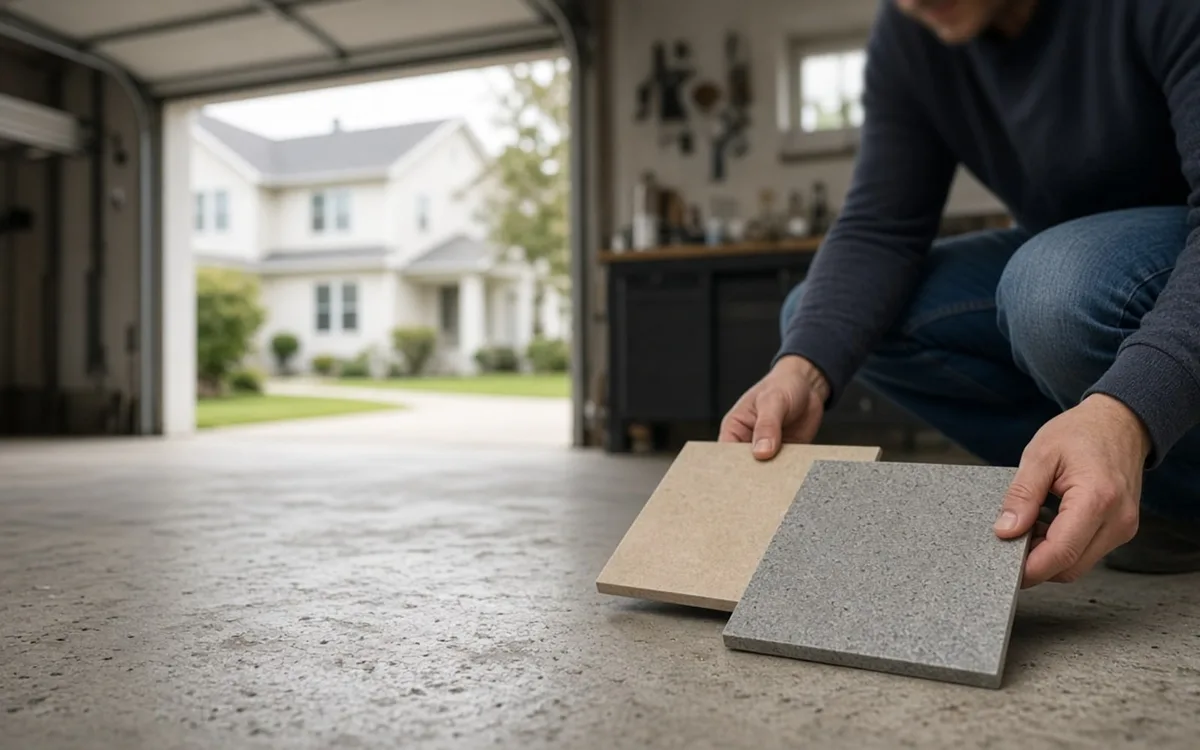
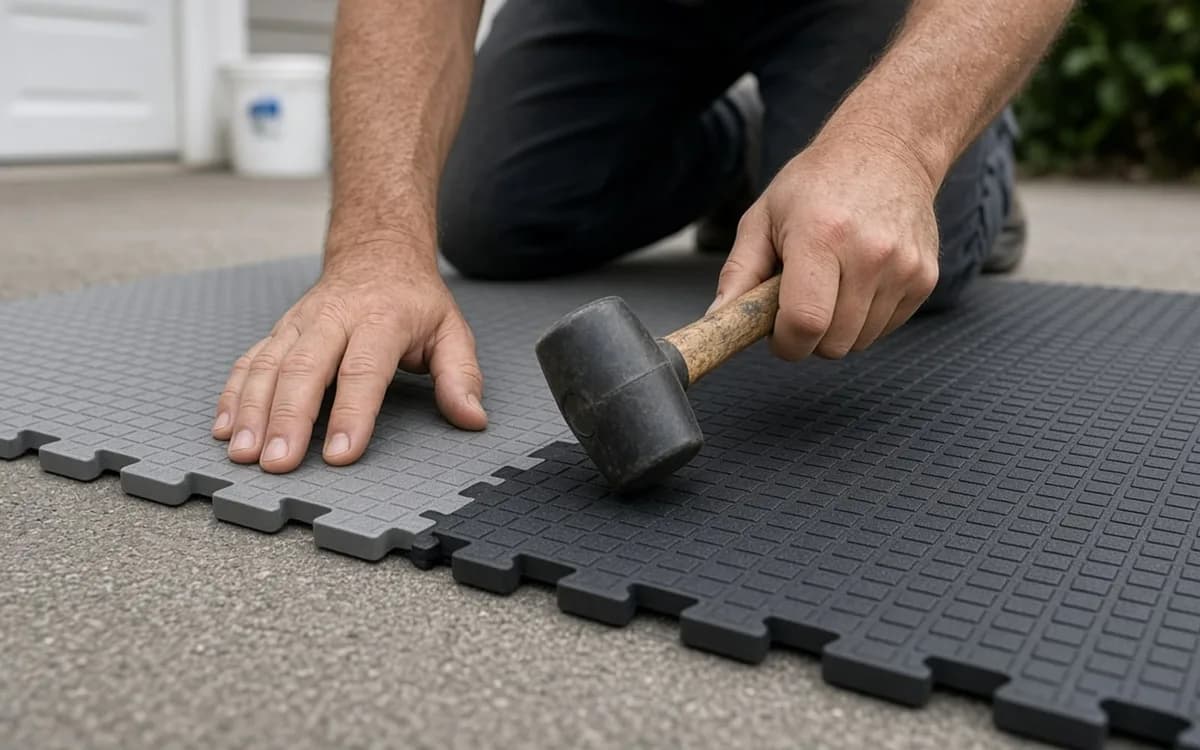
Interlocking garage tiles are rigid or flexible modular pieces, usually 12 to 16 inches square, that snap together over the existing concrete without adhesive or curing.
 Service guideConcrete Grinding & Prep
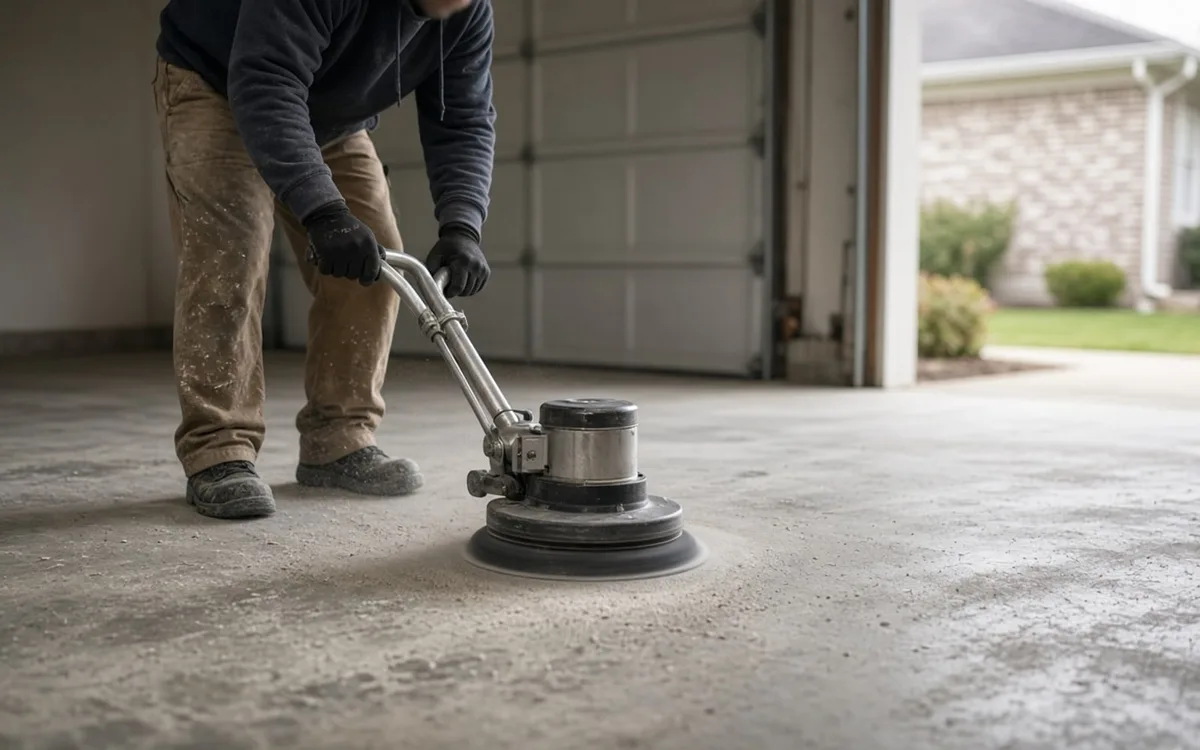
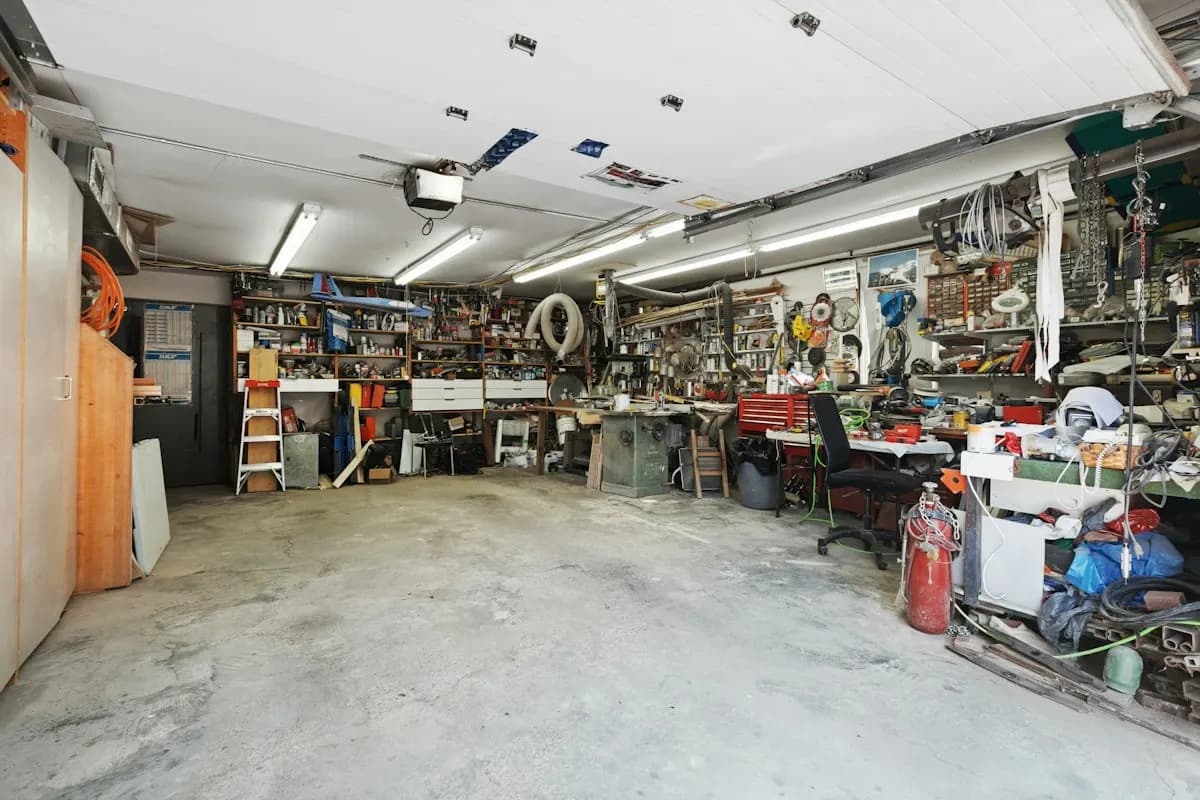
Concrete grinding and preparation means mechanically profiling a garage slab, removing old coatings and contamination, repairing cracks and spalls, and testing moisture so that a bonded coating can adhere.
The first fork in the road is not epoxy versus polyaspartic. It is whether you want to change the surface of the concrete or put something on top of it. A coating bonds to a ground slab and becomes part of the floor; it needs a dry, sound, profiled surface and a stretch of days when nothing sits on it. Tiles clip together over the existing concrete, tolerate a slab that is cracked or slightly damp, and can be lifted for cleaning or taken to the next house.
Coatings win when you want a seamless, easy-to-squeegee surface and the slab is in decent shape. Interlocking tiles win when the slab has moisture problems, when you cannot empty the garage for a week, or when you want the option of pulling the floor up later. Garage Flooring LLC's 2025 comparison prices tile materials at $2.90–$8.00+ per sq ft, overlapping with installed coating prices once you add the labor a coating requires.
If you are undecided, the garage floor quiz scores your slab condition, downtime, and use pattern against both options. The rest of this page assumes you have at least a leaning.
Angi's epoxy cost guide, updated in August 2026, puts installed epoxy at $2–$12 per sq ft, with labor at $1–$7 per sq ft of that. The labor share is what most homeowners underestimate: Angi attributes 33–60% of the installed price to labor, and nearly all of that labor is grinding, crack filling, and moisture checking before any resin is opened. Bob Vila's 2024 guide lands on a $2,441 national average for an epoxy garage floor, with a typical range of $1,595 to $3,337.
Polyaspartic costs more per square foot. Duration's 2026 guide lists $5 to $12 installed versus $3 to $7 for epoxy, and Bob Vila's separate polyaspartic guide lists $4 to $9. The premium buys a one-day install and a longer expected life, which Galaxy Concrete Coatings amortizes to $200 vs $375 per year over two decades. That framing comes from installers who sell polyaspartic, so weigh it, but the arithmetic holds if the epoxy really does need recoating twice in the same period.
Every proposal should break out preparation separately. Duration lists surface prep at $1–$5 per sq ft, minor crack repair at $250 to $800, moisture testing at $200 to $500, and old-coating removal at $3 to $8 per square foot. A quote that does not itemize those lines is hard to compare with one that does. The calculator models each of them as a separate add-on.
| System | Installed cost per sq ft | Two-car garage (400–576 sq ft) | Source |
|---|---|---|---|
| Professional epoxy | $3–$7 | $2,000–$4,000 | Duration 2026, FloorTek 2025 |
| Polyaspartic | $5–$12 | $3,500–$5,500 | Duration 2026, FloorTek 2025 |
| Interlocking tiles (materials) | $2.90–$8.00+ | $800–$2,900 (DIY) | Garage Flooring LLC 2025, HomeGuide 2026 |
| Roll-out mats | $1–$5 | Varies by thickness | Garage Flooring LLC 2025 |
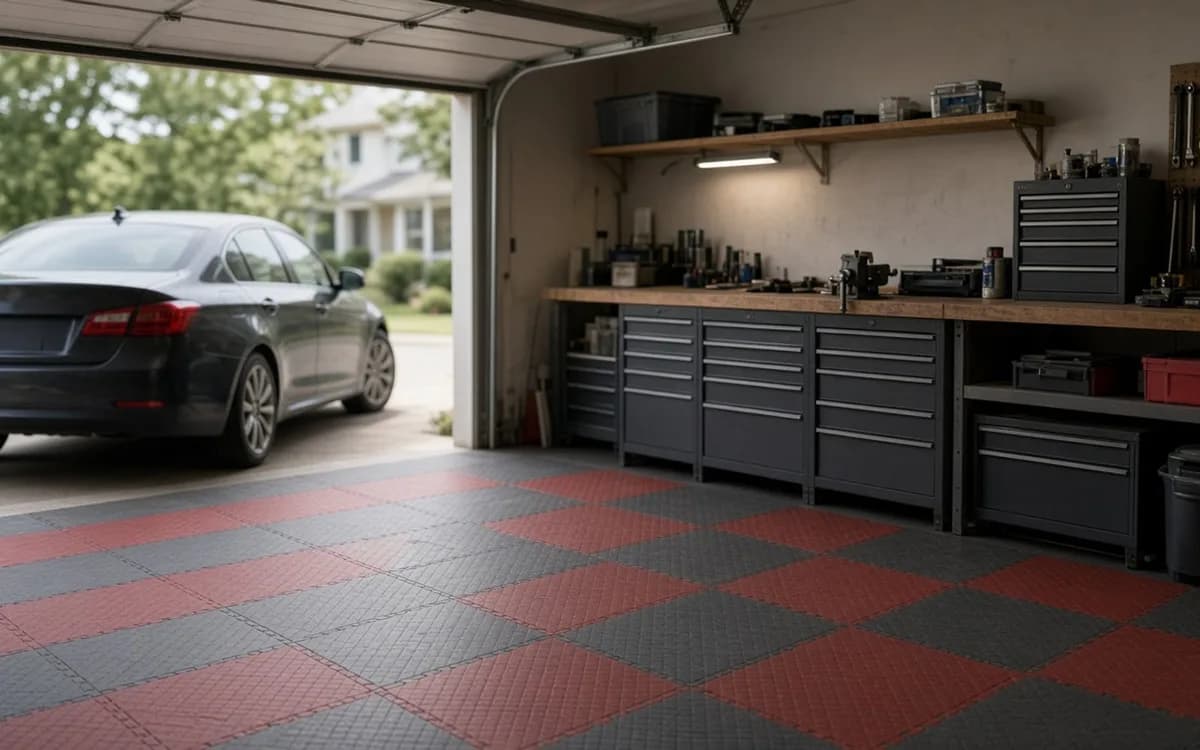
Three things kill garage coatings: moisture under the slab, poor surface profile, and hot tires. Water-based epoxy kits from the hardware store fail first because they are thin and weakly bonded. Bob Vila lists their lifespan at 1–3 years, against up to 20 years for a 100%-solids product installed over a properly ground floor. FloorTek Coatings, a polyaspartic installer, reports that even professional epoxy tends to show peeling or pickup within three to five years when hot tires are part of daily life.
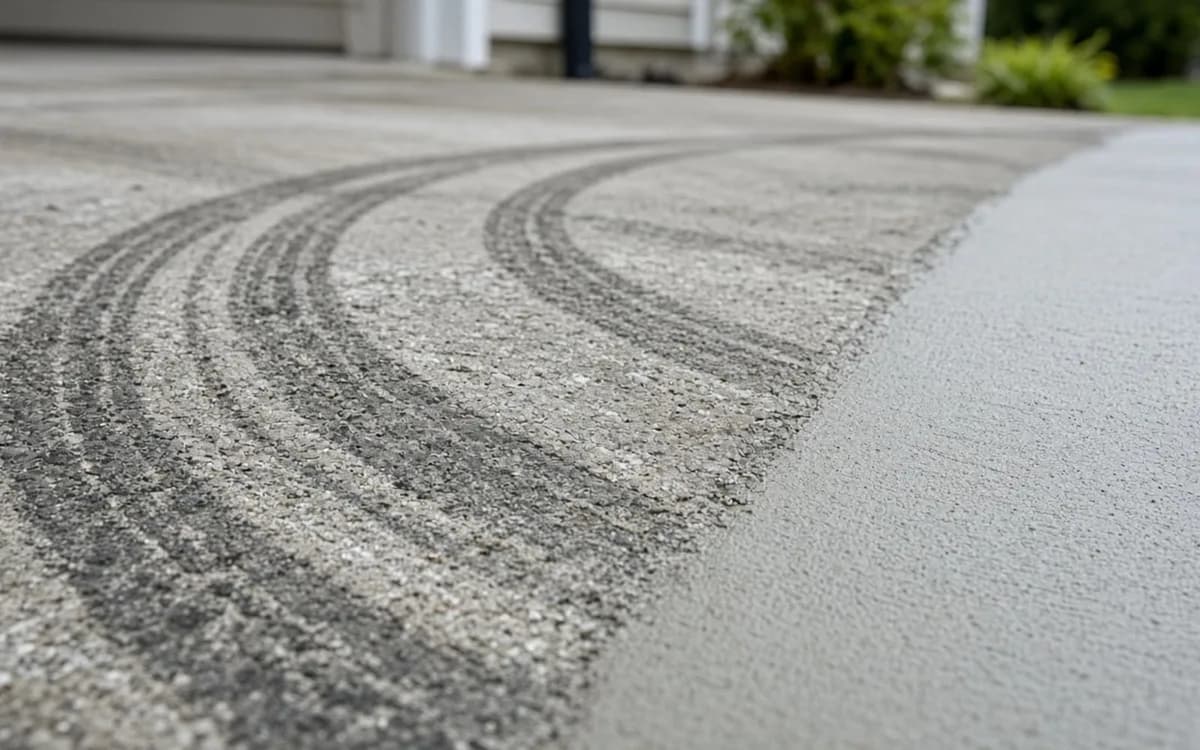
Hot tire pickup is the failure homeowners notice first. Hello Garage explains that tire surfaces can exceed 140°F on a summer day, which is enough to soften the bond between an under-prepared epoxy and the concrete. The tire cools, contracts, and lifts a patch of coating with it. The fix is not a different color of epoxy; it is diamond grinding to open the concrete, a moisture test before the first coat, and a topcoat that does not soften at tire temperature.
Ask any coating installer two questions: how will the slab be profiled, and what is the moisture reading? If the answers are acid etching and no test, keep looking. The grinding and prep page explains what a proper answer sounds like.
Downtime is the quiet cost of a coating. Garage Living's 2026 comparison says epoxy needs 24 to 72 hours before light foot traffic and up to 7 days before vehicles, while polyaspartic takes foot traffic within hours and cars in about a day. If your cars live outside anyway, epoxy's slow cure is a non-issue. If the garage is the only place to park, that week matters more than the price difference.
Plan the sequence before signing. Contents need to come out before grinding, which means a driveway full of cabinets, bikes, and the second refrigerator. Our analysis of the federal government's 2024 household energy survey found 15.1% of occupied U.S. homes keep a second refrigerator in the garage, and among owner-occupied homes with an attached garage the share is 32.0%. That appliance has to be unplugged, moved, and kept off the fresh coating until it is fully cured. The polyaspartic page covers what a one-day claim actually depends on.
Most coating quotes are priced per square foot, so the size class of your garage sets the budget before you pick a product. NAHB's analysis of Census Survey of Construction data shows that 65% of new single-family homes completed in 2024 had a two-car garage, with three-plus-car garages at 15% and one-car at 9%. Across the existing housing stock, our analysis of the EIA's 2024 household survey finds 42.9% of occupied homes have an attached garage and 27.8% a two-car attached garage specifically; 53.0% of owner-occupied attached-garage homes also sit on a concrete-slab foundation, a fact about the house rather than the garage floor.
A two-car footprint is typically 400 to 576 square feet, which is why so many published ranges use it as the reference. By our count of Census new-home data, 641,000 single-family homes completed in 2025 had a two-car garage and 154,000 had three or more bays. The one-car garage, at roughly 240 square feet, is priced at $720–$2,900 for epoxy by Bob Vila, and three-car garages run to $9,500 or more. Regional differences are real: NAHB finds three-plus-car garages on 33% of new homes in the West North Central states and only 4% in New England. The locations page covers how that changes typical proposals.
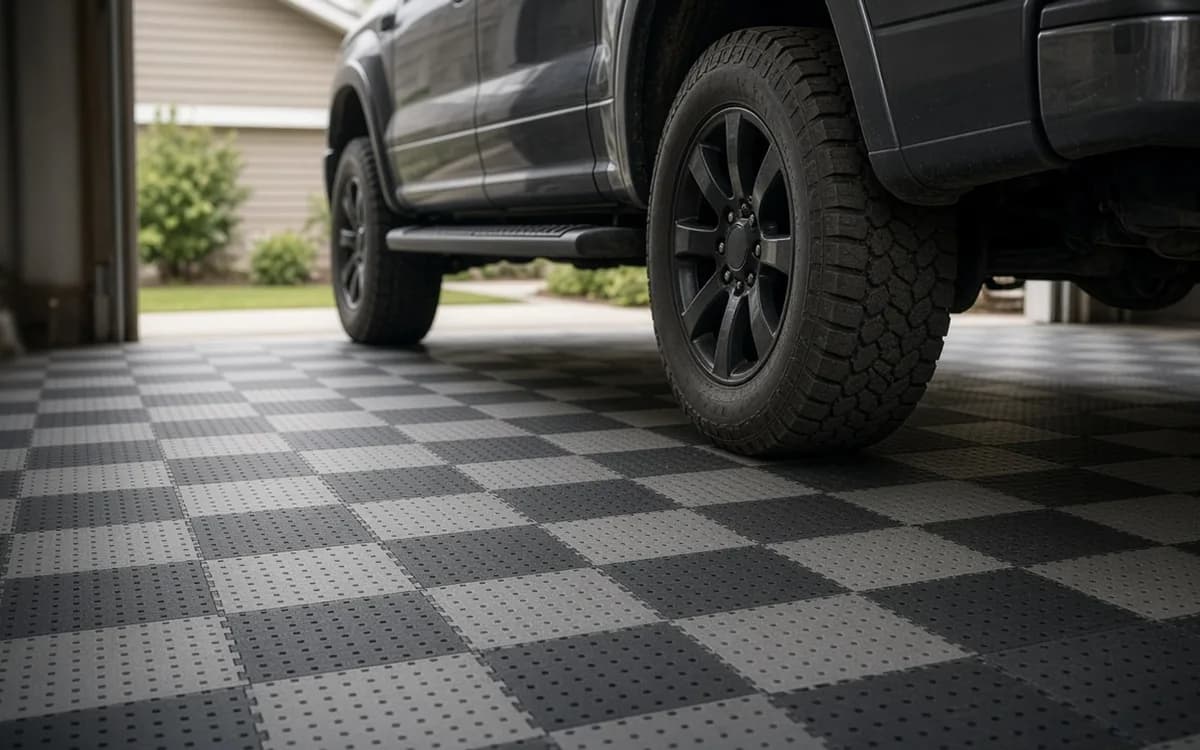
The honest answer is that a garage floor rarely sells a house by itself, but the garage as a whole carries real value. NAHB's regression on the 2023 American Housing Survey finds that a garage adds ~10% to a single-family home's value, on par with a fireplace and ahead of an extra bedroom. A floor that hides oil stains and dusting concrete helps that space show well; a peeling coating does the opposite.
There is also a use argument. A CRAFTSMAN survey of 2,004 U.S. adults conducted by Atomik Research in 2022 found that 36% of Americans say their garage is too cluttered to park in, and 53% use the space for DIY projects. A floor that sheds sawdust and wipes clean is part of what turns a storage cave back into a workshop or a parking spot. Bundling flooring with cabinets and storage is common for that reason; Angi's 2025 Home Spending Pulse found 29% of homeowners who hired a pro bundled repairs, and the homeowner polls track which upgrades people pair together.
Line the proposals up by scope, not by total. The first column is preparation: grinding method, crack and spall repair, moisture testing, and whether old coatings are removed or overcoated. The second is the system: number of coats, product names, mil thickness, flake or quartz broadcast, and topcoat chemistry. The third is edges and transitions: stem walls, the door threshold, expansion joints, and the step into the house. The fourth is the schedule and the written return-to-use conditions.
Warranty language separates serious installers from paint crews. Garage Living cites a 15-to-25-year service life for polyaspartic and backs its own system with a 21-year limited warranty; a coating with a one-year warranty is telling you what the installer expects. Ask what the warranty excludes, because moisture and hot tire pickup are the common carve-outs. The reviews guide explains how to read customer feedback for those same failure points, and the services overview lists what each system's proposal should contain.
The request form asks for garage size, current surface condition, how you use the space, and how long it can stay empty. That information goes to independent local professionals who install coatings or tiles in your area. They contact you to schedule a site visit, take moisture and surface readings, and return a written proposal. There is no fee and no obligation; you compare the proposals and hire the one you trust, or none of them.
Garage Floor Brief does not install floors, does not employ crews, and does not rank the pros. What it provides is the context to read the proposals: sourced cost ranges, cure and return-to-use expectations, and the questions worth asking. Anything a pro tells you should be checked against the product data sheet for the system they name.
Homeowner polls
Vote to see live results from other homeowners planning the same project.
No votes yet. Yours will be the first. · saved on this device
No votes yet. Yours will be the first. · saved on this device
Duration's 2026 national range for a coated two-car garage is $1,600–$6,900.
No votes yet. Yours will be the first. · saved on this device
 Free toolGarage floor cost calculator
Size, material tier and complexity in, a realistic budget range out.
 Free toolGarage floor comparisons
Side-by-side tables for the decisions that change the price most.
 Free toolWhich garage floor fits your slab and schedule?
8 questions that show what you already know and what to check next.
 Free toolGarage floor polls: how other homeowners decided
See what other planners chose and add your vote.
Usually yes, because the biggest enemies of a coating (hot tires and road salt) mostly leave with the cars. A workshop or storage garage with light traffic is the easiest case for epoxy, since the slow cure is irrelevant and the finish sees little abrasion. Prioritize a slip-resistant texture if you walk on it in wet shoes, and a chemical-resistant topcoat if you run a shop.
It depends on the product and the slab temperature, not the calendar. Most epoxies need the concrete above roughly 50°F to cure properly, which makes an unheated Midwest garage in January a poor candidate. Polyaspartics are more tolerant of low temperatures, which is one reason installers favor them for cold-season work. Ask for the product's minimum application temperature in writing and how the installer will confirm slab temperature.
The common field tests are a calcium chloride test that measures vapor emission over 60 to 72 hours, or a relative humidity probe drilled into the slab. Both give a number the coating manufacturer sets a limit for. A taped plastic sheet left overnight is a rough screen, not a test. Duration's 2026 guide lists moisture testing at $200 to $500, cheap insurance against a coating that lifts in its first spring.
For a coating, yes. Grinding produces dust that reaches every shelf, and anything left on the floor blocks the coating and creates an unfinished patch. Tiles are more forgiving; an installer can often work half the garage at a time. Plan for the contents to be out for the full cure period, which for epoxy can be a week before cabinets and heavy loads return.
A coating will fill and hide hairline shrinkage cracks if they are routed and filled first, but it will not stop a moving crack from reopening through the finish. Wide, offset, or growing cracks point to settlement or a failed subgrade and need a concrete contractor's opinion before any floor goes down. Tiles bridge cracks without cosmetic issues, which is one reason they suit older slabs.
Polyaspartic is generally drivable in 24 hours according to Bob Vila and Duration. Epoxy varies more: several days at minimum, and Garage Living advises up to a week before parking. Full chemical cure, when the floor resists gasoline and brake fluid, can take longer still. Get the walk-on, drive-on, and heavy-load dates in writing, along with the temperature the installer assumed.
Rigid polypropylene tiles do click underfoot and can transmit a hollow sound when rolling a creeper. Most homeowners stop noticing within a week. Slip resistance depends on the surface pattern: ribbed and coin-top tiles shed water and grip well, while smooth vinyl-topped tiles are slicker when wet. Ask for a sample of the exact tile and wet it before deciding.
No. The form sends your project details to independent professionals who serve your area so they can offer a free written estimate. You decide whether to schedule a site visit, and you are free to compare several proposals or walk away. Garage Floor Brief does not charge homeowners, does not install anything, and does not take a cut of your project.
 LocationsRegional planning notes
How climate, codes and prices change a project across U.S. regions.
 ArticlesPlanning articles
Cost guides, checklists and mistakes to avoid before you sign.
 ReviewsHow to read reviews
What genuine contractor reviews look like and what they leave out.
Tell us the size, the condition of what is there now, and what you want to change. Garage Floor Brief passes your request to independent local professionals, who reply with written, no-obligation estimates. The service is free to use.