Which garage floor did you choose, or are you leaning toward?
No votes yet. Yours will be the first. · saved on this device
Loading...
Garage Floor Brief · Services
Four services cover nearly every residential garage floor project: an epoxy coating for a sound slab with time to cure, a polyaspartic coating when the garage must return to use fast, interlocking tiles when the slab is damp or you want a removable floor, and concrete grinding and preparation, which every bonded coating depends on. This page explains who each suits and when to skip it.
Homeowners usually arrive with a product in mind, often because a neighbor's floor looked good or a kit was on sale. It is more useful to start with the slab and the schedule. A bonded coating asks for a dry, ground, repaired surface and a window of days when the garage is empty; a tile system asks for neither but costs about the same per square foot in materials and sits on top of the concrete rather than becoming part of it.
The four services below are the ones independent pros in this network quote most. Each links to a detailed page with sourced costs, process, and the questions to ask. If the choice between them is still open, the comparison tables and the garage floor quiz narrow it quickly.
 Service guideEpoxy Garage Floor Coating
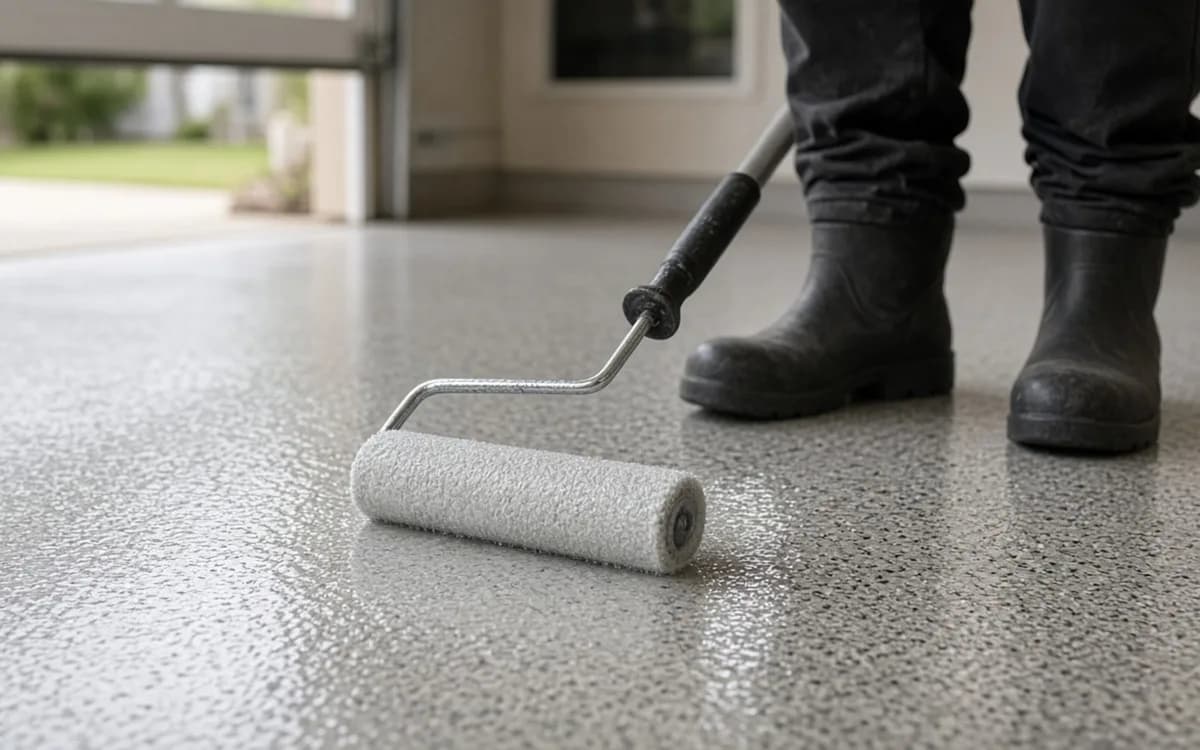
An epoxy garage floor coating is a two-part resin system applied in layers over ground, repaired concrete.
 Service guidePolyaspartic Floor Coating
A polyaspartic floor coating is an aliphatic polyurea system that cures within hours, resists UV yellowing, and tolerates lower application temperatures than epoxy.
 Service guideInterlocking Garage Tiles
Interlocking garage tiles are rigid or flexible modular pieces, usually 12 to 16 inches square, that snap together over the existing concrete without adhesive or curing.
 Service guideConcrete Grinding & Prep
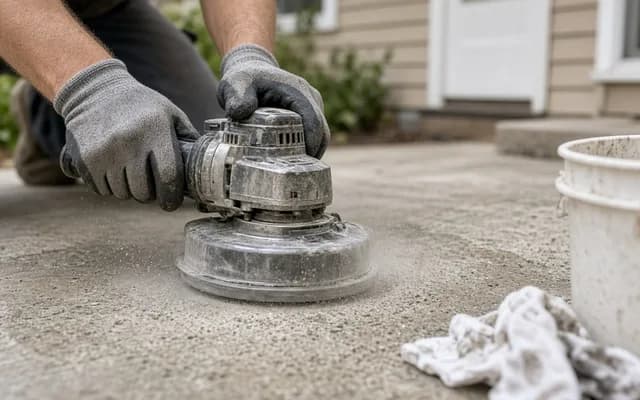
Concrete grinding and preparation means mechanically profiling a garage slab, removing old coatings and contamination, repairing cracks and spalls, and testing moisture so that a bonded coating can adhere.
| Service | Best for | Skip it if |
|---|---|---|
| Epoxy Garage Floor Coating | A sound, dry slab in a garage that can sit empty for up to a week; workshops and storage garages where hot tires are not a daily event; homeowners who want the lowest installed cost for a seamless floor. | You need to park within two days, the slab tests high for moisture, or you live where summer tire temperatures make hot tire pickup a known problem and the installer cannot specify a heat-tolerant topcoat. |
| Polyaspartic Floor Coating | Daily-driver garages that must return to use in 24 hours, cold-season installations, and homeowners willing to pay $5 to $12 per square foot for a longer expected service life and UV stability at the door. | The budget is fixed at the low end, the slab has unresolved moisture, or the garage is unused enough that epoxy's slower cure costs you nothing. |
| Interlocking Garage Tiles | Damp or cracked slabs, rentals and homes you may leave, workshops that cannot be emptied, and anyone who wants a floor that can be lifted, cleaned underneath, and replaced tile by tile. | You want a seamless surface for squeegee-and-hose cleaning, you run heavy point loads like a two-post lift without a plate, or you dislike the sound of rigid tiles underfoot. |
| Concrete Grinding & Prep | Any bonded coating, removal of a failed previous coating, slabs with oil contamination or laitance, and homeowners who want a ground-and-sealed concrete floor without a full resin system. | You are installing tiles or mats over a slab that only needs sweeping, or the slab is new construction with the surface profile already specified by the builder. |
By the numbers
33–60%
Labor is 33–60% of an installed epoxy floor price (Angi, 2026)
Angi's epoxy guide attributes between a third and 60% of the installed price to labor. Because most of that labor is surface preparation, the share explains why DIY material prices look low and why DIY floors fail at the prep step.
Angi, epoxy flooring cost guide (2026)$1–$5 per sq ft
Surface preparation adds $1–$5 per square foot to a garage coating (2026)
Grinding, cleaning and profiling the slab is priced separately by many installers. Duration also lists minor crack repair at $250–$800, moisture testing at $200–$500 and old-coating removal at $3–$8 per square foot.
Duration Concrete Coatings, garage floor coating cost guide (2026)$5–$12 per sq ft
Installed polyaspartic garage coating runs $5–$12 per square foot nationally (2026)
Duration Concrete Coatings' 2026 guide puts professionally installed polyaspartic at $5–$12 per square foot versus $3–$7 for epoxy. The premium buys a faster cure and a longer expected service life; the guide is installer-published.
Duration Concrete Coatings, garage floor coating cost guide (2026)$2.90–$8.00+ per sq ft
Interlocking garage tiles cost $2.90–$8.00+ per square foot in materials (2025)
Garage Flooring LLC's 2025 comparison prices DIY interlocking tiles at $2.90–$8.00+ per square foot with a 10–25+ year lifespan, and notes individual damaged tiles can be unclipped and replaced.
Garage Flooring LLC, comparing garage coatings, tiles and mats over time (2025)In practice, most requests split into two groups. The larger group has a concrete slab in fair condition, parks at least one car inside, and wants a durable, cleanable surface; that group is choosing between epoxy and polyaspartic, and the deciding factor is usually downtime and budget. Duration's 2026 guide lists epoxy at $3 to $7 per square foot installed and polyaspartic at $5–$12 per sq ft, with polyaspartic drivable in 24 hours versus several days for epoxy. Our analysis of the EIA's 2024 household survey finds 27.8% of occupied homes have a two-car attached garage, which is why most proposals are written around that size.
The smaller group has a slab with a history: efflorescence, a previous coating that peeled, a crack that keeps growing, or a garage that doubles as a shop with heavy tool chests that cannot leave for a week. That group is usually better served by interlocking tiles, or by a serious grinding and repair scope before any coating is considered. The same federal survey shows 53.0% of owner-occupied attached-garage homes sit on a concrete-slab foundation, structural context worth mentioning to the estimator. Both are legitimate outcomes; the mistake is coating a slab that was never a candidate.
Grinding and preparation appear as a separate service because they are the part of a coating project that determines whether it lasts. Angi's 2026 epoxy guide attributes 33–60% of the installed price to labor and prices that labor at $1–$7 per sq ft, and the labor is overwhelmingly prep. Duration itemizes surface preparation at $1–$5 per sq ft, old-coating removal at $3 to $8, and crack repair at $250 to $800. On a two-car garage, prep alone can equal the cost of the resin.
Some homeowners hire prep separately: they have a failed DIY coating to remove, or they want the slab ground and sealed as a finished floor without a full coating system. Others want a second opinion on whether the slab is coatable before paying for a system. Either way, the deliverable is a surface profile the coating manufacturer accepts and a moisture reading that is under the product limit. The prep page explains how both are verified.
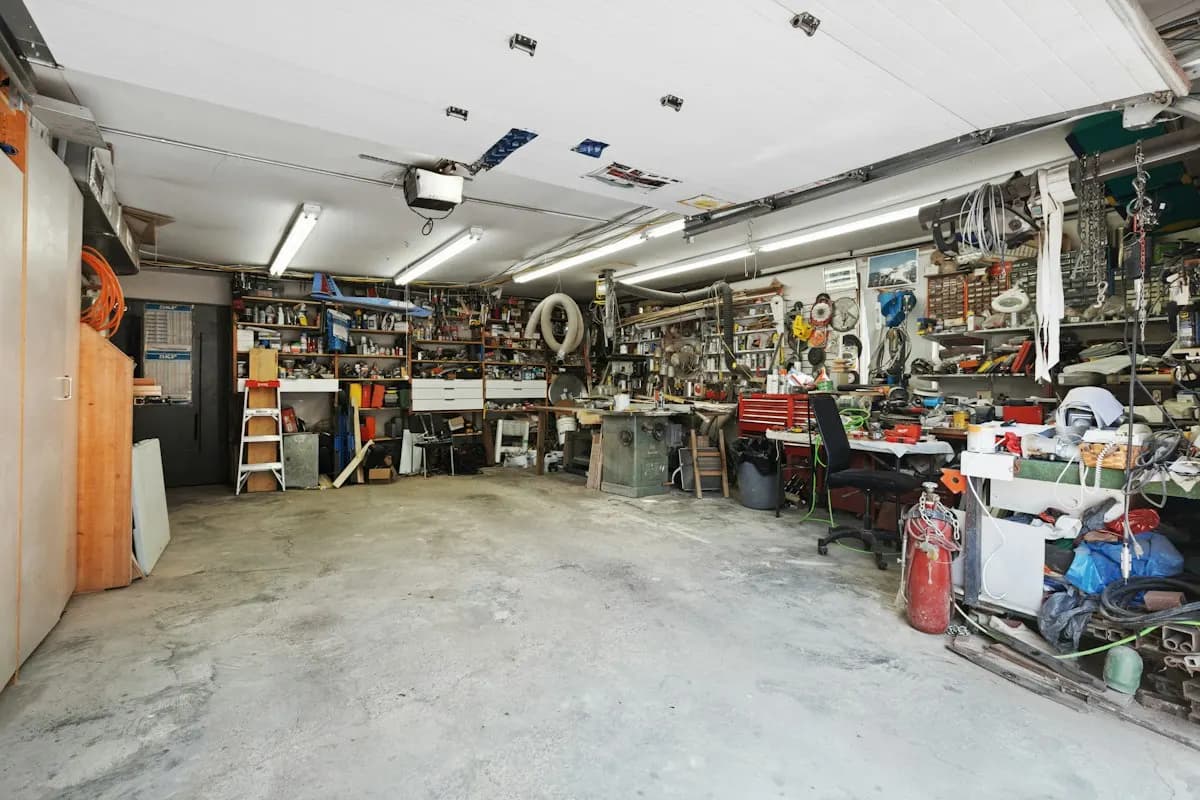
Regardless of service, a proposal you can compare has the same skeleton: measured square footage, the condition findings from a site visit, the preparation method and repairs, the named products and layer build, the edge and threshold details, the schedule with written return-to-use conditions, and the warranty with its exclusions. If any of those is missing, ask for it before comparing totals. The request form asks for the information that lets a pro fill that skeleton in on the first visit.
Two things a proposal should not contain: a promise that a coating will stop water coming up through the slab, and a one-day schedule for epoxy. Neither is realistic, and both are common. Garage Living's 2026 comparison and Bob Vila's guides agree that epoxy needs days before parking; a coating that goes on and takes cars the next morning is either polyaspartic or under-cured.
A single garage often needs more than one of these. A typical polyaspartic job is really a grinding and repair scope followed by a coating scope; the same installer does both, but the proposal should price them separately so you can see where the money goes. A tile project on a damp slab might pair a moisture-tolerant tile with a vapor-retarding underlayment rather than any grinding at all. Duration Concrete Coatings puts surface preparation at $1–$5 per sq ft on top of the coating, and a garage floor lends itself to pricing both in one job. The planning tools include a calculator that models these combinations with separate add-ons for prep, repairs, and moisture work.
Homeowner polls
No votes yet. Yours will be the first. · saved on this device
No votes yet. Yours will be the first. · saved on this device
Some installers do both and will quote each; many specialize. When you send a request, say that you want to compare a bonded coating with a tile system and let matched pros respond to the option they install. Comparing a coating proposal from one pro with a tile proposal from another is normal, as long as both are scoped for the same measured area.
Polyaspartic is a type of aliphatic polyurea formulated for a slower, workable pot life and UV stability. Installers use the terms loosely, and some market pure polyurea base coats with a polyaspartic topcoat. What matters is the product data sheet for each layer: cure times, recoat windows, and temperature limits. Ask for those sheets by name rather than trusting the category label.
Garage floor paint is a thin, usually water-based product applied like wall paint, and it lasts one to three years by Bob Vila's estimate. A coating is a multi-layer system, often 100% solids, applied over a ground slab at many times the thickness. Paint is a cosmetic refresh; a coating is a wear surface. Kits sold as epoxy paint sit closer to paint.
Grind-and-seal leaves the concrete exposed, opens the pores, and applies a penetrating or thin film sealer. It is cheaper than a full coating and does not peel the same way because there is little film to lift. It will still stain from oil, and it does not hide cracks or repairs. It suits homeowners who like the look of concrete and want dust control more than a decorative finish.
Publishers use different reference sizes, which explains some of the spread in cost guides. Duration uses 400 to 576 square feet, Bob Vila uses 360, and Angi's size table runs 250, 500, and 750 square feet. Measure your own floor wall to wall and subtract nothing; installers price the full slab including areas under cabinets unless you agree to leave them uncoated.
Yes, as long as the surface is reasonably flat and loose flakes are scraped or vacuumed off. This is a common rescue for a peeled DIY job, since tile does not depend on adhesion. Sharp ridges of remaining coating can telegraph through thin tiles, so knock those down. If the coating failed because of moisture, choose a tile with drainage channels and ventilate the space.
The matched professional sends an estimator or the installer. Have the garage as empty as practical so they can see the slab, and note any spots that stay damp, any previous products applied, and where oil has soaked in. Ask them to record a moisture reading and to show you the profile they intend to grind to. Those two data points make later comparison possible.
 Free toolGarage floor cost calculator
Size, material tier and complexity in, a realistic budget range out.
 Free toolGarage floor comparisons
Side-by-side tables for the decisions that change the price most.
 Free toolWhich garage floor fits your slab and schedule?
8 questions that show what you already know and what to check next.
 Free toolGarage floor polls: how other homeowners decided
See what other planners chose and add your vote.
Tell us the size, the condition of what is there now, and what you want to change. Garage Floor Brief passes your request to independent local professionals, who reply with written, no-obligation estimates. The service is free to use.