Which garage floor did you choose, or are you leaning toward?
No votes yet. Yours will be the first. · saved on this device
Loading...
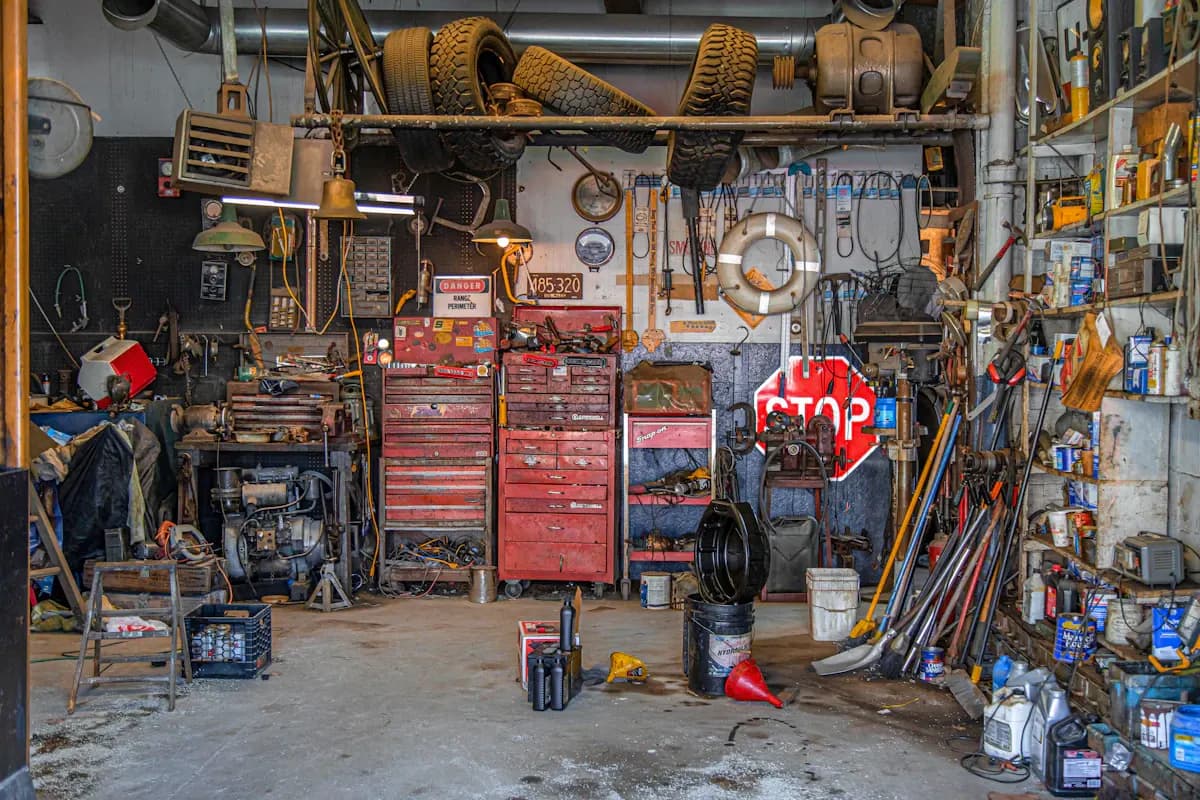
Garage Floor Brief · Statistics
166 sourced data points on garage flooring: what projects cost, what they return at resale, what homeowners choose, how many U.S. homes already have each feature by region, and 2 findings from Garage Floor Brief's own analysis of federal household data. Every number links to where it came from.
These comparisons were calculated by Garage Floor Brief from the Energy Information Administration's 2024 household survey microdata and the Census Bureau's new-housing tables. They answer questions the published reports don't break out.
Garage Floor Brief analysis · 2024
95% interval 30.5%–33.5% · about 16.6 million homes · 7,070 survey households
About one in three homes with an attached garage keeps a second refrigerator there. Plan a dedicated outlet, a level pad and a floor coating that tolerates condensation where it will stand.
Source: Garage Floor Brief analysis of 2024 federal household survey data from the U.S. Energy Information Administration. How we calculated it
Garage Floor Brief analysis · 2024
95% interval 51.8%–54.3% · about 27.5 million homes · 7,070 survey households
Just over half of homes with an attached garage report a concrete-slab foundation, the surface every coating or polish goes onto. Moisture testing that slab is the step that decides whether a floor lasts.
Source: Garage Floor Brief analysis of 2024 federal household survey data from the U.S. Energy Information Administration. How we calculated it
$5–$12 per sq ft Installed polyaspartic garage coating runs $5–$12 per square foot nationally (2026)
Duration Concrete Coatings' 2026 guide puts professionally installed polyaspartic at $5–$12 per square foot versus $3–$7 for epoxy. The premium buys a faster cure and a longer expected service life; the guide is installer-published.
Duration Concrete Coatings, garage floor coating cost guide (2026)$1,600–$6,900 A coated two-car garage (400–576 sq ft) costs $1,600–$6,900 nationally (2026)
Duration's guide lists national two-car ranges of $1,600–$6,900, one-car at $1,200–$3,500 and three-car at $3,500–$10,400. Use these as a sanity check against local quotes; most of the spread is preparation and layer count.
Duration Concrete Coatings, garage floor coating cost guide (2026)$1–$5 per sq ft Surface preparation adds $1–$5 per square foot to a garage coating (2026)
Grinding, cleaning and profiling the slab is priced separately by many installers. Duration also lists minor crack repair at $250–$800, moisture testing at $200–$500 and old-coating removal at $3–$8 per square foot.
Duration Concrete Coatings, garage floor coating cost guide (2026)$2,441 National average epoxy garage floor project: $2,441, typical range $1,595–$3,337 (2024)
Bob Vila's 2024 guide reports a $2,441 national average with a typical range of $1,595–$3,337, or $3–$12 per square foot installed. Labor alone runs $4–$7 per square foot or $50–$150 per hour.
Bob Vila, epoxy garage floor cost (2024)$720–$2,900 One-car garage (240 sq ft) epoxy costs $720–$2,900; two-car $1,100–$4,300 (2024)
Bob Vila sizes a one-car garage at 240 square feet and a two-car at 360 square feet, with three- and four-car garages at $1,700–$9,500. Metallic epoxy finishes run $5–$12 per square foot.
Bob Vila, epoxy garage floor cost (2024)$4–$9 per sq ft Polyaspartic coating costs $4–$9 per square foot, $2,000–$4,500 for 500 sq ft (2024)
Bob Vila's 2024 guide prices polyaspartic at $4–$9 per square foot and lists an optional moisture barrier at up to $1 per square foot. Installation typically takes 1–3 days.
Bob Vila, polyaspartic floor coating cost (2024)$1,100–$4,300 Bob Vila: epoxy on a 360 sq ft two-car garage costs about $1,100–$4,300 (2024)
Bob Vila's epoxy garage floor cost guide (updated April 2024) sizes a two-car garage at 360 square feet and prices epoxy for it at about $1,100 to $4,300, between its one-car ($720–$2,900) and three- to four-car ($1,700–$9,500) ranges.
Bob Vila, epoxy garage floor cost (2024)$1,700–$9,500 Bob Vila: epoxy on a three- or four-car garage costs $1,700–$9,500 (2024)
Bob Vila's 2024 epoxy guide gives $1,700 to $9,500 for three- and four-car garages, the widest of its size bands because floor area and preparation both vary most at that size.
Bob Vila, epoxy garage floor cost (2024)$3,500–$10,400 A coated three-car garage (about 864 sq ft) costs $3,500–$10,400 nationally (2026)
Duration Concrete Coatings' 2026 guide sizes a three-car garage at about 864 square feet and gives a national range of $3,500 to $10,400 across epoxy and polyaspartic systems; its own Fort Wayne installs run $4,300 to $6,900. Installer-published.
Duration Concrete Coatings, garage floor coating cost guide (2026)$1.49–$1.76 per sq ft Applying a polyurethane concrete sealer costs $1.49–$1.76 per sq ft (Homewyse, 2026)
Homewyse's September 2026 national estimate for applying polyurethane concrete sealer, based on a 534-square-foot project, is $1.49 to $1.76 per square foot. Grinding or repair before sealing is priced separately.
Homewyse, cost to apply polyurethane concrete sealer (2026)$3–$6 labor / $2–$6 materials per sq ft Polyaspartic pricing splits roughly $3–$6 labor and $2–$6 materials per square foot (2025)
Galaxy breaks a polyaspartic system into base coat ($1.50–$3.00), flake ($0.50–$1.50) and topcoat ($1.00–$2.00) per square foot, with labor at $3–$6. Regional pricing ranges from $6–$10 in Indianapolis to $8–$12 in Denver.
Galaxy Concrete Coatings, polyaspartic floor coatings cost guide (2025)$3,500–$5,500 vs $2,000–$4,000 Two-car garage: polyaspartic $3,500–$5,500 versus professional epoxy $2,000–$4,000 (2025)
FloorTek's 2025 price guide puts a 400–500 sq ft two-car garage at $3,500–$5,500 for polyaspartic versus $2,000–$4,000 for professional epoxy, and estimates $3,500 over 20 years for polyaspartic versus $6,000 for repeated cheap epoxy. Installer-published.
FloorTek Coatings, polyaspartic garage floor coating price guide 2025$2.90–$8.00+ per sq ft Interlocking garage tiles cost $2.90–$8.00+ per square foot in materials (2025)
Garage Flooring LLC's 2025 comparison prices DIY interlocking tiles at $2.90–$8.00+ per square foot with a 10–25+ year lifespan, and notes individual damaged tiles can be unclipped and replaced.
Garage Flooring LLC, comparing garage coatings, tiles and mats over time (2025)$1–$5 per sq ft, 2–10 years Roll-out garage mats cost $1–$5 per square foot but last only 2–10 years (2025)
Garage Flooring LLC lists thin mats at $1–$3 and heavy-duty mats at $2–$5+ per square foot with a 2–10 year lifespan, versus 10–25+ years for tiles and 5–20+ years for coatings. Mats are the cheapest entry point but the shortest-lived.
Garage Flooring LLC, comparing garage coatings, tiles and mats over time (2025)$1.45–$5.21 per sq ft DIY epoxy materials run $1.45–$5.21 per sq ft versus $3–$12+ installed (2025)
Garage Flooring LLC prices DIY epoxy at $1.45–$5.21 and DIY polyurea at $1.00–$4.78 per square foot for materials, compared with $3.00–$12.00+ for professional installation. The gap is mostly prep labor, which is also where DIY jobs fail.
Garage Flooring LLC, comparing garage coatings, tiles and mats over time (2025)$4.49–$7.75 per sq ft Swisstrax modular tiles list at $4.49–$7.75 per square foot (2026)
Swisstrax's 2026 cost page lists Ribtrax Pro at $4.99, Diamondtrax 12-Series at $4.49 and Vinyltrax Pro at $7.75 per square foot. Branded premium tiles sit at the top of the interlocking-tile price band.
Swisstrax, cost of a new garage floor (2026)$2,000–$6,900 HomeGuide: polyaspartic coating runs $2,000–$6,900 for a typical two-car garage (2026)
HomeGuide's 2026 cost guide lists polyaspartic at $5–$12 per square foot including materials and labor, or $2,000–$6,900 for a two-car garage. Figure taken from the guide's summary.
HomeGuide, polyaspartic floor coating cost (2026)$800–$2,900 HomeGuide: DIY garage floor tiles cost $800–$2,900 for a two-car garage (2026)
HomeGuide's garage floor coating guide lists self-installed tiles at $800–$2,900 for a two-car garage, a useful ceiling when comparing against a $1,600–$6,900 coating. Figure taken from the guide's summary.
HomeGuide, garage floor coating cost (2026)$1,600–$5,800 HomeGuide benchmark: epoxy flooring for a two-car garage costs $1,600–$5,800 (2026)
HomeGuide's epoxy flooring guide, updated February 2026, is the planning benchmark behind this site's calculator. It describes an epoxy installation only; tile and polyaspartic proposals need their own scope, and the exact garage area and preparation need confirmation.
HomeGuide, epoxy flooring cost (2026)$2–$12 per sq ft Installed epoxy flooring costs $2–$12 per square foot (Angi, updated August 2026)
Angi's epoxy flooring cost guide lists $2–$12 per square foot installed across epoxy types, with sized examples of $750–$3,000 for 250 square feet and $2,250–$9,000 for 750.
Angi, epoxy flooring cost guide (2026)$1–$7 per sq ft Epoxy installation labor runs $1–$7 per square foot (Angi, 2026)
Angi's guide separates labor at $1–$7 per square foot from the $2–$12 installed total. Preparation, grinding and repairs account for most of the labor range on a residential garage.
Angi, epoxy flooring cost guide (2026)33–60% Labor is 33–60% of an installed epoxy floor price (Angi, 2026)
Angi's epoxy guide attributes between a third and 60% of the installed price to labor. Because most of that labor is surface preparation, the share explains why DIY material prices look low and why DIY floors fail at the prep step.
Angi, epoxy flooring cost guide (2026)$1,500–$6,000 A 500-square-foot garage epoxy coating costs $1,500–$6,000 (Angi, 2026)
Angi's size table lists $750–$3,000 for 250 square feet, $1,500–$6,000 for 500 and $2,250–$9,000 for 750. The per-square-foot rate is constant; the range within each size reflects preparation and system.
Angi, epoxy flooring cost guide (2026)$30–$50/gallon Water-based resin (Guide updated August 3, 2026)
Water-based resin: $30–$50/gallon (Projects described by publisher, Guide updated August 3, 2026). Source: Angi epoxy flooring cost guide.
Angi epoxy flooring cost guide (2026)$40–$55/gallon Solvent-based resin (Guide updated August 3, 2026)
Solvent-based resin: $40–$55/gallon (Projects described by publisher, Guide updated August 3, 2026). Source: Angi epoxy flooring cost guide.
Angi epoxy flooring cost guide (2026)$100/gallon Pebble resin (Guide updated August 3, 2026)
Pebble resin: $100/gallon (Projects described by publisher, Guide updated August 3, 2026). Source: Angi epoxy flooring cost guide.
Angi epoxy flooring cost guide (2026)$750–$3,000 250-square-foot garage coating (Guide updated August 3, 2026)
250-square-foot garage coating: $750–$3,000 (Projects described by publisher, Guide updated August 3, 2026). Source: Angi epoxy flooring cost guide.
Angi epoxy flooring cost guide (2026)$2,250–$9,000 750-square-foot garage coating (Guide updated August 3, 2026)
750-square-foot garage coating: $2,250–$9,000 (Projects described by publisher, Guide updated August 3, 2026). Source: Angi epoxy flooring cost guide.
Angi epoxy flooring cost guide (2026)~1 hr / 24 hr Polyaspartic takes foot traffic in about an hour and vehicles within 24 hours (2026)
Duration lists epoxy at 12–16 hours before foot traffic and several days before parking, while polyaspartic takes roughly one hour to walk on and 24 hours to drive on. Faster return to use is the main reason installers push polyaspartic for daily-driver garages.
Duration Concrete Coatings, garage floor coating cost guide (2026)3–6 hrs / 24 hrs Bob Vila: polyaspartic takes foot traffic after 3–6 hours and vehicles after 24 (2024)
Bob Vila's polyaspartic cost guide (updated January 2024) gives 3 to 4 hours of curing before walking in one passage and about 4 to 6 hours in another, medium-weight items after about 12 hours, and vehicles or heavy items after 24 hours. It says polyaspartic can last over a decade versus 5–10 years for epoxy or painted floors.
Bob Vila, polyaspartic floor coating cost (2024)Up to 7 days Epoxy needs 24–72 hours before foot traffic and up to 7 days before parking (2026)
Garage Living's 2026 comparison says epoxy takes 24–72 hours before light foot traffic and up to a week before vehicles, while polyaspartic is ready for foot traffic in 4–6 hours and cars in 24 hours. Plan where the cars will sit during cure.
Garage Living, polyaspartic vs epoxy garage coatings 20261–3 years Water-based epoxy lasts 1–3 years; 100%-solids epoxy up to 20 (2024)
Bob Vila lists water-based epoxy ($30–$50 per gallon) at a 1–3 year lifespan versus up to 20 years for 100%-solids products. Cheap DIY kits are usually water-based, which explains why they peel early.
Bob Vila, epoxy garage floor cost (2024)15–25 years Polyaspartic coatings last 15–25 years with proper maintenance (2026)
Garage Living cites a 15–25 year service life for polyaspartic and backs its own system with a 21-year limited warranty. Ask any installer for warranty length in writing; it signals how long they expect the floor to hold.
Garage Living, polyaspartic vs epoxy garage coatings 20263–5 years Installer estimate: professional epoxy shows problems in 3–5 years; DIY kits in 1–2 (2024)
FloorTek Coatings, a polyaspartic installer, says DIY water-based kits typically show peeling or hot-tire pickup within 1–2 years and professionally installed epoxy within 3–5 years. Treat as an installer's view, but it matches the failure modes homeowners report.
FloorTek Coatings, how long does epoxy last (2024)140°F Summer tires can exceed 140°F, hot enough to weaken an epoxy bond (2024)
Hello Garage explains that tire temperatures reaching upward of 140°F on hot days can soften the epoxy-to-concrete bond, causing hot tire pickup where the coating peels under the tire. This is the top failure complaint in hot-climate garages.
Hello Garage, hot tire pick up on epoxy garage floors (2024)32.4% of occupied U.S. homes sit over a concrete slab foundation (EIA RECS 2024)
RECS 2024 estimates 42,961,000 homes over a concrete slab nationally: 43.0% in the South, 38.8% in the West, 20.1% in the Midwest and 15.7% in the Northeast. Slab-on-grade homes share moisture behavior with their garage slabs.
EIA 2024 RECS preliminary household microdata (May 2026)49.9% of occupied homes in the West have an attached garage (EIA RECS 2024)
RECS 2024 regional estimates: West 49.9% (14.8 million), Midwest 44.2%, South 43.4%, Northeast 31.2%. Regional observations of the same question; do not sum with the national figure.
EIA 2024 RECS preliminary household microdata (May 2026)31.2% of occupied homes in the Northeast have an attached garage (EIA RECS 2024)
The Northeast has the lowest attached-garage share of the four Census regions at 31.2% (7.1 million homes), and only 1.7% have a three-or-more-car attached garage. Smaller garages and older slabs shape typical Northeastern proposals.
EIA 2024 RECS preliminary household microdata (May 2026)$200 vs $375 per year Over 20 years polyaspartic works out to about $200/yr versus $375/yr for epoxy (2025)
Galaxy Concrete Coatings' 2025 guide amortizes a polyaspartic floor ($4–$12 per sq ft, $8 national average, 15–25 year life) against epoxy ($3–$7, 5–10 year life). Installer-published; higher upfront cost, lower annual cost.
Galaxy Concrete Coatings, polyaspartic floor coatings cost guide (2025)~10% A garage adds roughly 10% to a single-family home's value (2023 AHS analysis)
NAHB's regression on the 2023 American Housing Survey finds garages add about 10% to home value after controlling for region, age and other features, comparable to a fireplace and ahead of an extra bedroom. This is the value of the garage, not of any particular floor finish.
NAHB Eye on Housing, What Home Features Add the Most Value? (2025)~80% ROI Garage conversions return about 80% and average $16,199 (2024)
Bob Vila's 2024 guide puts a garage conversion at a $16,199 national average ($6,012–$27,090, or $25–$75 per square foot) with roughly 80% return on investment, and budgets flooring at $5–$14 per square foot within that.
Bob Vila, garage conversion cost (2024)80% of home buyers factor the garage into their purchase decision (older survey, 2018 compilation)
Garage Living's compilation of garage statistics cites an Impulse Research survey in which 80% of buyers weigh the garage when purchasing, and a Wall Street Journal survey of 900 homeowners in which only 11% were satisfied with their garage as-is. Older data, still widely cited.
Garage Living, 35 surprising home garage stats (2018)70,000 lbs Ribtrax Pro tiles are rated for up to 70,000 lbs rollover weight (2026)
Swisstrax's Ribtrax Pro spec page lists a 15.75 in x 15.75 in x 0.75 in polypropylene tile weighing 1.47 lbs that can withstand up to 70,000 lbs rollover weight in aircraft hangar use. Any passenger vehicle is well within that; point loads are the real limit.
Swisstrax, Ribtrax Pro product page (2026)$45–$150 per gallon 100%-solids epoxy resin costs $45–$150 per gallon; water-based $30–$50 (Angi, 2026)
Angi's types table lists water-based resin at $30–$50, solvent-based at $40–$55, 100%-solids at $45–$150 and pebble resin at about $100 per gallon. Solids content tracks film build and lifespan.
Angi, epoxy flooring cost guide (2026)36% of Americans say their garage is too cluttered to park a vehicle in (2022)
A CRAFTSMAN survey of 2,004 U.S. adults (Atomik Research, Sept–Oct 2022, ±2 points) found 36% can no longer park inside and 62% call the garage the most cluttered space in the home. A new floor is often the trigger for reclaiming the space.
CRAFTSMAN / Atomik Research survey, PR Newswire (2022)53% of Americans use their garage or home workshop for DIY projects (2022)
The same CRAFTSMAN survey found 53% use the garage for DIY, 46% for automotive maintenance, 41% for woodworking and 33% for socializing. Floors that shed oil, sawdust and spills matter to more than half of owners.
CRAFTSMAN / Atomik Research survey, PR Newswire (2022)52% of Americans are unsatisfied with how their garage is organized (2022)
CRAFTSMAN's 2022 survey found 52% unsatisfied with garage organization and 85% saying an organized garage is a source of pride. Flooring upgrades are frequently bundled with cabinet and storage projects.
CRAFTSMAN / Atomik Research survey, PR Newswire (2022)3 of 4 UCLA study: 3 of 4 households had too much stuff in the garage to park a car (2022 review)
Sightline Institute's review of garage-use research cites UCLA's Center on Everyday Lives of Families, which photographed families over nine years and found three of four had garages too full to park in. A 2022 Sacramento survey found 37% of homeowners stored no car in the garage.
Sightline Institute, One in Three Garages Has No Car in It (2022)55% of homeowners use the garage as the main entrance to the house (2018 compilation)
Garage Living cites a Chamberlain Group study finding 55% enter the home through the garage, with doors cycling 3–5 times daily (about 1,500 openings a year). High-traffic walk paths are where thin coatings wear first.
Garage Living, 35 surprising home garage stats (2018)47% of Americans admit to problems parking in their garage (2018 compilation)
A SpareFoot survey of 1,000 Americans, cited in Garage Living's statistics roundup, found 47% have trouble parking in the garage; a separate Garage Living poll of 1,500 found 20% cannot park at all.
SpareFoot survey via Garage Living (2018)71% Prioritized preventative maintenance (April 15-16, 2025)
Angi's 2025 Home Spending Pulse surveyed homeowners who had hired a pro in the previous year (fielded April 15–16, 2025). 71% said they were putting preventive maintenance first.
Angi 2025 Home Spending Pulse54% of surveyed Houzz homeowners renovated in 2025; 50% plan to in 2026
The 2026 U.S. Houzz & Home Study reports 54% of surveyed homeowners renovated in 2025, 47% made repairs and 50% plan a renovation in 2026. Platform sample of Houzz users, not all U.S. households.
2026 U.S. Houzz & Home Study32.0% of owner-occupied attached-garage homes keep a second fridge in the garage
Garage Floor Brief's weighted analysis of the EIA's 2024 household survey microdata: Owner-occupied homes with an attached garage 32.0%. Storage and access planning should consider appliances. The survey does not locate the refrigerator within a particular garage or establish a flooring project.
Garage Floor Brief analysis of EIA 2024 RECS household data53.0% of owner-occupied attached-garage homes also report a slab foundation
Garage Floor Brief's weighted analysis of the EIA's 2024 household survey microdata: Owner-occupied homes with an attached garage 53.0%. The foundation question describes the home, not the garage floor; this is structural context only and cannot establish coating demand.
Garage Floor Brief analysis of EIA 2024 RECS household data52% Decorated in 2025 (2025 activity; 2026 plans)
The 2026 U.S. Houzz & Home Study surveyed homeowners on Houzz about their 2025 projects and 2026 plans; 52% decorated in 2025, alongside 54% who renovated and 47% who made repairs.
2026 U.S. Houzz & Home Study47% Repaired in 2025 (2025 activity; 2026 plans)
The 2026 U.S. Houzz & Home Study surveyed homeowners on Houzz about their 2025 projects and 2026 plans; 47% made repairs in 2025, while 54% renovated and 52% decorated.
2026 U.S. Houzz & Home Study50% of surveyed Houzz homeowners plan to renovate in 2026
The 2026 U.S. Houzz & Home Study found 54% of surveyed homeowners renovated in 2025 and 50% plan to renovate in 2026. Stated intent, from a Houzz platform sample.
2026 U.S. Houzz & Home Study29% Bundled repairs (April 15-16, 2025)
Angi's 2025 Home Spending Pulse surveyed homeowners who had hired a pro in the previous year (fielded April 15–16, 2025). 29% bundled several repairs into one visit.
Angi 2025 Home Spending Pulse19% Selected cheaper materials/services (April 15-16, 2025)
Angi's 2025 Home Spending Pulse surveyed homeowners who had hired a pro in the previous year (fielded April 15–16, 2025). 19% chose cheaper materials or services.
Angi 2025 Home Spending Pulse23% Started early before price rises (April 15-16, 2025)
Angi's 2025 Home Spending Pulse surveyed homeowners who had hired a pro in the previous year (fielded April 15–16, 2025). 23% started a project early before expected price rises.
Angi 2025 Home Spending Pulse62% Increased maintenance-affordability concern (April 15-16, 2025)
Angi's 2025 Home Spending Pulse surveyed homeowners who had hired a pro in the previous year (fielded April 15–16, 2025). 62% reported growing concern about affording home maintenance.
Angi 2025 Home Spending Pulse65% of new single-family homes completed in 2024 had a two-car garage
NAHB's analysis of Census Survey of Construction data shows 65% two-car, 15% three-or-more-car, 9% one-car, 1% carport and 9% no parking facility in 2024. Two-car shares range from 54% (East North Central) to 72% (West South Central). New construction only.
NAHB Eye on Housing, Parking Trends in Newly Completed Single-Family Homes 202415% Three-plus-car garages fell to 15% of new homes in 2024, down from a 24% peak in 2015
NAHB reports the share of new homes with three or more car garages at 15% in 2024 (17% in 2023), continuing a slide from 24% in 2015. Regionally the share is 33% in West North Central and 4% in New England, which drives large differences in typical coating square footage.
NAHB Eye on Housing, Parking Trends in Newly Completed Single-Family Homes 202442.9% of occupied U.S. homes (56.9 million) have an attached garage (EIA RECS 2024)
A weighted analysis of the EIA's preliminary 2024 Residential Energy Consumption Survey microdata estimates 56,902,000 occupied primary residences with an attached garage. Installed stock, not annual projects; RSE 0.73%.
EIA 2024 RECS preliminary household microdata (May 2026)27.8% of occupied U.S. homes (36.9 million) have a two-car attached garage (EIA RECS 2024)
The same RECS analysis estimates 36,856,000 homes with a two-car attached garage, 12,132,000 with one-car (9.2%) and 7,914,000 with three or more (6.0%). Installed stock context for why two-car is the pricing reference.
EIA 2024 RECS preliminary household microdata (May 2026)666,000 houses 666,000 new single-family homes completed in 2024 had a two-car garage (Census)
Census Characteristics of New Housing reports 666,000 completed single-family homes with a two-car garage in 2024 and 155,000 with three or more. New construction only; counts are rounded by Census.
Census Characteristics of New Housing: parking (2024)9.2% Homes with a one-car attached garage (2024)
9.2% of occupied primary-residence housing units in 2024 (about 12.1M housing units); by region: Northeast 12.5%, Midwest 7.5%, South 8.8%, West 8.9%. Garage Floor Brief's weighted analysis of EIA 2024 RECS preliminary household microdata (May 2026).
Garage Floor Brief analysis of EIA 2024 RECS preliminary household microdata (May 2026)6.0% Homes with a three-or-more-car attached garage (2024)
6.0% of occupied primary-residence housing units in 2024 (about 7.9M housing units); by region: Northeast 1.7%, Midwest 8.2%, South 4.7%, West 9.4%. Garage Floor Brief's weighted analysis of EIA 2024 RECS preliminary household microdata (May 2026).
Garage Floor Brief analysis of EIA 2024 RECS preliminary household microdata (May 2026)641,000 new single-family homes completed in 2025 had a two-car garage (Census)
New single-family homes completed with two car garage (all purposes): 2021 649,000, 2022 673,000, 2023 659,000, 2024 666,000, 2025 641,000 (New single-family houses completed, all purposes), from the Census Bureau's Characteristics of New Housing.
Garage Floor Brief analysis of Census Characteristics of New Housing: parking (2025)154,000 new single-family homes completed in 2025 had a 3+ car garage (Census)
New single-family homes completed with three plus car garage (all purposes): 2021 184,000, 2022 192,000, 2023 165,000, 2024 155,000, 2025 154,000 (New single-family houses completed, all purposes), from the Census Bureau's Characteristics of New Housing.
Garage Floor Brief analysis of Census Characteristics of New Housing: parking (2025)519,000 built-for-sale homes completed in 2025 had a two-car garage (Census)
New single-family homes completed with two car garage (built for sale): 2021 558,000, 2022 561,000, 2023 522,000, 2024 536,000, 2025 519,000 (New single-family houses completed, built for sale), from the Census Bureau's Characteristics of New Housing.
Garage Floor Brief analysis of Census Characteristics of New Housing: parking (2025)60,000 contractor-built homes completed in 2025 had a two-car garage (Census)
New single-family homes completed with two car garage (contractor-built): 2021 51,000, 2022 60,000, 2023 67,000, 2024 55,000, 2025 60,000 (New single-family houses completed, contractor-built), from the Census Bureau's Characteristics of New Housing.
Garage Floor Brief analysis of Census Characteristics of New Housing: parking (2025)19,000 owner-built homes completed in 2025 had a two-car garage (Census)
New single-family homes completed with two car garage (owner-built): 2021 18,000, 2022 19,000, 2023 23,000, 2024 18,000, 2025 19,000 (New single-family houses completed, owner-built), from the Census Bureau's Characteristics of New Housing.
Garage Floor Brief analysis of Census Characteristics of New Housing: parking (2025)15.1% of occupied U.S. homes keep a second refrigerator in the garage (EIA RECS 2024)
RECS 2024 estimates 20,024,000 homes with a second refrigerator located in the garage, highest in the West (18.3%) and lowest in the Northeast (8.8%). One more appliance to move and keep off a curing floor.
EIA 2024 RECS preliminary household microdata (May 2026)Homes with an attached garage: 42.9% nationally. Highest in Idaho (60.4%), Utah (59.9%), Nevada (57.7%); lowest in District of Columbia (5.1%), New York (23.2%), Massachusetts (25.9%).
Homes built on a concrete slab: 32.4% nationally. Highest in Arizona (63.8%), New Mexico (58.6%), Florida (57.7%); lowest in Rhode Island (9.1%), Vermont (11%), Massachusetts (11.1%).
Households with an electric vehicle: 4.5% nationally. Highest in California (12.5%), Hawaii (9.3%), Colorado (8.9%); lowest in Tennessee (3.1%), Texas (3.3%), Illinois (3.4%).
Garage Floor Brief calculated these state estimates from the Energy Information Administration's 2024 household survey microdata. EIA publishes the 2024 survey nationally and by region, not by state. Shares are weighted; a dash means the state sample was too small for a reliable estimate (fewer than 100 households, fewer than 10 yes answers, or a relative standard error above 30%). Source data.
| State | Homes with an attached garage | Homes built on a concrete slab | Households with an electric vehicle |
|---|---|---|---|
| United States | 42.9% | 32.4% | 4.5% |
| Alabama | 37.4% | 34.8% | — |
| Alaska | 43.7% | 26.8% | — |
| Arizona | 53.1% | 63.8% | 5.1% |
| Arkansas | 42.4% | 40.7% | — |
| California | 48.5% | 42% | 12.5% |
| Colorado | 53.5% | 24.3% | 8.9% |
| Connecticut | 40.5% | 15.8% | 4.7% |
| Delaware | 52.3% | 24.8% | 7.5% |
| District of Columbia | 5.1% | 11.4% | 5.2% |
| Florida | 52.3% | 57.7% | 5% |
| Georgia | 47% | 37.6% | — |
| Hawaii | 42.3% | 45.1% | 9.3% |
| Idaho | 60.4% | 18.1% | — |
| Illinois | 41.2% | 17.7% | 3.4% |
| Indiana | 44.6% | 27.2% | 3.5% |
| Iowa | 50.7% | 19.8% | — |
| Kansas | 51.6% | 18.8% | — |
| Kentucky | 40.3% | 19.2% | — |
| Louisiana | 33% | 55.2% | — |
| Maine | 30.5% | 13.3% | — |
| Maryland | 34.6% | 25.8% | 8% |
| Massachusetts | 25.9% | 11.1% | 6.3% |
| Michigan | 42.9% | 17.5% | — |
| Minnesota | 44% | 24.1% | — |
| Mississippi | 35% | 57% | — |
| Missouri | 48.6% | 22.7% | — |
| Montana | 40.5% | 20.2% | — |
| Nebraska | 51.4% | 19.2% | — |
| Nevada | 57.7% | 47.4% | 4.7% |
| New Hampshire | 37% | 12.9% | — |
| New Jersey | 36.1% | 22.5% | 5.2% |
| New Mexico | 46.9% | 58.6% | — |
| New York | 23.2% | 13% | 3.7% |
| North Carolina | 37.9% | 28.1% | — |
| North Dakota | 45.8% | 19.9% | — |
| Ohio | 42.3% | 20% | — |
| Oklahoma | 50.7% | 54.3% | — |
| Oregon | 50.5% | 22.8% | 7.7% |
| Pennsylvania | 39.7% | 19% | — |
| Rhode Island | 27.2% | 9.1% | — |
| South Carolina | 48.2% | 36% | — |
| South Dakota | 53.2% | 20.7% | — |
| Tennessee | 38.4% | 30.5% | 3.1% |
| Texas | 47.2% | 56% | 3.3% |
| Utah | 59.9% | 28.8% | — |
| Vermont | 28% | 11% | 7.1% |
| Virginia | 33.1% | 26% | 4.4% |
| Washington | 44.9% | 26.1% | 8.6% |
| West Virginia | 34.3% | 20.7% | — |
| Wisconsin | 41% | 16.3% | — |
| Wyoming | 43.7% | 18% | — |
How many existing homes already have the features that shape a garage flooring project, nationally and in each census region. Garage Floor Brief weighted these from the federal survey records; counts are rounded.
| Measure | U.S. | Northeast | Midwest | South | West | Source |
|---|---|---|---|---|---|---|
| Homes over a concrete slab2024 · occupied primary-residence housing units | 32.4% | 15.7% | 20.1% | 43.0% | 38.8% | U.S. Energy Information Administration |
| Measure | U.S. | Northeast | Midwest | South | West | Source |
|---|---|---|---|---|---|---|
| Homes with an attached garage2024 · occupied primary-residence housing units | 42.9% | 31.2% | 44.2% | 43.4% | 49.9% | U.S. Energy Information Administration |
| Homes with a one-car attached garage2024 · occupied primary-residence housing units | 9.2% | 12.5% | 7.5% | 8.8% | 8.9% | U.S. Energy Information Administration |
| Homes with a two-car attached garage2024 · occupied primary-residence housing units | 27.8% | 17.0% | 28.5% | 30.0% | 31.6% | U.S. Energy Information Administration |
| Homes with a three-or-more-car attached garage2024 · occupied primary-residence housing units | 6.0% | 1.7% | 8.2% | 4.7% | 9.4% | U.S. Energy Information Administration |
| Homes with their second refrigerator in the garage2024 · occupied primary-residence housing units | 15.1% | 8.8% | 14.5% | 16.5% | 18.3% | U.S. Energy Information Administration |
Published figures come from Duration Concrete Coatings, Bob Vila, Homewyse, Garage Living, FloorTek Coatings, Hello Garage, Galaxy Concrete Coatings, Garage Flooring LLC and other named sources, each linked where it appears. Housing data by region is Garage Floor Brief's weighted tabulation of the EIA's 2024 Residential Energy Consumption Survey public microdata, using the survey's own weights and 60 replicate weights for the intervals, and of the Census Bureau's Characteristics of New Housing tables. Figures describe the period and population shown next to each one.
Homeowner polls
No votes yet. Yours will be the first. · saved on this device
No votes yet. Yours will be the first. · saved on this device
Duration's 2026 national range for a coated two-car garage is $1,600–$6,900.
No votes yet. Yours will be the first. · saved on this device
32.4% nationally in 2024 (about 43.0M housing units), based on Garage Floor Brief's weighted analysis of EIA 2024 RECS preliminary household microdata (May 2026). The share is highest in the South at 43.0% and lowest in the Northeast at 15.7%. The figure covers occupied primary-residence housing units.
42.9% nationally in 2024 (about 56.9M housing units), based on Garage Floor Brief's weighted analysis of EIA 2024 RECS preliminary household microdata (May 2026). The share is highest in the West at 49.9% and lowest in the Northeast at 31.2%. The figure covers occupied primary-residence housing units.
9.2% nationally in 2024 (about 12.1M housing units), based on Garage Floor Brief's weighted analysis of EIA 2024 RECS preliminary household microdata (May 2026). The share is highest in the Northeast at 12.5% and lowest in the Midwest at 7.5%. The figure covers occupied primary-residence housing units.
27.8% nationally in 2024 (about 36.9M housing units), based on Garage Floor Brief's weighted analysis of EIA 2024 RECS preliminary household microdata (May 2026). The share is highest in the West at 31.6% and lowest in the Northeast at 17.0%. The figure covers occupied primary-residence housing units.
6.0% nationally in 2024 (about 7.9M housing units), based on Garage Floor Brief's weighted analysis of EIA 2024 RECS preliminary household microdata (May 2026). The share is highest in the West at 9.4% and lowest in the Northeast at 1.7%. The figure covers occupied primary-residence housing units.
About one in three homes with an attached garage keeps a second refrigerator there. Plan a dedicated outlet, a level pad and a floor coating that tolerates condensation where it will stand. Garage Floor Brief calculated this from the federal government's 2024 household survey data: owner-occupied homes with an attached garage 32.0%.
Just over half of homes with an attached garage report a concrete-slab foundation, the surface every coating or polish goes onto. Moisture testing that slab is the step that decides whether a floor lasts. Garage Floor Brief calculated this from the federal government's 2024 household survey data: owner-occupied homes with an attached garage 53.0%.
$5–$12 per sq ft. Duration Concrete Coatings' 2026 guide puts professionally installed polyaspartic at $5–$12 per square foot versus $3–$7 for epoxy. The premium buys a faster cure and a longer expected service life; the guide is installer-published. Source: Duration Concrete Coatings, garage floor coating cost guide (2026).
 Free toolGarage floor cost calculator
Size, material tier and complexity in, a realistic budget range out.
 Free toolGarage floor comparisons
Side-by-side tables for the decisions that change the price most.
 Free toolWhich garage floor fits your slab and schedule?
8 questions that show what you already know and what to check next.
 Free toolGarage floor polls: how other homeowners decided
See what other planners chose and add your vote.
 Service guideEpoxy Garage Floor Coating
An epoxy garage floor coating is a two-part resin system applied in layers over ground, repaired concrete.
 Service guidePolyaspartic Floor Coating
A polyaspartic floor coating is an aliphatic polyurea system that cures within hours, resists UV yellowing, and tolerates lower application temperatures than epoxy.
 Service guideInterlocking Garage Tiles
Interlocking garage tiles are rigid or flexible modular pieces, usually 12 to 16 inches square, that snap together over the existing concrete without adhesive or curing.
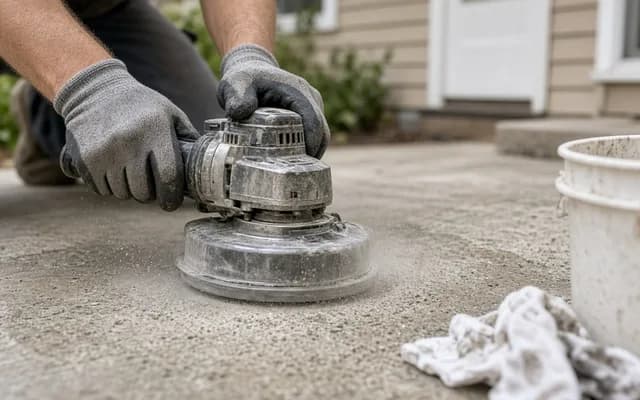 Service guideConcrete Grinding & Prep
Concrete grinding and preparation means mechanically profiling a garage slab, removing old coatings and contamination, repairing cracks and spalls, and testing moisture so that a bonded coating can adhere.
Tell us the size, the condition of what is there now, and what you want to change. Garage Floor Brief passes your request to independent local professionals, who reply with written, no-obligation estimates. The service is free to use.