What kept you from choosing interlocking tiles?
No votes yet. Yours will be the first. · saved on this device
Loading...
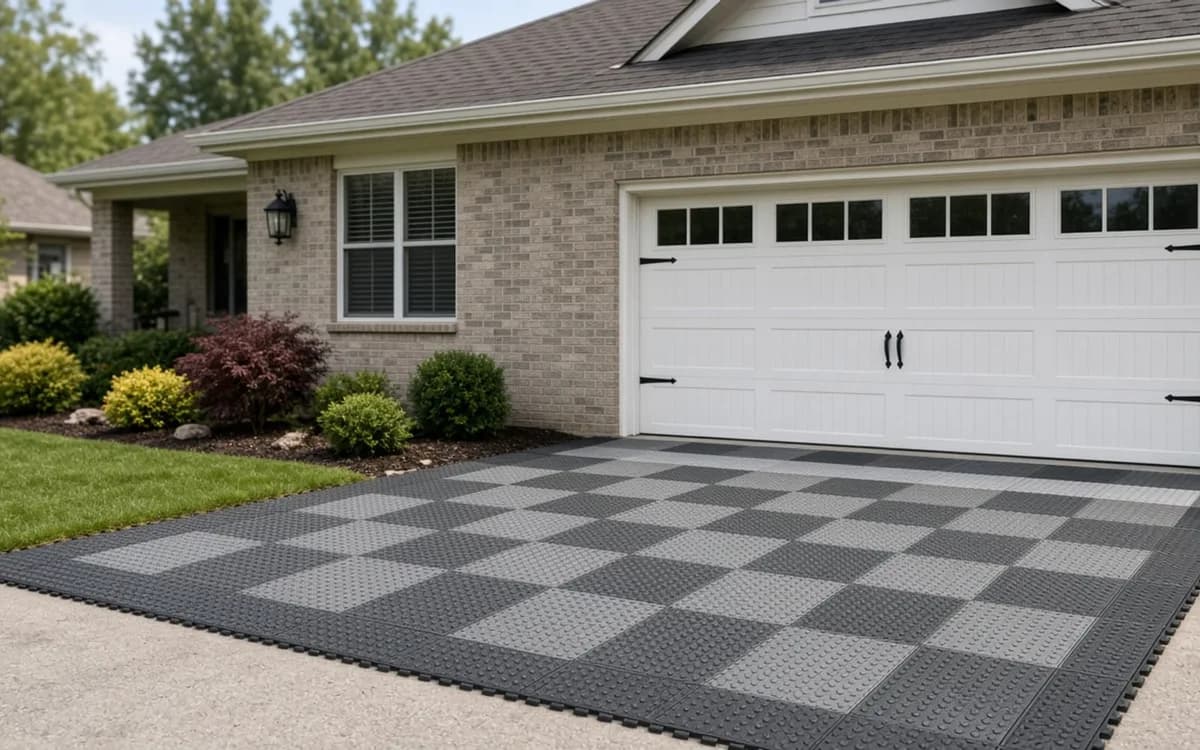
Garage Floor Brief · Service guide
Interlocking garage tiles are rigid or flexible modular pieces, usually 12 to 16 inches square, that snap together over the existing concrete without adhesive or curing. They suit damp or cracked slabs, garages that cannot be emptied, renters and movers, and homeowners who want a floor that can be repaired one tile at a time. Materials run $2.90 to $8 or more per square foot.
A tile floor changes the question from what will stick to the concrete to what will sit on it. Garage Flooring LLC's 2025 comparison prices interlocking tiles at $2.90–$8.00+ per sq ft in materials with a 10-to-25-plus-year lifespan, and notes the obvious advantage: a damaged tile unclips and a new one clips in. There is no grinding, no moisture test, and no week without the cars.
The trade-offs are just as concrete. Tiles are not sealed to the slab, so water and grit find their way underneath; rigid tiles are audible; and a two-post lift or a dropped engine block treats the floor differently than a coating. This page covers load ratings, drainage, edges, cleaning beneath, and how to price a tile floor against a coating.
Want the numbers only? Read the interlocking garage tiles cost guide for 2026 ranges, what moves the price, and sample budgets.
| Item | Low | High | Unit | Notes |
|---|---|---|---|---|
| Interlocking tile materials, economy to premium | $2.9 | $8 | per sq ft | Garage Flooring LLC 2025 |
| Branded rigid tiles (Swisstrax) | $4.49 | $7.75 | per sq ft | Swisstrax 2026 list prices |
| Two-car garage, self-installed tiles | $800 | $2,900 | flat | HomeGuide 2026 |
| Roll-out garage mats | $1 | $5 | per sq ft | Garage Flooring LLC 2025; 2–10 year life |
| Edge ramps and corner pieces | $3 | $8 | per linear ft | Typical retail; varies by brand |
| Professional layout and installation | $1 | $3 | per sq ft | Typical; no grinding or cure |
Tiles solve problems a coating cannot. A slab that reads high for moisture or shows efflorescence is a poor coating candidate but a fine tile base, as long as you choose a perforated or channeled tile that lets it breathe. A garage full of workbenches and a rolling toolbox that cannot leave for a week can be tiled in sections. A rented house, or one you plan to sell in a few years, gets a floor you can pull up and reinstall. And a slab with active cracks gets bridged rather than telegraphed.
They also suit homeowners who like the look: checkerboards, racing stripes, and logo inlays are trivial with tiles and expensive with coatings. The CRAFTSMAN 2022 survey found 53% of Americans use the garage for DIY projects, and tile is the one garage floor a capable owner can install in a weekend without specialized equipment. Tiles also suit a budget that moves in stages: Swisstrax lists its modular tiles at $4.49–$7.75 per sq ft, and a tile floor can start with the parking bays and grow later. Skip tiles if you want a seamless surface to hose down, or if the sound of rigid plastic underfoot would bother you daily.
Rigid polypropylene tiles are the workhorse. They are typically 12 to 16 inches square, a half to three-quarters of an inch thick, with a ribbed, coin, or diamond top and an open or solid underside. Swisstrax's 2026 cost page lists its Ribtrax Pro at $4.99, Diamondtrax at $4.49, and Vinyltrax Pro at $7.75 per square foot, which is the branded upper end of the category. Cheaper rigid tiles from big-box retailers sit at the $2.90 low end and use thinner walls and simpler locks.
Flexible PVC tiles are heavier, quieter, and more forgiving of an uneven slab, and their solid backs keep spills on top rather than beneath. They cost more per square foot and can be affected by some tire compounds, so check the manufacturer's note on tire staining. Vinyl-topped tiles imitate wood or stone for a showroom garage but are slicker when wet. Roll-out mats are the budget cousin: Garage Flooring LLC lists them at $1–$5 per sq ft, 2–10 years, cheaper but shorter-lived than tiles.
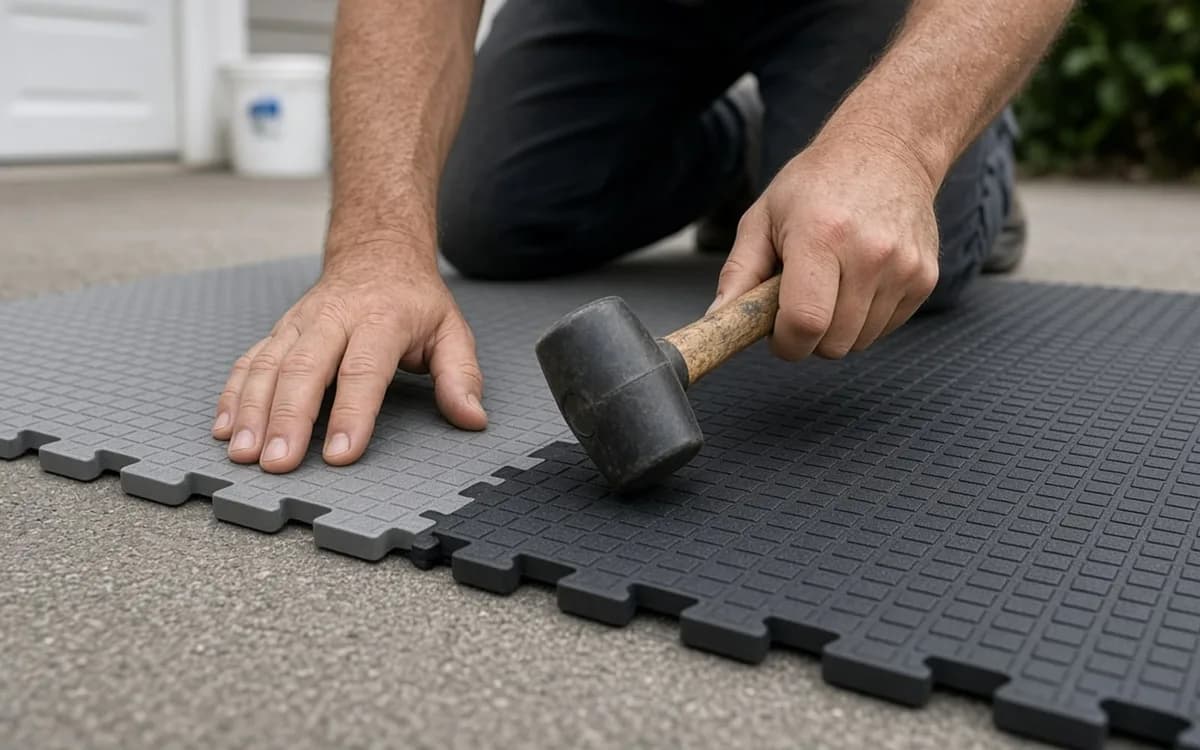
Passenger vehicles are not the issue. Swisstrax rates its Ribtrax Pro at 70,000 lbs of rollover weight in aircraft hangar use, and most rigid tiles carry ratings well beyond any SUV. The concern is point loads: a jack stand, a motorcycle kickstand, or a two-post lift foot concentrates weight on an area smaller than one tile's support ribs. Cheap tiles crack there; good ones dent or leave a mark. The fix is a steel or plywood plate under the load, or leaving the lift footprint as bare concrete.
Turning tires on rigid tile can scuff and, over years, polish the surface at the parking spot. Flexible PVC handles this better. Ask the manufacturer or installer for the tile's compressive strength in pounds per square inch rather than the rollover rating; the former tells you about jack stands, the latter about hangars. The garage floor quiz asks about lifts and heavy equipment for exactly this reason.
Material dominates the price, and it scales with tile quality. Garage Flooring LLC's $2.90 to $8-plus per square foot spans the category, and HomeGuide's 2026 guide lists self-installed tiles at $800–$2,900 for a two-car garage. Professional installation adds labor for layout, cutting around posts and the door track, and edge pieces, usually a modest fraction of what coating labor costs because there is no grinding. Duration's coated two-car range of $1,600–$6,900 is a useful ceiling: a premium tile floor installed lands in the same territory as a mid-range coating.
Edges and ramps are the line items homeowners forget. Every exposed edge needs a beveled ramp piece so tires roll on and shoes do not catch; the garage door edge needs a transition that lets the door seal. Around a step into the house, the tile raises the floor by up to three-quarters of an inch, which changes the step height. Order 5% to 10% extra tiles for cuts and future replacements in the same dye lot. The cost calculator has a tile tier that prices materials, edges, and labor separately.
Water gets under tiles. Snowmelt drips off cars, a hose leaks, the slab sweats in humid weather. Open-back tiles let it evaporate; solid-back tiles trap it. In either case, plan to lift a section once or twice a year, sweep and mop the concrete, and let it dry before reinstalling. A garage with a floor drain and a slab that slopes toward the door manages this easily; a flat slab in a humid climate can grow mildew underneath if it is never opened up.
Grit is the other thing underneath. Sand and salt work through the joints and abrade the tile bottoms and the concrete, which is mostly cosmetic but noisy. Sweeping the surface regularly limits it. Spills of oil or antifreeze on open-back tiles reach the slab and need the section lifted for cleanup; on solid-back or PVC tiles they stay on top. Choose the tile with your spill pattern in mind, not just the look. Compare this with how a sealed coating handles the same events.
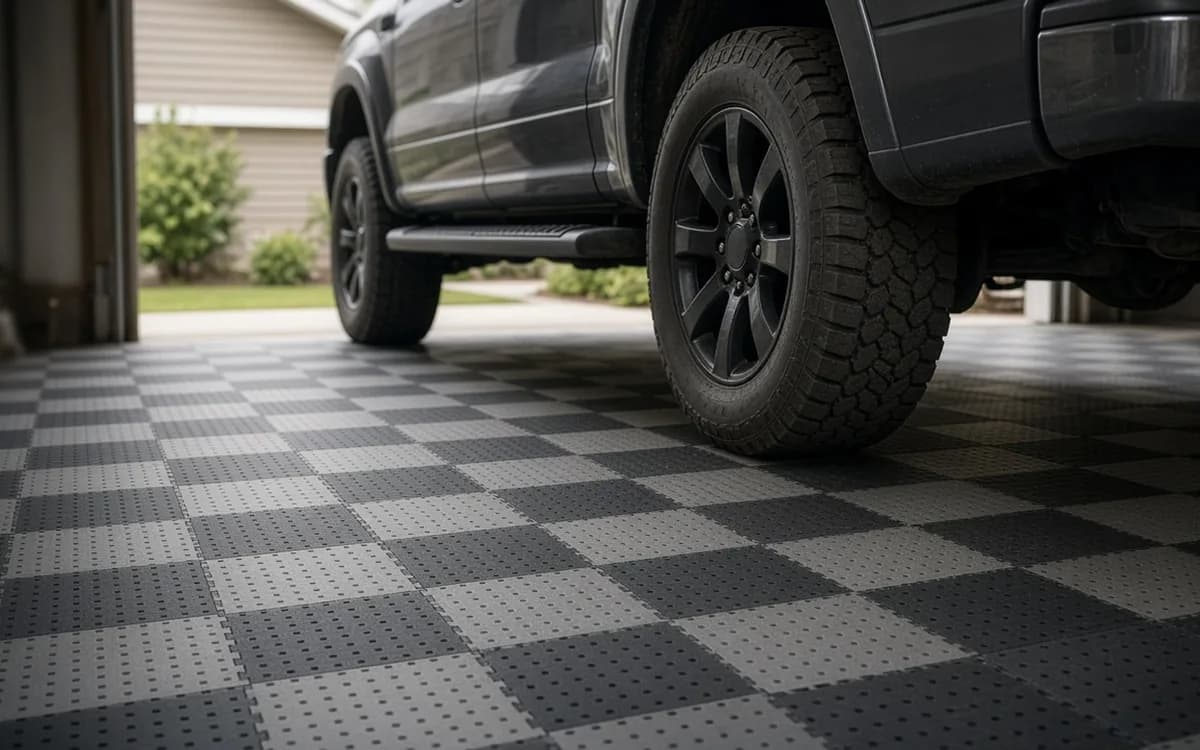
Expansion is the classic failure. Polypropylene grows in heat and shrinks in cold, and a floor installed tight to the walls in January buckles in July. Installers leave a gap at every wall and post, hide it under trim or an edge piece, and install in the middle of the temperature range when possible. A sunlit strip inside the door expands more than the shaded back, which is why some manufacturers recommend lighter colors there or a break in the pattern.
The other failures are mechanical: locks that break on cheap tiles when lifted repeatedly, tiles that creep toward the door under turning tires, and edges that lift when a ramp piece is omitted. None of these ruin the floor; they are why the brief says to check load, edges, and the lifting process before ordering. A tile floor that is cracked at the jack stand and buckled at the door was specified wrong, not made wrong.
In snow-belt garages, tiles win on moisture tolerance and lose on the volume of meltwater and salt that ends up underneath, which means a spring lift-and-clean is not optional. In hot climates, the expansion gap is the whole game, and darker tiles at the door get uncomfortably hot and grow more. In humid coastal areas, open-back tiles over a breathing slab outperform solid backs. Across all regions, our analysis of the EIA's 2024 household survey finds 32.4% of occupied homes sit over a concrete slab foundation, from 43.0% in the South to 15.7% in the Northeast, and 53.0% of owner-occupied attached-garage homes report one.
Ask for the tile brand and model, its thickness, its compressive rating, and whether it is open or solid backed. Confirm the proposal includes edge ramps at every exposed edge, a door threshold detail, and a stated expansion gap. Check the color count and whether the pattern is drawn on a layout. If the installer is also removing an old coating or leveling a spot, that should be its own line. For DIY, buy one box first, install it at the door, park on it for a week, and lift it before ordering the rest.
Get proposals for the same measured area from several matched professionals through the request form, and read the reviews guide for what tile customers complain about a year later: noise, creep, and buckling are the ones that reflect on the installer.
Homeowner polls
No votes yet. Yours will be the first. · saved on this device
No votes yet. Yours will be the first. · saved on this device
No votes yet. Yours will be the first. · saved on this device
 Service guideEpoxy Garage Floor Coating
An epoxy garage floor coating is a two-part resin system applied in layers over ground, repaired concrete.
 Service guidePolyaspartic Floor Coating
A polyaspartic floor coating is an aliphatic polyurea system that cures within hours, resists UV yellowing, and tolerates lower application temperatures than epoxy.
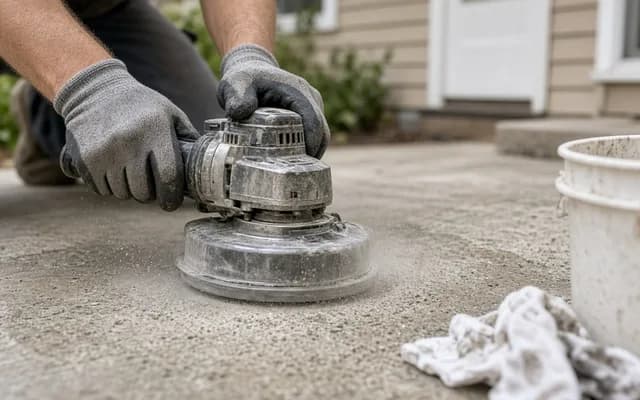 Service guideConcrete Grinding & Prep
Concrete grinding and preparation means mechanically profiling a garage slab, removing old coatings and contamination, repairing cracks and spalls, and testing moisture so that a bonded coating can adhere.
No. The locking edges hold the field together, and the floor's own weight plus the wall gap keeps it in place. Some installers tack the perimeter or the door row with double-sided tape to limit creep under turning tires. Gluing tiles defeats their main advantages: removability and the ability to lift a section to clean the concrete.
Rigid tiles are usually between half an inch and three-quarters of an inch thick; flexible PVC tiles are often a quarter inch. That raise changes the step height into the house and can interfere with a garage door that seals tight to the slab. Measure both before ordering, and plan a ramp edge at the door so the seal lands on a bevel rather than a ledge.
Cracks are fine; tiles bridge them. Unevenness is a matter of degree. A slab that varies by a quarter inch across a few feet will make rigid tiles rock and click. Grinding high spots or using a flexible PVC tile solves most cases. A heaved slab with a lip at a crack should be ground flat first or the tile locks will fatigue at that line.
A solid-back polypropylene or PVC tile keeps oil and coolant on the surface where a rag can reach it. Rigid polypropylene resists most automotive fluids; some flexible PVC compounds soften with prolonged solvent contact, so check the data sheet. Welding spatter and grinding sparks will scar any plastic tile, so keep a steel plate or bare concrete zone under the welding table.
Open-back polypropylene tiles produce a hollow click when walked on and a rattle under a rolling creeper or tool cart. Solid-back and flexible PVC tiles are noticeably quieter. If the garage is under a bedroom or you spend hours in it, ask for samples of both types and walk on them over concrete before deciding.
Hot tires do not lift tiles the way they lift epoxy, but they can leave temporary marks and, on some flexible PVC compounds, permanent staining from tire plasticizers. Rigid polypropylene is more resistant. Turning the wheel while parked scuffs any tile over time. Ask the manufacturer about tire staining, and avoid steering a stationary car on the floor.
Many rigid tiles are UV stabilized and drain well, so covered patios and carports work. Open driveways are harder: freeze-thaw with water underneath, snowplow blades, and full sun expansion all shorten the life. Manufacturers usually list an outdoor rating; if it is not stated, assume the tile is indoor only.
Measure wall to wall and multiply, then divide by the tile's coverage (a 12-inch tile covers one square foot, a 15.75-inch tile about 1.7). Add 5% to 10% for cuts around posts, the door track, and future replacements. For a 20-by-22-foot garage that is roughly 440 square feet of field tile plus about 42 feet of edge ramp across the door opening and any exposed sides.
 Free toolGarage floor cost calculator
Size, material tier and complexity in, a realistic budget range out.
 Free toolGarage floor comparisons
Side-by-side tables for the decisions that change the price most.
 Free toolWhich garage floor fits your slab and schedule?
8 questions that show what you already know and what to check next.
 Free toolGarage floor polls: how other homeowners decided
See what other planners chose and add your vote.
Tell us the size, the condition of what is there now, and what you want to change. Garage Floor Brief passes your request to independent local professionals, who reply with written, no-obligation estimates. The service is free to use.