What kept you from choosing interlocking tiles?
No votes yet. Yours will be the first. · saved on this device
Loading...
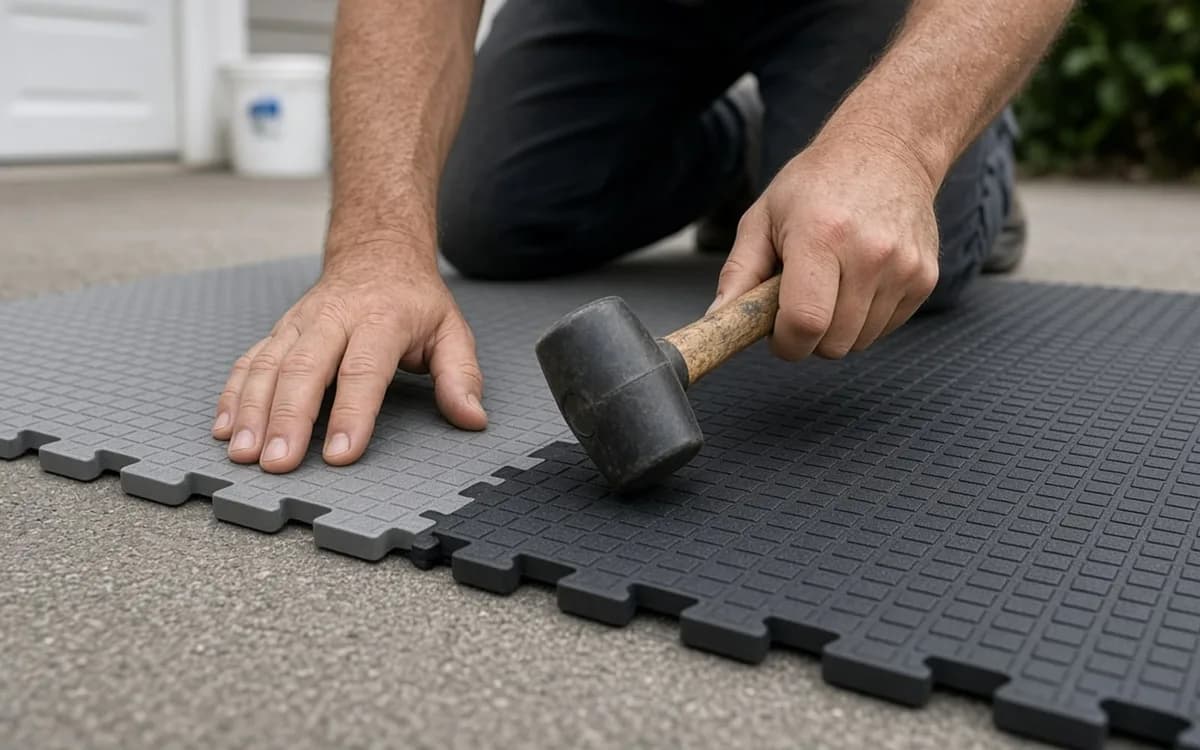
Garage Floor Brief · Interlocking Garage Tiles cost guide
Interlocking garage tiles cost about $2.90 to $8.00 or more per square foot in materials according to Garage Flooring LLC, and HomeGuide puts a self-installed two-car floor at $800 to $2,900. Branded rigid tiles sit at the top of that range. Edging, ramps, cuts and optional professional installation add to the total, but there is no grinding or cure time.
Tile floors are the easiest garage floors to price because most of the cost is material you can see on a price list. There is no hidden slab work to discover, no resin chemistry and no cure schedule. What varies is tile quality, the finishing pieces, how much cutting the layout needs and whether you install them yourself or hire a professional.
This guide uses Garage Flooring LLC's 2025 comparison, HomeGuide's 2026 figures and Swisstrax's 2026 price list to break down tile costs. Swisstrax is a manufacturer, so its figures describe its own products. The cost table and calculator on this page show component ranges; the sections below explain how to combine them.
| Item | Low | High | Unit | Notes |
|---|---|---|---|---|
| Interlocking tile materials, economy to premium | $2.9 | $8 | per sq ft | Garage Flooring LLC 2025 |
| Branded rigid tiles (Swisstrax) | $4.49 | $7.75 | per sq ft | Swisstrax 2026 list prices |
| Two-car garage, self-installed tiles | $800 | $2,900 | flat | HomeGuide 2026 |
| Roll-out garage mats | $1 | $5 | per sq ft | Garage Flooring LLC 2025; 2–10 year life |
| Edge ramps and corner pieces | $3 | $8 | per linear ft | Typical retail; varies by brand |
| Professional layout and installation | $1 | $3 | per sq ft | Typical; no grinding or cure |
Garage Flooring LLC prices interlocking tiles at $2.90–$8.00+ per sq ft in materials. The low end covers thinner, hollow-backed tiles suited to light use; the middle covers solid or ribbed polypropylene tiles for everyday parking; and the top covers thick, dense branded tiles and specialty surfaces. Swisstrax lists its branded tiles at $4.49–$7.75 per sq ft.
The main price drivers are tile thickness, density, the locking system, UV stabilizers for sunny doorways, and surface pattern. Premium tiles also tend to offer more colors and matching borders. For a garage with heavy use, hot tires or a lift, a mid-range or premium rigid tile generally lasts longer and resists cracking better than economy options.
HomeGuide puts a self-installed two-car tile floor at $800–$2,900. Where you land depends on tile tier and garage size. A two-car garage measured at around 400 to 500 square feet, covered wall to wall with mid-range tiles, usually lands in the middle of that range. Add edging and ramps on top of the tile cost.
For comparison, a coated two-car garage runs $1,600–$6,900 according to Duration Concrete Coatings. Tiles can therefore be similar to or cheaper than a coating, especially when the slab needs repairs or coating removal that tiles avoid. The coating versus tiles comparison covers the full trade-off. Tile prices are also more predictable, because there are no hidden slab conditions to discover after work begins.
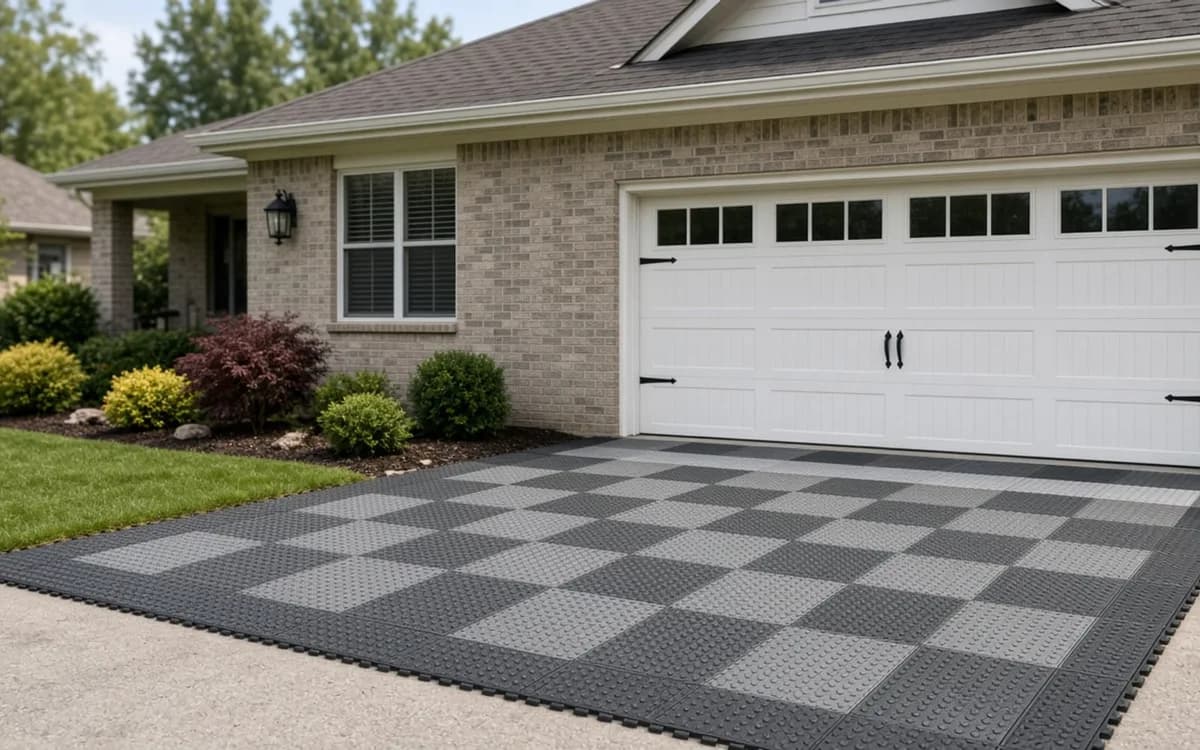
Finishing pieces are easy to forget. Edge ramps at the garage door let cars roll smoothly onto the floor, and corner and edge pieces give a finished look along walls. Extra tiles are needed for cuts around posts, steps and drains. A small surplus also allows for future replacements, which is one of the main advantages of a tile floor.
Many owners install tiles themselves in a day, which keeps labor cost at zero. Professional installation adds a per-square-foot charge for layout, cutting around obstacles and fitting edging. It is worth considering for complex floors with many posts, steps or drains, for patterned layouts, or when you simply do not want to spend a weekend on your knees.
Compared with coatings, labor is a much smaller share of a tile floor. Angi puts labor at 33–60% of an installed epoxy floor, while for tiles most of the cost is material. That makes tile totals more predictable and easier to compare, since the main variables are tile model and area.
Tiles have no cure time, need no recoating and can be repaired one tile at a time. Garage Flooring LLC gives interlocking tiles a long life compared with mats, which cost $1–$5 per sq ft, 2–10 years. For owners who will stay many years, tiles' per-year cost is competitive with coatings. For renters and movers, tiles are portable, so the cost can be spread over more than one garage.
Hidden long-term costs are modest: occasional cleaning under vented tiles, replacing a cracked or stained tile, and possibly a few new edge ramps. The largest long-term risk is buying economy tiles for heavy use and having to replace the floor early, which is why matching the tile tier to your garage's demands is the most important cost decision.
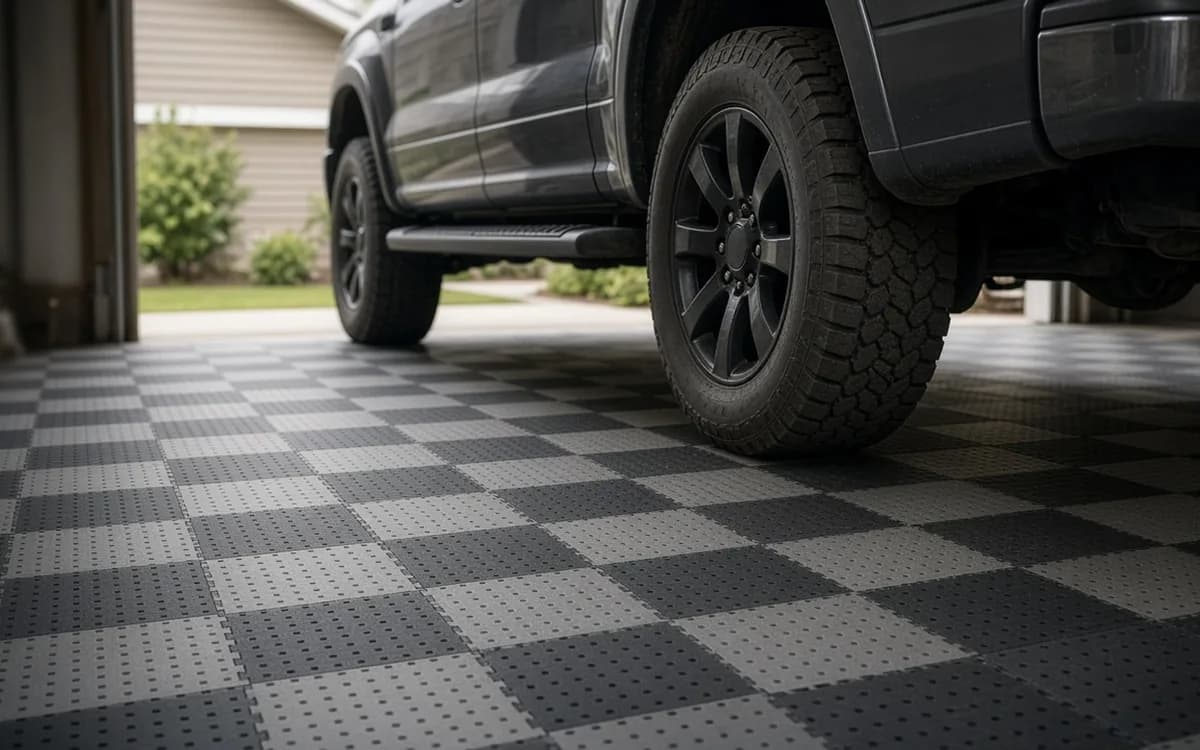
Choose a single color instead of a patterned or bordered layout, which reduces waste and complexity. Tile only the areas that need it, such as parking bays, and leave storage zones bare. Install the tiles yourself, and buy a mid-range tile rather than the most premium if your garage sees ordinary parking. Measure carefully to avoid over-ordering.
Avoid trimming on tile quality if the garage sees hot tires, heavy vehicles or equipment, and do not skip edge ramps at the door, which protect tile edges. The tile service page covers load, drainage and layout, and the cost calculator helps test budget scenarios against coatings. If you are undecided, price both options for the same measured area before choosing.
Illustrative budgets help frame what you will spend. A single parking bay covered in economy tiles, laid by the owner, sits at the very bottom of the range and can be done in an afternoon. A full two-car garage in mid-range rigid tiles with ramps along the door and a small stock of spares usually lands in the middle of HomeGuide's self-installed range. A premium branded floor with borders and professional installation sits at the top or above it.
Garage size drives totals more than anything else. NAHB reports that 65% of new single-family homes completed in 2024 had a two-car garage, by our count of Census data 641,000 completed in 2025 did, and our analysis of the EIA's 2024 household survey finds 27.8% of occupied homes have a two-car attached garage, so most budgets start there. Three-car garages scale up with area, and complex layouts with posts, steps and drains add cuts and waste. Measure your own floor rather than assuming a standard size.
Remember that tiles avoid preparation costs that coatings carry. A slab that would need coating removal, extensive crack repair or moisture mitigation before a coating can often take tiles with only cleaning and minor leveling. The preparation cost guide shows what those avoided steps typically cost. Cleaning, filling the worst cracks and removing loose material are usually all a tile floor asks of the slab.
A garage used mainly for storage and occasional parking can use a lighter tile and skip premium features. A daily-driver garage benefits from a rigid tile with good UV stability near the door and ramps to protect the leading edge. A workshop with rolling toolboxes and jack stands benefits from a dense, solid-surface tile that handles point loads and makes it easy to find dropped parts.
Specialty uses add cost. A lift may call for load plates or reinforced tiles under the posts, and a wash bay benefits from vented tiles and a clear drainage plan. A home gym area may need rubber tiles or mats in addition to the main floor. Matching the tile to the use prevents both overspending on a storage garage and underspending on a working one.
By the numbers
Planning figures from published U.S. sources; every card links to where the number came from.
$2.90–$8.00+ per sq ft
Interlocking garage tiles cost $2.90–$8.00+ per square foot in materials (2025)
Garage Flooring LLC's 2025 comparison prices DIY interlocking tiles at $2.90–$8.00+ per square foot with a 10–25+ year lifespan, and notes individual damaged tiles can be unclipped and replaced.
Garage Flooring LLC, comparing garage coatings, tiles and mats over time (2025)$4.49–$7.75 per sq ft
Swisstrax modular tiles list at $4.49–$7.75 per square foot (2026)
Swisstrax's 2026 cost page lists Ribtrax Pro at $4.99, Diamondtrax 12-Series at $4.49 and Vinyltrax Pro at $7.75 per square foot. Branded premium tiles sit at the top of the interlocking-tile price band.
Swisstrax, cost of a new garage floor (2026)$800–$2,900
HomeGuide: DIY garage floor tiles cost $800–$2,900 for a two-car garage (2026)
HomeGuide's garage floor coating guide lists self-installed tiles at $800–$2,900 for a two-car garage, a useful ceiling when comparing against a $1,600–$6,900 coating. Figure taken from the guide's summary.
HomeGuide, garage floor coating cost (2026)$1–$5 per sq ft, 2–10 years
Roll-out garage mats cost $1–$5 per square foot but last only 2–10 years (2025)
Garage Flooring LLC lists thin mats at $1–$3 and heavy-duty mats at $2–$5+ per square foot with a 2–10 year lifespan, versus 10–25+ years for tiles and 5–20+ years for coatings. Mats are the cheapest entry point but the shortest-lived.
Garage Flooring LLC, comparing garage coatings, tiles and mats over time (2025)The calculator uses the same garage flooring benchmarks as this guide. Set the size and tier, then request a written estimate to check it against a real proposal.
Homeowner polls
No votes yet. Yours will be the first. · saved on this device
Duration's 2026 national range for a coated two-car garage is $1,600–$6,900.
No votes yet. Yours will be the first. · saved on this device
For light use, such as covering a storage area or a garage for occasional parking, economy tiles can be fine. For daily parking, hot climates or heavy equipment, they are more likely to crack, shift or mark. Paying a little more for a mid-range rigid tile usually buys a longer-lasting floor and fewer replacements.
A small box of spares is useful for replacing damaged tiles later, especially because colors and models can be discontinued. Many owners keep enough for a few replacements in high-traffic areas near the door. Store them out of sunlight so their color stays close to the installed floor.
Usually not. Edge ramps, borders and corner pieces are typically sold separately and priced per piece or per linear foot. When comparing quotes or online carts, check whether edging is included and how many linear feet you need along the door and any exposed edges.
Often tile. A damaged slab can require coating removal, extensive crack repair or moisture mitigation before any coating, which adds significant cost. Tiles sit on top and tolerate many slab issues, though large cracks or uneven areas may still need minor leveling for tiles to sit flat.
Tiles are bulky and heavy in bulk, so shipping can be noticeable when ordering online. Some sellers offer free shipping above a minimum order, while others charge by weight. Check delivered cost rather than listed price, and compare with local suppliers who may offer pickup.
Yes. One advantage of tiles is that you can cover the parking bays first and extend the floor later with the same model. Garage Flooring LLC prices interlocking tiles at $2.90–$8.00+ per sq ft in materials, so staging spreads that cost instead of postponing the whole floor. Buying all tiles at once reduces the risk of color mismatch between batches, but staged installs are practical if you confirm the model will remain available.
Often, because patterns require more planning and cutting, and sometimes more waste. A two-tone border or checkerboard adds visual interest but increases labor. If you are hiring a pro, ask for pricing on both a single-color and a patterned layout to see the difference.
 Epoxy Garage Floor Coating · Cost guideEpoxy in a garage floor budget: line items, and how it compares with polyaspartic and tiles
On a two-car garage, epoxy is the cheapest professional coating: FloorTek Coatings, a polyaspartic installer, quotes $2,000 to $4,000 for professional epoxy against $3,500 to $5,500 for polyaspartic, while HomeGuide puts self-installed tiles at $800 to $2,900.
 Polyaspartic Floor Coating · Cost guideWhat does a polyaspartic garage floor cost in 2026?
Duration Concrete Coatings puts installed polyaspartic at $5 to $12 per square foot in 2026, and HomeGuide lists $2,000 to $6,900 for a typical two-car garage.
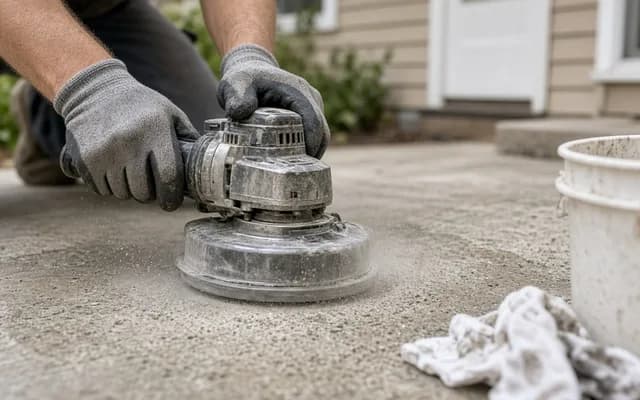 Concrete Grinding & Prep · Cost guideHow much does garage concrete grinding and preparation cost?
Duration Concrete Coatings puts garage surface preparation at $1 to $5 per square foot in 2026, with old-coating removal at $3 to $8 per square foot, minor crack repair at $250 to $800 and moisture testing at $200 to $500.
 Service guideInterlocking Garage Tiles
Interlocking garage tiles are rigid or flexible modular pieces, usually 12 to 16 inches square, that snap together over the existing concrete without adhesive or curing.
Service guideEpoxy Garage Floor CoatingAn epoxy garage floor coating is a two-part resin system applied in layers over ground, repaired concrete.
Service guidePolyaspartic Floor CoatingA polyaspartic floor coating is an aliphatic polyurea system that cures within hours, resists UV yellowing, and tolerates lower application temperatures than epoxy.
 Free toolGarage floor cost calculator
Size, material tier and complexity in, a realistic budget range out.
 Free toolGarage floor comparisons
Side-by-side tables for the decisions that change the price most.
 Free toolWhich garage floor fits your slab and schedule?
8 questions that show what you already know and what to check next.
 Free toolGarage floor polls: how other homeowners decided
See what other planners chose and add your vote.
Tell us the size, the condition of what is there now, and what you want to change. Garage Floor Brief passes your request to independent local professionals, who reply with written, no-obligation estimates. The service is free to use.