If you paid the polyaspartic premium over epoxy, was it worth it?
Duration's 2026 guide lists polyaspartic at $5–$12 per sq ft versus $3–$7 for epoxy.
No votes yet. Yours will be the first. · saved on this device
Loading...
Garage Floor Brief · Polyaspartic Floor Coating cost guide
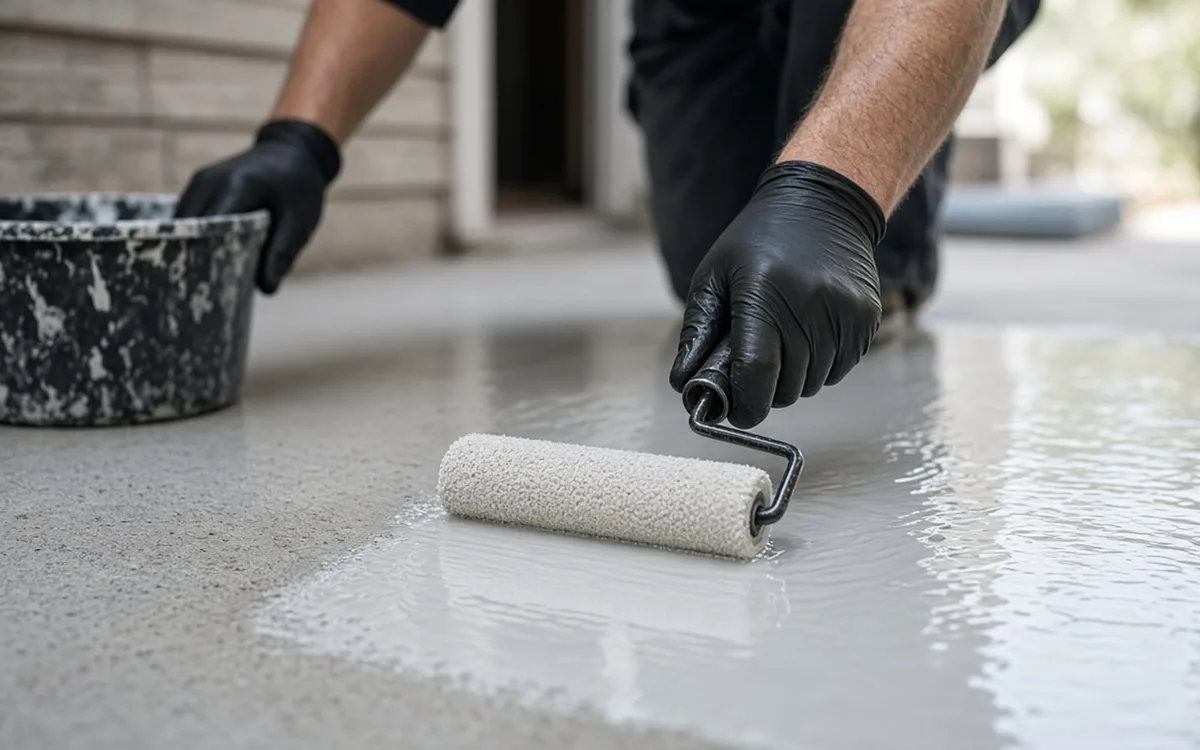
Duration Concrete Coatings puts installed polyaspartic at $5 to $12 per square foot in 2026, and HomeGuide lists $2,000 to $6,900 for a typical two-car garage. The price covers preparation, a base coat, flake and a clear topcoat. Labor is roughly half the cost, and preparation, repairs and local rates move totals more than the resin itself.
Polyaspartic floors carry a premium over epoxy, and homeowners reasonably ask what they are paying for. The short answer is faster cure, better UV resistance and, according to installers that sell it, a longer service life. The longer answer is that the premium varies a great deal depending on how the system is built, how much preparation the slab needs and where you live.
This guide breaks polyaspartic pricing into its parts using Duration Concrete Coatings' 2026 guide, Bob Vila's 2024 polyaspartic cost guide, HomeGuide's 2026 figures, Galaxy Concrete Coatings' 2025 breakdown and FloorTek Coatings' 2025 price guide. Galaxy and FloorTek are installers, and their figures are labeled accordingly. The cost table and calculator on this page show component ranges, so the sections below focus on how the parts combine and where the premium over epoxy actually comes from.
| Item | Low | High | Unit | Notes |
|---|---|---|---|---|
| Polyaspartic system, installed | $5 | $12 | per sq ft | Duration 2026; Bob Vila 2024 lists $4–$9 |
| Two-car garage polyaspartic project | $3,500 | $5,500 | flat | FloorTek 2025; HomeGuide 2026 lists $2,000–$6,900 |
| Labor share | $3 | $6 | per sq ft | Galaxy 2025 |
| Base coat material | $1.5 | $3 | per sq ft | Galaxy 2025 |
| Full flake broadcast | $0.5 | $1.5 | per sq ft | Galaxy 2025 |
| Moisture barrier or primer | $0.5 | $1 | per sq ft | Bob Vila 2024 |
| Surface grinding | $1 | $5 | per sq ft | Duration 2026 |
Published ranges cluster in the mid-single digits to low double digits. Duration lists installed polyaspartic at $5–$12 per sq ft, while Bob Vila's 2024 guide gives $4–$9 per sq ft. HomeGuide's two-car range is $2,000–$6,900, and FloorTek Coatings prices a two-car garage at $3,500–$5,500 vs $2,000–$4,000 for polyaspartic versus professional epoxy. Because FloorTek sells polyaspartic, read its comparison as one installer's framing rather than a neutral survey of prices.
The differences between publishers reflect timing, sample and scope. Bob Vila's figures are older and slightly lower; installer-published figures may include their standard preparation and warranty. Use the overlap, roughly five to nine dollars per square foot for a standard system, as the zone where most two-car garage quotes should fall, and ask questions about any quote well outside it.
Galaxy Concrete Coatings' 2025 guide breaks a polyaspartic floor into base coat, flake and topcoat, with labor priced separately at roughly $3–$6 labor / $2–$6 materials per sq ft. For comparison, Angi attributes 33–60% of an installed epoxy price to labor. That structure is useful for reading proposals: if one quote includes a full flake broadcast and a thick topcoat while another uses a partial broadcast and a thin clear coat, the price difference is explained by the materials alone.
Some systems use an epoxy or polyurea base with a polyaspartic topcoat, while others use polyaspartic for every layer. Full polyaspartic systems cost more but cure fastest. Hybrid systems cost less and can build thickness more easily. Ask which layers are polyaspartic and at what thickness, because the name on the proposal may apply only to the topcoat.
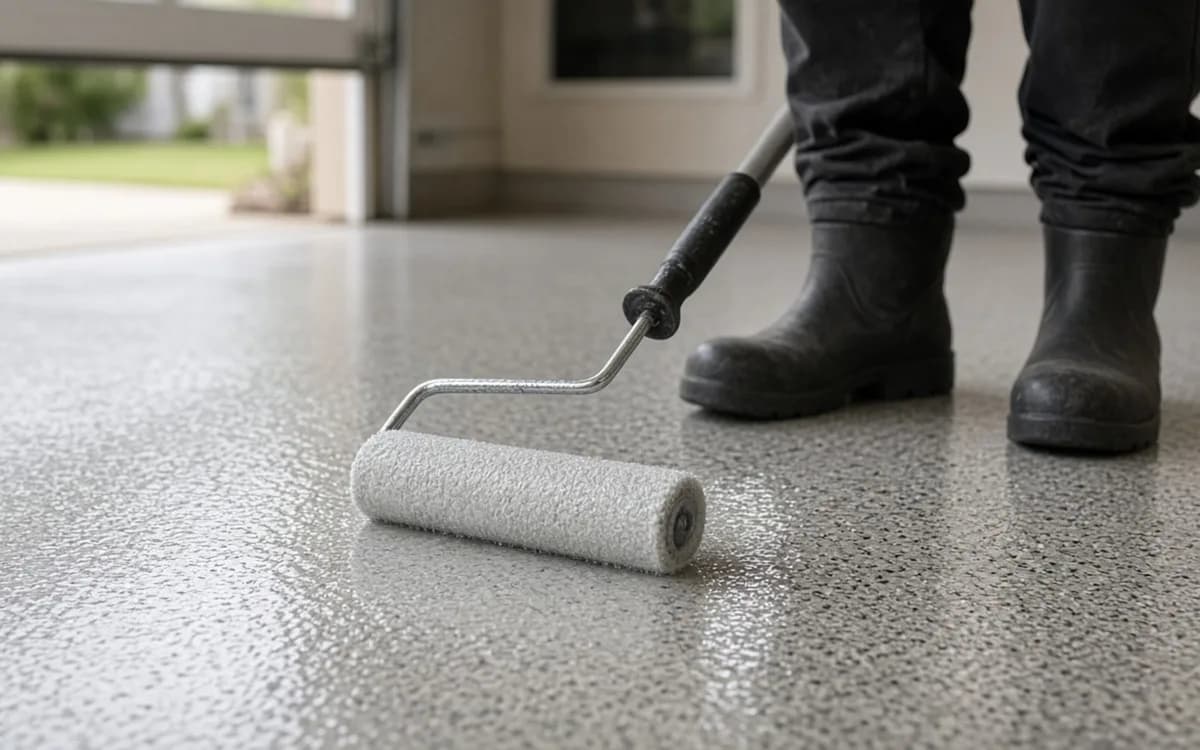
Polyaspartic is less forgiving of poor preparation than epoxy because it cures fast and wets the surface for a shorter time. Duration lists surface preparation at $1–$5 per sq ft, and most polyaspartic installers include grinding in their standard price. Bob Vila notes an optional moisture barrier at up to a dollar per square foot, which is worth budgeting if a moisture test shows elevated readings.
Old coating removal and heavy crack repair are priced the same as for epoxy and can add substantially to the total. If your slab needs extensive work, get the preparation priced separately so you can see whether the polyaspartic premium or the slab condition is driving the quote. The preparation cost guide explains what each prep item typically costs.
The fast cure is the main practical benefit. Duration reports polyaspartic accepts foot traffic in about an hour and vehicles within 24 hours, while Bob Vila's 2024 guide gives 3–6 hrs / 24 hrs for walking and driving. For households that park inside daily, avoiding a week of street parking, storage or disruption has real value, even if it does not appear on the invoice. Our analysis of the federal 2024 household survey found 32.0% of owner-occupied attached-garage homes also have a second refrigerator in the garage to unplug and relocate.
For installers, a one-day job means fewer return trips, which offsets some of the higher material cost. That is one reason some polyaspartic quotes come in closer to epoxy than published ranges suggest. If a proposal requires two or three days because of repairs or weather, ask whether that changes the price and why.
Galaxy Concrete Coatings quotes regional polyaspartic ranges, including six to ten dollars per square foot in Indianapolis and eight to twelve in Denver. Higher-cost metros sit at or above the top of national ranges. Local competition matters too: markets with several established installers often price more tightly. Get at least two or three written proposals to see your local range.
Over the long term, Galaxy works out polyaspartic at $200 vs $375 per year over twenty years, based on its expectation of a longer service life. Garage Living cites a 15–25 years life with proper maintenance. Those are installer assumptions, but they show why some homeowners accept a higher upfront cost. The epoxy versus polyaspartic comparison covers the trade-off in full.
The safest savings are in finish choices and scope. A standard flake blend, skipping stem walls or coating only the parking area can all reduce cost. A hybrid system with an epoxy base and polyaspartic topcoat can cost less than a full polyaspartic build while keeping the UV and abrasion benefits on the surface. Scheduling in a slower season may also help.
Do not save on preparation, moisture testing or topcoat thickness. Those determine whether the floor lasts long enough to justify the premium. If the budget is still too high, compare with epoxy costs or tile costs and use the calculator to test different scenarios. Changing one variable at a time, such as system tier or complexity, shows which decisions move the total most for your garage.
The scenarios below combine published ranges into illustrative budgets rather than quotes. Angi prices a 250-square-foot epoxy coating at $750–$3,000, and polyaspartic sits above that per foot. A one-car garage of around 250 square feet on a sound slab, with standard grinding, full flake and a polyaspartic topcoat, tends to land toward the lower end of totals because setup and travel are spread over a small area. A standard two-car garage of 400 to 500 square feet with minor crack repair lands near the middle of HomeGuide's two-car range.
Costs climb when the slab needs heavy work. A two-car garage with an old coating to remove, several wide cracks and a moisture-mitigating primer can reach the top of published ranges or beyond, because removal and repairs are priced on top of the system. A three-car garage with stem walls, steps and a custom flake blend scales up in proportion to area and detail.
Use these patterns to sense-check proposals rather than to predict them. If your quote is well above the middle for a standard two-car garage, ask which conditions or options are driving it. If it is well below, ask about thickness, flake coverage and which layers are actually polyaspartic. A clear written answer to each question says something good about the installer as well as the price.
A few lines on polyaspartic proposals are worth reading slowly. Check whether the price covers a full flake broadcast or a partial one, whether the topcoat is applied in one coat or two, and whether stem walls are included. Look for a named moisture test and a stated result, and for the minimum slab temperature at which the installer will apply the product. Missing lines are as important as priced ones.
Also read the warranty terms beside the price. Many polyaspartic proposals advertise long warranties, but exclusions for moisture, hot tire marks or chemical damage can narrow what is covered. The 2026 garage floor cost guide explains how to adjust totals when one proposal includes items another leaves out, so you compare full systems rather than headline prices.
By the numbers
Planning figures from published U.S. sources; every card links to where the number came from.
$5–$12 per sq ft
Installed polyaspartic garage coating runs $5–$12 per square foot nationally (2026)
Duration Concrete Coatings' 2026 guide puts professionally installed polyaspartic at $5–$12 per square foot versus $3–$7 for epoxy. The premium buys a faster cure and a longer expected service life; the guide is installer-published.
Duration Concrete Coatings, garage floor coating cost guide (2026)$4–$9 per sq ft
Polyaspartic coating costs $4–$9 per square foot, $2,000–$4,500 for 500 sq ft (2024)
Bob Vila's 2024 guide prices polyaspartic at $4–$9 per square foot and lists an optional moisture barrier at up to $1 per square foot. Installation typically takes 1–3 days.
Bob Vila, polyaspartic floor coating cost (2024)$2,000–$6,900
HomeGuide: polyaspartic coating runs $2,000–$6,900 for a typical two-car garage (2026)
HomeGuide's 2026 cost guide lists polyaspartic at $5–$12 per square foot including materials and labor, or $2,000–$6,900 for a two-car garage. Figure taken from the guide's summary.
HomeGuide, polyaspartic floor coating cost (2026)$3–$6 labor / $2–$6 materials per sq ft
Polyaspartic pricing splits roughly $3–$6 labor and $2–$6 materials per square foot (2025)
Galaxy breaks a polyaspartic system into base coat ($1.50–$3.00), flake ($0.50–$1.50) and topcoat ($1.00–$2.00) per square foot, with labor at $3–$6. Regional pricing ranges from $6–$10 in Indianapolis to $8–$12 in Denver.
Galaxy Concrete Coatings, polyaspartic floor coatings cost guide (2025)The calculator uses the same garage flooring benchmarks as this guide. Set the size and tier, then request a written estimate to check it against a real proposal.
Homeowner polls
Duration's 2026 guide lists polyaspartic at $5–$12 per sq ft versus $3–$7 for epoxy.
No votes yet. Yours will be the first. · saved on this device
Duration's 2026 national range for a coated two-car garage is $1,600–$6,900.
No votes yet. Yours will be the first. · saved on this device
The resin costs more per gallon, it requires experienced installers because of its short working time, and many installers include longer warranties that are priced into the system. The faster cure can reduce the number of visits, which offsets some of the premium. The net difference depends on the system, the slab and the local market.
For many garages, yes. It combines epoxy's thickness and bond with polyaspartic's UV and abrasion resistance at a lower price than a full polyaspartic build. The trade-off is a longer cure for the epoxy layer. Ask the installer which layers are which chemistry and how long the full system needs before vehicles return.
Warranty length reflects installer confidence, but exclusions matter. Some polyaspartic warranties are long but exclude moisture-related failure or wear. Read what is covered, whether labor is included, and whether it transfers to a buyer. A strong warranty is valuable only if its terms cover the failures most likely in your garage.
It changes it somewhat. Galaxy Concrete Coatings prices flake separately from the base and topcoat. Full broadcast uses more flake and more topcoat to lock it in, so it costs more than partial broadcast, but it hides dirt and slab imperfections better and adds texture. Most garage owners find full flake worth the modest extra cost.
Polyaspartic tolerates cooler temperatures better than epoxy, so winter installs are more feasible in a heated or temporarily heated garage. Some installers charge for temporary heat. Slower winter demand can mean more flexible scheduling and occasionally better pricing. Ask about minimum slab temperature for the specific product.
Multiply the measured area by the per-square-foot range. A three-car garage often runs from about 600 to over 800 square feet, so totals rise proportionally; our analysis of the EIA's 2024 household survey finds three-or-more-car attached garages at 6.0% of occupied homes. Duration's 2026 guide lists three-car coating ranges up to about ten thousand dollars. Larger floors sometimes get a slightly lower per-square-foot rate because setup costs are spread further.
Franchise pricing is often standardized, but scope is negotiable. You can often adjust flake choice, stem wall coverage or scheduling to reduce the total. Comparing a franchise proposal against an independent one, with the same preparation and layers, gives you the best sense of whether a price is fair in your market.
 Epoxy Garage Floor Coating · Cost guideEpoxy in a garage floor budget: line items, and how it compares with polyaspartic and tiles
On a two-car garage, epoxy is the cheapest professional coating: FloorTek Coatings, a polyaspartic installer, quotes $2,000 to $4,000 for professional epoxy against $3,500 to $5,500 for polyaspartic, while HomeGuide puts self-installed tiles at $800 to $2,900.
 Interlocking Garage Tiles · Cost guideHow much do interlocking garage floor tiles cost?
Interlocking garage tiles cost about $2.90 to $8.00 or more per square foot in materials according to Garage Flooring LLC, and HomeGuide puts a self-installed two-car floor at $800 to $2,900.
 Concrete Grinding & Prep · Cost guideHow much does garage concrete grinding and preparation cost?
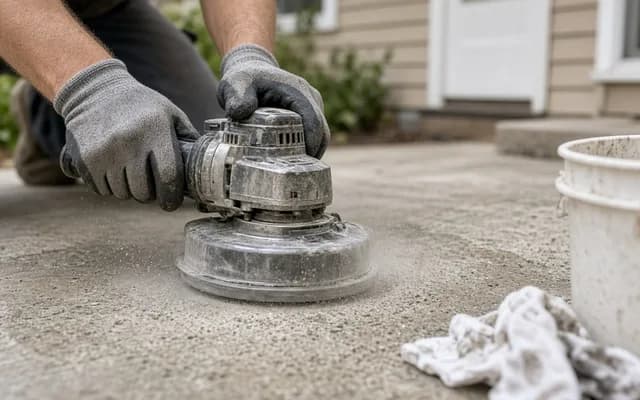
Duration Concrete Coatings puts garage surface preparation at $1 to $5 per square foot in 2026, with old-coating removal at $3 to $8 per square foot, minor crack repair at $250 to $800 and moisture testing at $200 to $500.
 Service guidePolyaspartic Floor Coating
A polyaspartic floor coating is an aliphatic polyurea system that cures within hours, resists UV yellowing, and tolerates lower application temperatures than epoxy.
Service guideEpoxy Garage Floor CoatingAn epoxy garage floor coating is a two-part resin system applied in layers over ground, repaired concrete.
Service guideConcrete Grinding & PrepConcrete grinding and preparation means mechanically profiling a garage slab, removing old coatings and contamination, repairing cracks and spalls, and testing moisture so that a bonded coating can adhere.
 Free toolGarage floor cost calculator
Size, material tier and complexity in, a realistic budget range out.
 Free toolGarage floor comparisons
Side-by-side tables for the decisions that change the price most.
 Free toolWhich garage floor fits your slab and schedule?
8 questions that show what you already know and what to check next.
 Free toolGarage floor polls: how other homeowners decided
See what other planners chose and add your vote.
Tell us the size, the condition of what is there now, and what you want to change. Garage Floor Brief passes your request to independent local professionals, who reply with written, no-obligation estimates. The service is free to use.