What did prep uncover that changed the scope?
No votes yet. Yours will be the first. · saved on this device
Loading...
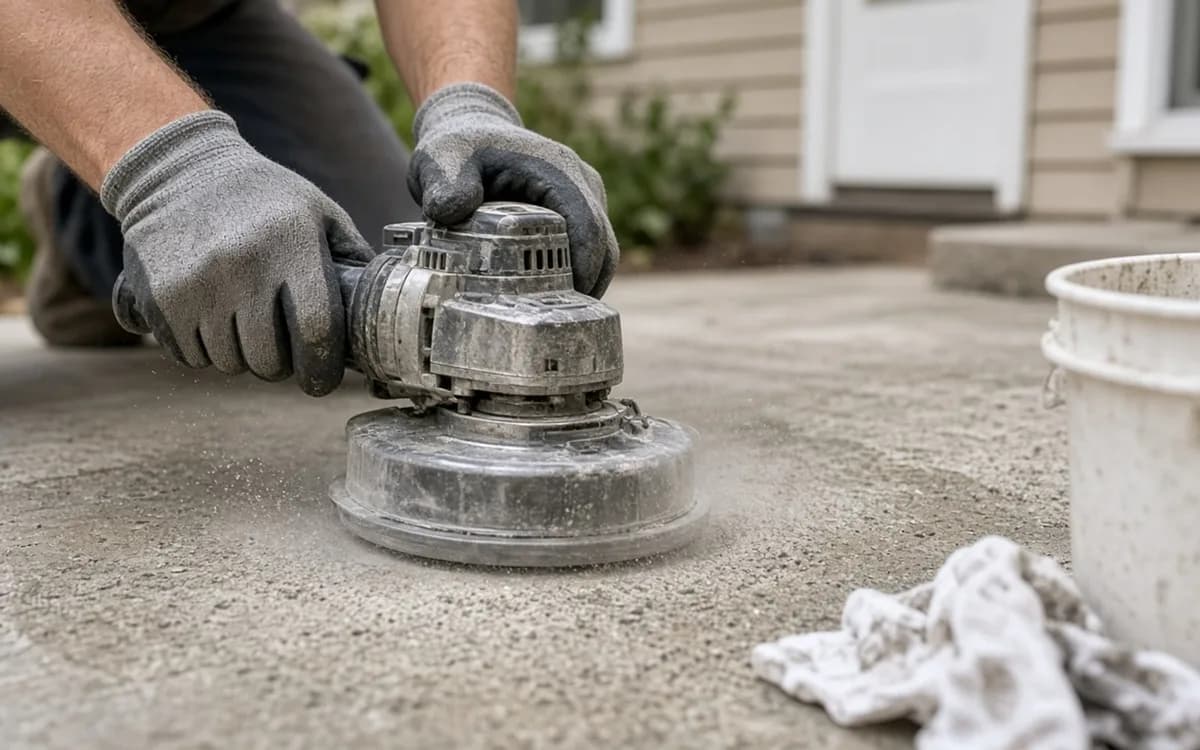
Garage Floor Brief · Concrete Grinding & Prep cost guide
Duration Concrete Coatings puts garage surface preparation at $1 to $5 per square foot in 2026, with old-coating removal at $3 to $8 per square foot, minor crack repair at $250 to $800 and moisture testing at $200 to $500. Preparation is often the largest variable on a coating quote and the step that most decides whether the floor lasts.
Preparation is where most of the uncertainty in a garage floor quote lives. The resin and flake cost roughly the same on every job, but the amount of grinding, repair, removal and moisture work depends entirely on your slab. That is why this guide treats preparation as its own cost category, and why a proposal that lumps preparation into a single line leaves you guessing.
Figures come from Duration Concrete Coatings' 2026 itemized guide, Angi's 2026 epoxy cost guide, Bob Vila's 2024 guides and Garage Flooring LLC's 2025 comparison. The cost table and calculator on this page show component ranges; the sections below explain how they combine on real slabs. Whether you plan an epoxy, polyaspartic or grind-and-seal floor, the preparation figures apply.
| Item | Low | High | Unit | Notes |
|---|---|---|---|---|
| Diamond grinding and profiling | $1 | $5 | per sq ft | Duration 2026 |
| Removal of an existing coating | $3 | $8 | per sq ft | Duration 2026 |
| Crack chasing and rigid fill | $250 | $800 | flat | Duration 2026; per garage |
| Moisture testing (calcium chloride or RH probe) | $200 | $500 | flat | Duration 2026 |
| Moisture-mitigating primer | $0.5 | $1 | per sq ft | Bob Vila 2024 lists barrier at up to $1 |
| Grind-and-seal finished floor | $2 | $6 | per sq ft | Grinding plus densifier and sealer |
Duration Concrete Coatings lists surface preparation at $1–$5 per sq ft. The low end reflects a sound, bare slab that needs a single pass to remove laitance and open the surface. The high end reflects hard-troweled concrete, sealers, heavy staining or multiple passes. For a two-car garage, grinding alone can range from a few hundred to over a thousand dollars.
Grinding is often bundled into coating prices rather than listed separately. If it is bundled, ask what the price assumes, including passes, edge work and dust control, so you know what happens if the slab turns out harder or more contaminated than expected. If it is listed separately, you can compare preparation directly between proposals.
Removing an existing coating is usually the single largest prep cost. Duration Concrete Coatings prices it at three to eight dollars per square foot, which on a two-car garage can add well over a thousand dollars. The range depends on the coating type and thickness, how well it is bonded, and whether it contains flake or multiple layers.
A failed coating that is already peeling is sometimes easier to remove than a thick, well-bonded one. Paint and thin DIY kits come off faster than professional multi-layer systems. If you are unsure what is on your floor, ask the installer to test-grind a small area during the site visit so the removal cost can be estimated accurately rather than discovered mid-job.
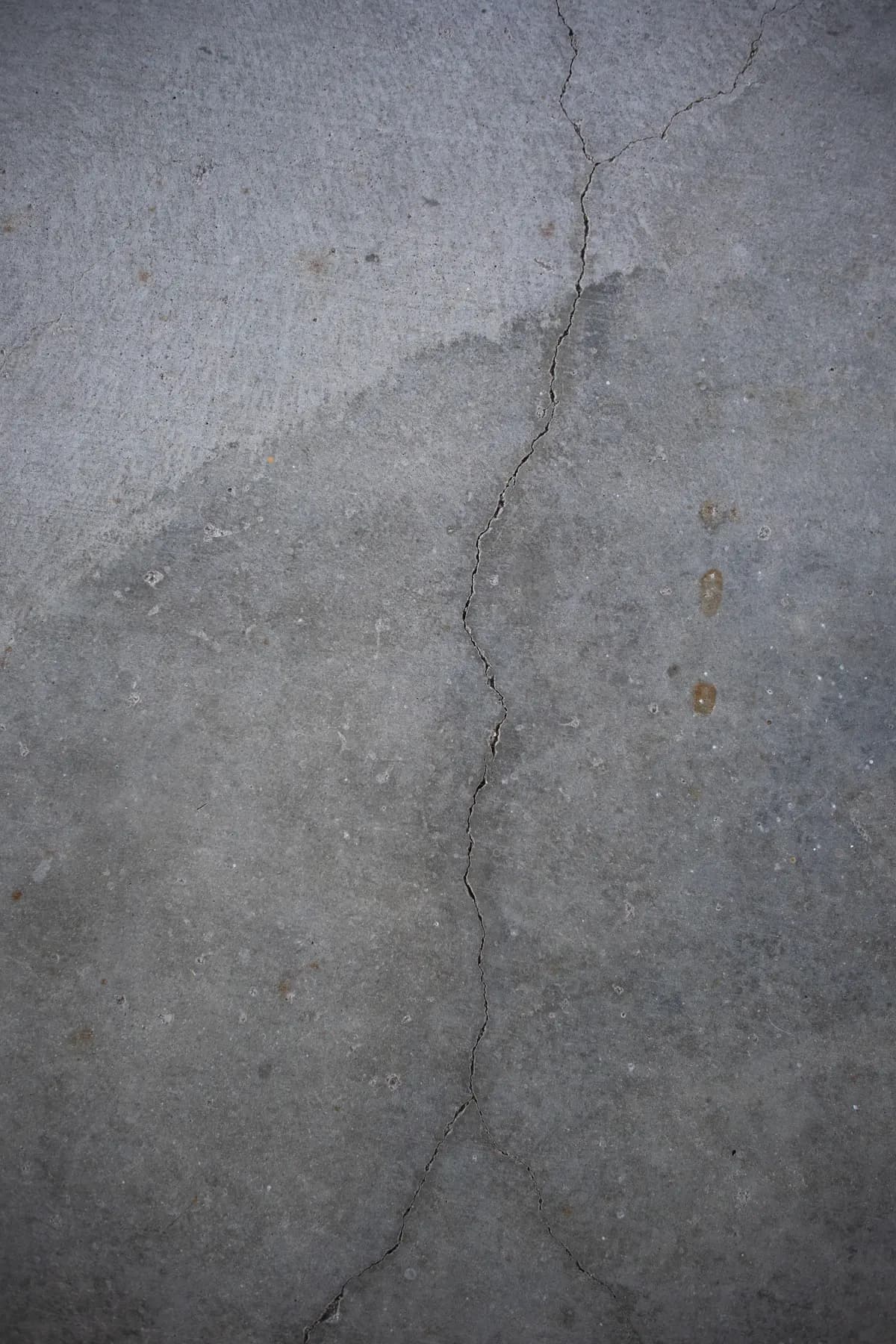
Duration lists minor crack repair at $250 to $800 and moisture testing at $200 to $500. Crack repair involves chasing cracks with a grinder to widen and clean them, then filling with a rigid epoxy or polyurea filler. Wide, active or structural cracks cost more and may need a different approach, and control joints may be filled or left open depending on the system.
Moisture testing is a small line with a large effect. A calcium chloride test or relative humidity probe tells the installer whether the slab can take a coating as-is, needs a moisture-mitigating primer, or is better suited to tiles. Bob Vila notes a moisture barrier at up to a dollar per square foot, which is modest compared to the cost of a coating that delaminates from moisture.
Preparation is overwhelmingly labor and equipment. Angi's 2026 guide puts epoxy installation labor at $1–$7 per sq ft and labor at 33–60% of installed price, and much of that labor is preparation. Professional grinders, diamond tooling and industrial dust extractors are significant investments, and their cost is built into prep pricing. Diamond tooling also wears faster on hard concrete, which is one reason hard slabs cost more to prepare.
For DIY owners, equipment rental is the main prep cost. A rented walk-behind grinder, tooling and vacuum can add several hundred dollars. Garage Flooring LLC prices DIY coating materials at $1.45–$5.21 per sq ft, but the gap to professional pricing is mostly the prep labor and equipment. The professional versus DIY comparison covers this trade-off.
Grind and seal uses the same grinding step as coating preparation, followed by a penetrating or thin film sealer rather than a full resin system. It costs less than a full coating because there are fewer materials and fewer steps. It suits owners who want a clean concrete look, less dust and some stain resistance without the cost of a flake system.
Budget for resealing every few years, depending on traffic and sealer type. A grind and seal floor can also be upgraded later: the ground surface can be coated in the future, although any sealer will need to be ground off first. Because the surface is already profiled and repaired, that later coating usually needs less preparation than a raw slab would. The concrete grinding and prep service page compares grind and seal with coating preparation.
Grinding, moisture testing and crack repair are the three prep steps not to cut, because they protect everything above them. Duration's national range of $1,600–$6,900 for coated two-car garages includes varying prep. Contents moving, cove bases and cosmetic patching are areas where you can save by doing some work yourself or narrowing scope.
| Slab condition | Typical prep scope | Relative prep cost |
|---|---|---|
| Bare, sound, newer slab | Single grind pass, vacuum, moisture test | Low |
| Older slab with cracks and oil | Grind, crack chasing and fill, degreasing, moisture test | Moderate |
| Previously coated slab | Coating removal, grind, repairs, moisture test | High |
| Damp slab | Grind, moisture test, mitigating primer | Moderate to high |
Older slabs usually cost more to prepare. Decades of oil drips, road salt, paint spills and patching leave contaminants that must be ground out, and older concrete often has more cracks and spalls near the door where freeze-thaw cycles and salt do the most damage. A slab that was sealed or painted at some point needs that layer removed entirely before a new coating can bond.
Newer slabs have fewer repairs but their own quirks. A very smooth, hard trowel finish may need more aggressive grinding to reach a usable profile, and curing compounds applied when the slab was poured must be removed. Very new concrete also needs time to cure and dry before coating, and a moisture test is still essential. The EIA's 2024 housing survey finds 32.4% of occupied homes sit on slab foundations, and garage slabs of every age appear in that stock.
Tell installers what you know about the slab's history, such as previous coatings, sealers, flooding or oil leaks. That information helps them price preparation accurately and reduces the chance of change orders once grinding starts. It also helps them decide whether a sample grind during the site visit is worthwhile, which is often the fastest way to replace guesses about the surface with an observed fact.
Put each proposal's preparation lines side by side: grinding method and target profile, number of passes, edge work, crack and joint treatment, oil treatment, moisture test type and result, primer, and dust control. If one proposal lists all of these and another lists only surface prep, ask the second installer to itemize. Without detail, you cannot tell whether a lower price reflects efficiency or skipped steps.
Then add published allowances for anything missing, so totals are comparable. A proposal that omits moisture testing, for instance, should be adjusted by a testing allowance before you compare. The epoxy cost guide and polyaspartic cost guide show how prep fits into full system budgets, and the calculator lets you model a floor with and without heavy preparation.
By the numbers
Planning figures from published U.S. sources; every card links to where the number came from.
$1–$5 per sq ft
Surface preparation adds $1–$5 per square foot to a garage coating (2026)
Grinding, cleaning and profiling the slab is priced separately by many installers. Duration also lists minor crack repair at $250–$800, moisture testing at $200–$500 and old-coating removal at $3–$8 per square foot.
Duration Concrete Coatings, garage floor coating cost guide (2026)$1–$7 per sq ft
Epoxy installation labor runs $1–$7 per square foot (Angi, 2026)
Angi's guide separates labor at $1–$7 per square foot from the $2–$12 installed total. Preparation, grinding and repairs account for most of the labor range on a residential garage.
Angi, epoxy flooring cost guide (2026)33–60%
Labor is 33–60% of an installed epoxy floor price (Angi, 2026)
Angi's epoxy guide attributes between a third and 60% of the installed price to labor. Because most of that labor is surface preparation, the share explains why DIY material prices look low and why DIY floors fail at the prep step.
Angi, epoxy flooring cost guide (2026)$1.45–$5.21 per sq ft
DIY epoxy materials run $1.45–$5.21 per sq ft versus $3–$12+ installed (2025)
Garage Flooring LLC prices DIY epoxy at $1.45–$5.21 and DIY polyurea at $1.00–$4.78 per square foot for materials, compared with $3.00–$12.00+ for professional installation. The gap is mostly prep labor, which is also where DIY jobs fail.
Garage Flooring LLC, comparing garage coatings, tiles and mats over time (2025)The calculator uses the same garage flooring benchmarks as this guide. Set the size and tier, then request a written estimate to check it against a real proposal.
Homeowner polls
No votes yet. Yours will be the first. · saved on this device
No votes yet. Yours will be the first. · saved on this device
No votes yet. Yours will be the first. · saved on this device
Installers differ. Some include a standard prep in their per-square-foot coating price and charge extra only for removal or heavy repairs. Others itemize every step. Itemized proposals make comparison easier. If prep is bundled, ask what the bundled price assumes so you know what could be added if conditions differ.
Somewhat. Emptying the garage, sweeping, and degreasing obvious oil stains before the crew arrives can save a little time. Grinding, crack repair and moisture testing are best left to the installer, both for quality and because most warranties depend on the installer's own preparation.
Often, but not always. New slabs may have curing compounds or a hard trowel finish that still needs grinding, and very new concrete needs time to cure and dry before coating. A newer slab usually has fewer cracks and stains, which keeps repair costs down.
The installer may recommend a moisture-mitigating primer, which adds cost but allows a coating to proceed, or suggest tiles, which tolerate moisture better. In some cases, the source of moisture, such as poor drainage outside, should be addressed first. A failed test is useful information, not a reason to skip the test.
Grinding and basic repairs usually take a few hours to most of a day, depending on slab hardness, repairs and removal. Coating removal can add a day. Most installers complete preparation and at least the first coat on the same day for a standard job.
Professional grinding normally includes dust extraction through vacuums attached to the grinder. Ask how dust is controlled, especially if the garage is attached to the house. Good dust control is part of a professional job and should not be an extra charge.
Prep is usually covered as part of the coating warranty, because a bond failure often traces back to preparation. Read the warranty to see whether delamination is covered and whether moisture-related failures are excluded. A warranty that covers delamination shows confidence in the installer's prep.
 Epoxy Garage Floor Coating · Cost guideEpoxy in a garage floor budget: line items, and how it compares with polyaspartic and tiles
On a two-car garage, epoxy is the cheapest professional coating: FloorTek Coatings, a polyaspartic installer, quotes $2,000 to $4,000 for professional epoxy against $3,500 to $5,500 for polyaspartic, while HomeGuide puts self-installed tiles at $800 to $2,900.
 Polyaspartic Floor Coating · Cost guideWhat does a polyaspartic garage floor cost in 2026?
Duration Concrete Coatings puts installed polyaspartic at $5 to $12 per square foot in 2026, and HomeGuide lists $2,000 to $6,900 for a typical two-car garage.
 Interlocking Garage Tiles · Cost guideHow much do interlocking garage floor tiles cost?
Interlocking garage tiles cost about $2.90 to $8.00 or more per square foot in materials according to Garage Flooring LLC, and HomeGuide puts a self-installed two-car floor at $800 to $2,900.
 Service guideConcrete Grinding & Prep
Concrete grinding and preparation means mechanically profiling a garage slab, removing old coatings and contamination, repairing cracks and spalls, and testing moisture so that a bonded coating can adhere.
Service guideEpoxy Garage Floor CoatingAn epoxy garage floor coating is a two-part resin system applied in layers over ground, repaired concrete.
Service guidePolyaspartic Floor CoatingA polyaspartic floor coating is an aliphatic polyurea system that cures within hours, resists UV yellowing, and tolerates lower application temperatures than epoxy.
 Free toolGarage floor cost calculator
Size, material tier and complexity in, a realistic budget range out.
 Free toolGarage floor comparisons
Side-by-side tables for the decisions that change the price most.
 Free toolWhich garage floor fits your slab and schedule?
8 questions that show what you already know and what to check next.
 Free toolGarage floor polls: how other homeowners decided
See what other planners chose and add your vote.
Tell us the size, the condition of what is there now, and what you want to change. Garage Floor Brief passes your request to independent local professionals, who reply with written, no-obligation estimates. The service is free to use.