What did you budget for a two-car garage floor?
Duration's 2026 national range for a coated two-car garage is $1,600–$6,900.
No votes yet. Yours will be the first. · saved on this device
Loading...
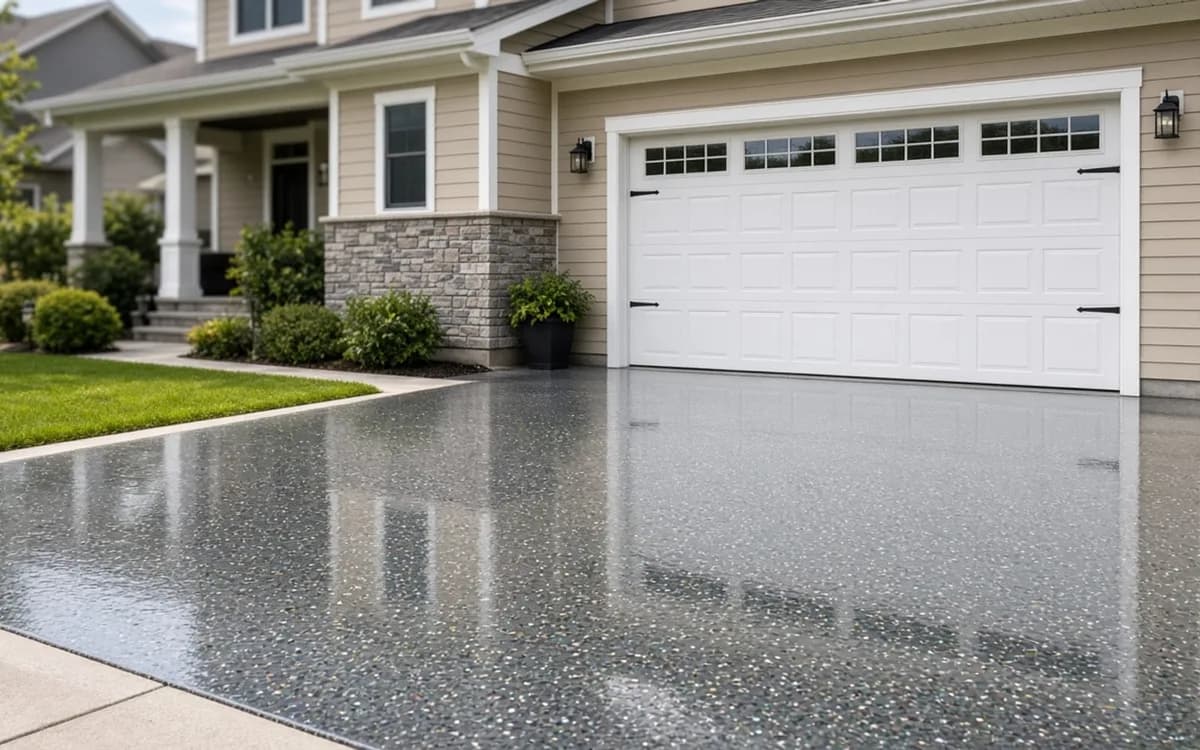
Garage Floor Brief · Epoxy Garage Floor Coating cost guide
On a two-car garage, epoxy is the cheapest professional coating: FloorTek Coatings, a polyaspartic installer, quotes $2,000 to $4,000 for professional epoxy against $3,500 to $5,500 for polyaspartic, while HomeGuide puts self-installed tiles at $800 to $2,900. What moves an epoxy quote is preparation, repairs, coat count, flake and topcoat, and local labor.
Epoxy is the most common professional garage floor and the usual baseline when you price the alternatives. Its range is also the widest, because the word covers so many different systems. A single coat of pigmented epoxy on a clean slab and a three-layer build with full flake and a polyaspartic clear topcoat over a repaired floor are both called epoxy on many proposals. This page breaks an epoxy quote into its line items so you can set it against a polyaspartic or tile proposal for the same garage; the garage floor coating cost guide compares every system by garage size.
Figures come from Angi's August 2026 epoxy cost guide, HomeGuide's 2026 benchmark, Bob Vila's 2024 epoxy guide and Duration Concrete Coatings' 2026 itemized guide. The cost table and calculator on this page show component ranges; the sections below explain how they combine and where your money goes. Use them together with your own measured square footage, since published size assumptions for a two-car garage vary widely.
| Item | Low | High | Unit | Notes |
|---|---|---|---|---|
| Professional 100%-solids epoxy, installed | $3 | $7 | per sq ft | Duration 2026; Angi 2026 lists $2–$12 across all epoxy types |
| Two-car garage epoxy project | $1,600 | $5,800 | flat | HomeGuide benchmark used by the calculator |
| Surface grinding and profiling | $1 | $5 | per sq ft | Duration 2026 |
| Old coating removal | $3 | $8 | per sq ft | Duration 2026 |
| Crack routing and repair | $250 | $800 | flat | Duration 2026 |
| Moisture testing | $200 | $500 | flat | Duration 2026 |
| Metallic epoxy finish | $5 | $12 | per sq ft | Bob Vila 2024 |
Angi's 2026 guide puts installed epoxy at $2–$12 per sq ft, and Bob Vila reports a national average epoxy project of $2,441. The low end reflects a basic coat on a clean slab in a low-cost market; the high end reflects multi-layer systems, heavy preparation and decorative finishes in expensive metros. Most two-car garages with standard preparation and a flake finish land in the middle.
The width of the range is less a sign of chaos than of different specifications. A proposal that includes grinding, crack repair, a moisture test, a thick base coat, full flake and a clear topcoat is not comparable to one that includes a single coat over etched concrete. Before judging a price, write down what layers and preparation it includes and compare only like with like. A per-square-foot price is only meaningful once you know what it buys.
Basic systems use a single pigmented coat, sometimes with a light flake sprinkle, over ground concrete. They sit at the bottom of published ranges and suit light-use garages. Mid-range systems add a thicker 100%-solids base, a full flake broadcast and a clear topcoat, which is where most professional two-car jobs fall. Premium systems include metallic or custom designs, moisture-mitigating primers, extra-thick builds or polyaspartic topcoats and land at the top of the range.
Material grade drives part of the difference. Angi lists 100%-solids resin at $45–$150 per gallon, well above water-based products. Bob Vila notes water-based epoxy lasts only 1–3 years, so a lower tier that relies on thin water-based product can cost more over time. Metallic finishes typically carry a premium for the extra labor and artistry.
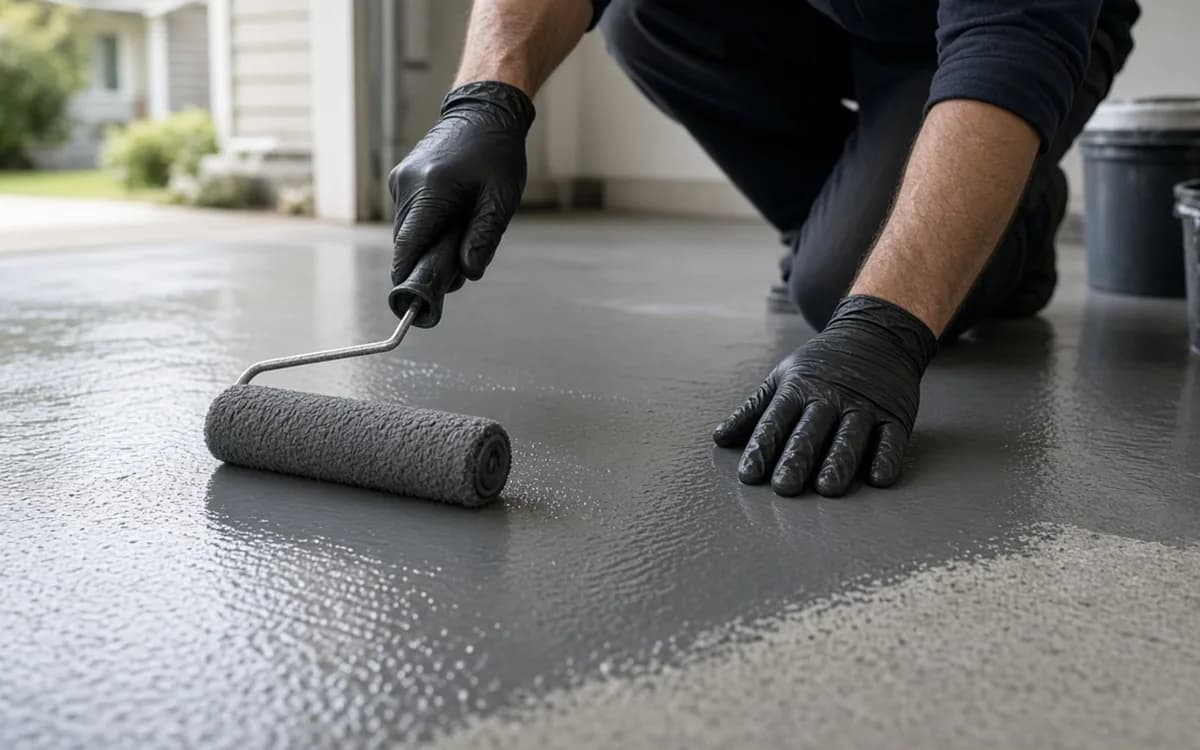
Preparation add-ons usually matter more than finish choices. Duration Concrete Coatings lists surface preparation at $1–$5 per sq ft, and it treats old-coating removal, crack repair and moisture testing as separate items. Removing an old coating is the largest single add-on on most jobs and can add well over a thousand dollars to a two-car garage.
Angi's 2026 guide puts epoxy labor at $1–$7 per sq ft and says labor makes up 33–60% of an installed epoxy floor. Grinding and repair account for much of that labor, and they are the steps that most influence whether the floor lasts. Bob Vila's 2024 guide notes labor quoted by the hour as well, which you may see on smaller or repair-focused jobs.
Because labor is such a large share, anything that reduces labor hours can reduce the price: an empty garage on arrival, an easy-access driveway for equipment, and a flexible start date that fits the installer's schedule. Trimming labor on preparation, however, is a false economy. The preparation cost guide explains which prep steps can safely be scaled back and which cannot.
Epoxy's slow cure has a cost that rarely appears on the invoice. Garage Living's 2026 comparison says epoxy can need up to 7 days before cars return. If that means paying for temporary parking, storage, or taking time off to supervise, factor it in. In cold weather, temporary heat to bring the slab into the product's temperature range may be charged separately, and rush bookings in peak season can carry a premium.
Multi-day installs can also cost more than single-day ones because the crew returns for each coat. Ask how many visits the schedule involves and whether each visit is priced into the total. A proposal that lists cure times for foot and vehicle traffic in hours helps you plan and prevents early parking that could damage the floor. If you need to be home for each visit, count the time off work as part of the true cost of the floor.
Cut decorative choices before structural ones. A standard flake blend instead of a custom color, a solid color instead of metallic, or skipping stem walls can save meaningful money without weakening the floor. Reducing flake from full to partial broadcast saves a little but leaves more exposed resin. Never cut grinding, crack repair or the moisture test, because they protect everything else you pay for.
If the budget still does not fit, consider coating only the parking bays and leaving storage areas bare, or comparing against tile costs. Bob Vila's figures put a one-car epoxy floor at $720–$2,900, so smaller areas can come in well under a full two-car project. The calculator shows how size and complexity change the total.
The dollar column in the table in this section comes from Bob Vila's 2024 epoxy size ranges (240 square feet for one car, 360 for two, and a single band for three- and four-car garages), with the older-slab row adding Duration's 2026 coating-removal rate of $3 to $8 per square foot across 360 square feet. The ranges assume standard grinding and a modest number of crack repairs; your region and slab will move them.
For a cross-check on a larger two-car floor, HomeGuide's 2026 epoxy benchmark is $1,600–$5,800 and Duration's range for any coated two-car garage is $1,600–$6,900. If a polyaspartic proposal for the same garage is on the table, FloorTek's paired quote of $3,500–$5,500 vs $2,000–$4,000 shows the usual size of the premium.
| Scenario | What it includes | Dollar range | Basis |
|---|---|---|---|
| One-car, light use | Grind, single coat, light flake | $720–$2,900 | Bob Vila one-car epoxy, 240 sq ft |
| Two-car, standard | Grind, crack repair, base, full flake, clear topcoat | $1,100–$4,300 | Bob Vila two-car epoxy, 360 sq ft |
| Two-car, older slab | Old coating removal, repairs, moisture primer, full system | About $2,200–$7,200 | Bob Vila two-car range plus Duration removal at $3–$8 per sq ft on 360 sq ft |
| Three-car, premium | Full system with metallic or polyaspartic topcoat | Upper half of $1,700–$9,500 | Bob Vila three- to four-car epoxy |
Start by measuring the floor yourself and dividing each quote's total by the area to get a per-square-foot price. Then subtract any separately listed preparation, removal or repair allowances, so you are comparing the coating system alone. If the remaining figure sits within Angi's published installed range and the proposal names each coat, product and thickness, the quote is at least internally consistent.
Next, compare what is included. A quote that looks high may include a clear topcoat, stem walls and moisture testing that a cheaper quote omits. A quote far below published ranges deserves questions about thickness, product grade and preparation method. Write your questions down before calling installers back. The professional versus DIY comparison is useful here too, because a very low professional bid sometimes approaches the cost of a well-equipped DIY job without the control over preparation.
By the numbers
Planning figures from published U.S. sources; every card links to where the number came from.
$3,500–$5,500 vs $2,000–$4,000
Two-car garage: polyaspartic $3,500–$5,500 versus professional epoxy $2,000–$4,000 (2025)
FloorTek's 2025 price guide puts a 400–500 sq ft two-car garage at $3,500–$5,500 for polyaspartic versus $2,000–$4,000 for professional epoxy, and estimates $3,500 over 20 years for polyaspartic versus $6,000 for repeated cheap epoxy. Installer-published.
FloorTek Coatings, polyaspartic garage floor coating price guide 2025 (2025)$800–$2,900
HomeGuide: DIY garage floor tiles cost $800–$2,900 for a two-car garage (2026)
HomeGuide's garage floor coating guide lists self-installed tiles at $800–$2,900 for a two-car garage, a useful ceiling when comparing against a $1,600–$6,900 coating. Figure taken from the guide's summary.
HomeGuide, garage floor coating cost (2026)$1,100–$4,300
Bob Vila: epoxy on a 360 sq ft two-car garage costs about $1,100–$4,300 (2024)
Bob Vila's epoxy garage floor cost guide (updated April 2024) sizes a two-car garage at 360 square feet and prices epoxy for it at about $1,100 to $4,300, between its one-car ($720–$2,900) and three- to four-car ($1,700–$9,500) ranges.
Bob Vila, epoxy garage floor cost (2024)$1,700–$9,500
Bob Vila: epoxy on a three- or four-car garage costs $1,700–$9,500 (2024)
Bob Vila's 2024 epoxy guide gives $1,700 to $9,500 for three- and four-car garages, the widest of its size bands because floor area and preparation both vary most at that size.
Bob Vila, epoxy garage floor cost (2024)The calculator uses the same garage flooring benchmarks as this guide. Set the size and tier, then request a written estimate to check it against a real proposal.
Homeowner polls
Duration's 2026 national range for a coated two-car garage is $1,600–$6,900.
No votes yet. Yours will be the first. · saved on this device
No votes yet. Yours will be the first. · saved on this device
Tile prices are mostly material and layout labor, which are predictable. Epoxy prices depend on the slab: how much grinding, repair and removal it needs, which can only be judged on site. Two installers may also specify very different systems under the same name. That is why epoxy quotes should always be compared layer by layer.
For most garages that see vehicles, yes. The topcoat takes most of the wear, resists chemicals and UV, and protects the flake layer. Without it, the base epoxy is exposed to tires and sunlight and wears or yellows faster. Many installers include a topcoat as standard; if one does not, ask for a price with and without.
It can. Cold slabs slow curing, so installers may need temporary heat or a winter-grade product, and scheduling can be restricted to warmer months. Demand also bunches in spring and fall. Some installers offer lower prices in slower seasons if the garage can be heated. Ask about seasonal pricing when you request proposals.
Bay sizes vary, so per-square-foot figures are more reliable. As a rough guide, Bob Vila's one-car figure of roughly 240 square feet gives a sense of a single bay, while two-car garages range from about 360 to nearly 600 square feet. Multiply your measured area by published per-square-foot ranges rather than relying on per-bay pricing.
It can if hidden conditions are found, such as a sealer, deeper cracks or oil saturation. A good proposal states how discovered conditions will be priced and requires your approval before extra work. Ask for per-square-foot or per-crack rates in writing, so any change is predictable rather than negotiated in the middle of the job.
Less than the thickness and number of coats. Premium brands cost more per gallon, but labor and preparation dominate the total. A thick build of a mid-priced 100%-solids product usually outperforms a thin coat of a premium one. Ask for product names and data sheets so you can compare solids content and recommended thickness.
Grind and seal, a penetrating sealer over ground concrete, costs less than a full epoxy system and leaves a clean concrete look. It offers less protection against oil and wear, but for a storage-only garage it can be a reasonable choice. Roll-out mats under specific items are another low-cost option.
 Polyaspartic Floor Coating · Cost guideWhat does a polyaspartic garage floor cost in 2026?
Duration Concrete Coatings puts installed polyaspartic at $5 to $12 per square foot in 2026, and HomeGuide lists $2,000 to $6,900 for a typical two-car garage.
 Interlocking Garage Tiles · Cost guideHow much do interlocking garage floor tiles cost?
Interlocking garage tiles cost about $2.90 to $8.00 or more per square foot in materials according to Garage Flooring LLC, and HomeGuide puts a self-installed two-car floor at $800 to $2,900.
 Concrete Grinding & Prep · Cost guideHow much does garage concrete grinding and preparation cost?
Duration Concrete Coatings puts garage surface preparation at $1 to $5 per square foot in 2026, with old-coating removal at $3 to $8 per square foot, minor crack repair at $250 to $800 and moisture testing at $200 to $500.
 Service guideEpoxy Garage Floor Coating
An epoxy garage floor coating is a two-part resin system applied in layers over ground, repaired concrete.
Service guidePolyaspartic Floor CoatingA polyaspartic floor coating is an aliphatic polyurea system that cures within hours, resists UV yellowing, and tolerates lower application temperatures than epoxy.
Service guideConcrete Grinding & PrepConcrete grinding and preparation means mechanically profiling a garage slab, removing old coatings and contamination, repairing cracks and spalls, and testing moisture so that a bonded coating can adhere.
 Free toolGarage floor cost calculator
Size, material tier and complexity in, a realistic budget range out.
 Free toolGarage floor comparisons
Side-by-side tables for the decisions that change the price most.
 Free toolWhich garage floor fits your slab and schedule?
8 questions that show what you already know and what to check next.
 Free toolGarage floor polls: how other homeowners decided
See what other planners chose and add your vote.
Tell us the size, the condition of what is there now, and what you want to change. Garage Floor Brief passes your request to independent local professionals, who reply with written, no-obligation estimates. The service is free to use.