What did prep uncover that changed the scope?
No votes yet. Yours will be the first. · saved on this device
Loading...
Garage Floor Brief · Diamond grinding vs Acid etching
Diamond grinding mechanically removes the weak top layer, sealers and contaminants and leaves a measurable surface profile that coatings grip reliably. Acid etching is cheaper and needs no machine, but it cannot remove sealers or old coatings, profiles unevenly and leaves residue. Most professional installers grind; etching is mainly a DIY method with a higher failure rate.
Of all the decisions on a garage coating proposal, the preparation method is the one most likely to be glossed over and the one most likely to decide whether the floor lasts. Grinding and etching both aim to open the concrete surface so resin can bond, but they work very differently and produce very different results on real garage slabs.
This page compares them on practical scenarios, cost over time, climate, resale implications, mistakes and how to read a proposal's preparation line. Figures come from Duration Concrete Coatings, Garage Flooring LLC and FloorTek Coatings, with installer sources named. The comparison applies whether you are hiring a professional or doing the work yourself, because the bond between coating and concrete does not care who prepared the surface.
Grinding mechanically removes the weak surface layer, old sealers, and contamination, and leaves a measurable profile most coating manufacturers require. Acid etching chemically roughens the surface, does nothing to sealers or laitance, leaves salts if under-rinsed, and is the preparation behind most peeled DIY floors.
| Factor | Diamond grinding | Acid etching |
|---|---|---|
| Cost | $1–$5 per sq ft (Duration 2026) | A few dollars in acid; DIY labor |
| Removes old sealer or coating | Yes; removal $3–$8 per sq ft for thick coatings | No |
| Removes laitance and dust | Yes | Partially at best |
| Surface profile achieved | CSP-2 to CSP-3, the range coating makers specify (Cleveland Concrete Coatings) | Inconsistent; not measurable |
| Concrete removed | Top 1–3 mils plus paint and sealers (Cleveland Concrete Coatings) | A thin layer of cement paste; sealers stay |
| Time on a two-car garage | 3–4 hours including crack repair (Cleveland Concrete Coatings) | Etch and rinse, then wait for the slab to dry fully before coating |
| Residue | Dust, captured by extractor | Salts and acid if not thoroughly rinsed; slab must dry fully |
| Manufacturer acceptance | Specified by most professional data sheets | Accepted mainly by DIY kits |
| Best for | Any bonded coating | Not recommended for a coating expected to last |
Grinding wins for every coating intended to last more than a season. It is the reason professional floors hold and the largest share of what you pay a professional for. Acid etching survives only in DIY kit instructions, and its results are visible in the one-to-three-year lifespan Bob Vila assigns to water-based floors. If a professional proposal lists acid etching as the prep method, that is the proposal to set aside.
A diamond grinder uses rotating segments to abrade the surface, removing laitance, the weak cement-rich skin on top of most slabs, along with curing compounds, sealers, light coatings and embedded stains. The result is a uniform, slightly rough surface, described by the concrete surface profile scale, that exposes sound concrete. Industrial grinders connected to vacuums capture most of the dust.
Acid etching uses a diluted acid solution, often muriatic or a milder citric or phosphoric product in kits, to dissolve a thin layer of cement paste. It opens the surface on bare, clean concrete but cannot penetrate sealers, paint or oil. It produces an uneven profile, needs thorough neutralizing and rinsing, and leaves moisture in the slab that must dry before coating. Duration Concrete Coatings prices preparation at $1–$5 per sq ft, and grinding is the method most professional quotes describe.
Etching can work on a newer, bare slab that was never sealed, has no oil staining, and will receive a light-duty coating in a garage used mainly for storage. It is also the method included with many DIY kits, whose materials Garage Flooring LLC prices at $1.45–$5.21 per sq ft, because it requires no machine rental. A simple water test helps: if water droplets bead rather than soak in, there is a sealer present, and etching will not work. Even on a suitable slab, an etched floor usually receives a lighter-duty coating with a shorter expected life.
Grinding is the right method for any slab with a sealer, old coating, oil staining, hard trowel finish or laitance, and for any coating expected to handle daily parking and hot tires. Given that most garage slabs have at least one of those conditions, grinding is the default in professional work. The concrete grinding and prep page covers what the process involves and how to verify it.
Etching is cheaper on the day. A DIY etch uses inexpensive chemicals and a pressure washer, and even professional etching saves some labor and equipment. That saving is not trivial: Angi attributes 33–60% of an installed epoxy price to labor and prices that labor at $1–$7 per sq ft, much of it grinding. But coatings over etched surfaces fail more often, and the failures appear as peeling in tire paths and near the door. FloorTek Coatings estimates that DIY kits, which usually rely on etching, show problems within one to two years, and professional epoxy within 3–5 years.
Once a coating fails, the savings vanish. Removing a failed coating costs three to eight dollars per square foot according to Duration Concrete Coatings, before paying for a new installation. For a two-car garage, a failure can add over a thousand dollars in removal alone. Over ten years, grinding is almost always cheaper for a floor that sees vehicles. That arithmetic is why many professional installers decline to coat over an etched slab or to warranty one.
Etching introduces a lot of water into the slab. In humid or cold climates, that water takes longer to leave, and coating too soon traps moisture, a leading cause of bubbling and delamination. Grinding is dry, so the slab can be coated the same day once it is vacuumed and any moisture test is passed. In hot climates, where tires can reach 140°F according to Hello Garage, the stronger bond from grinding is the main defense against hot tire pickup.
Moisture testing matters with either method, but etching makes the reading harder to interpret because it adds water to the surface. If your proposal includes etching, ask when the moisture test will be done and how long the slab will dry before coating. A calendar-based answer, such as waiting overnight, is weaker than one tied to a measured reading, particularly in a damp season or on a slab with no vapor barrier. Our analysis of the federal 2024 household survey found 53.0% of owner-occupied attached-garage homes sit on a concrete-slab foundation, so ask what the installer knows about slabs of your home's age.
Buyers never see the preparation, only its consequences. A floor that is peeling near the door or in the tire paths signals a coating failure, and a buyer's inspector may note it. A floor that is intact years later reflects good preparation. Keep the proposal and any photos of the ground slab, because they document that the floor was installed properly if a buyer asks. Some installers include those photos with the warranty paperwork as a matter of routine.
If you are coating shortly before selling, grinding still matters, because a coating that begins to fail during the sale process creates a negotiation point. A clean, ground slab left bare can be a reasonable choice if you do not have time or budget for a full system. Buyers who want a coating can add one later, and a slab that has already been ground properly is easier and cheaper for them to coat.
With etching, common mistakes include etching over a sealer, not neutralizing the acid, not rinsing thoroughly, and coating before the slab has dried. With grinding, they include using the wrong diamond for the slab hardness, leaving edges and corners unground, and not vacuuming the fine dust before coating. Both methods require crack and joint repair and oil treatment beforehand.
A good proposal names the preparation method, the target surface profile, how edges will be handled, how dust will be controlled, and when the moisture test will happen. If a proposal says etching or is silent on preparation, ask why. The professional versus DIY comparison and preparation cost guide help put the answer in context.
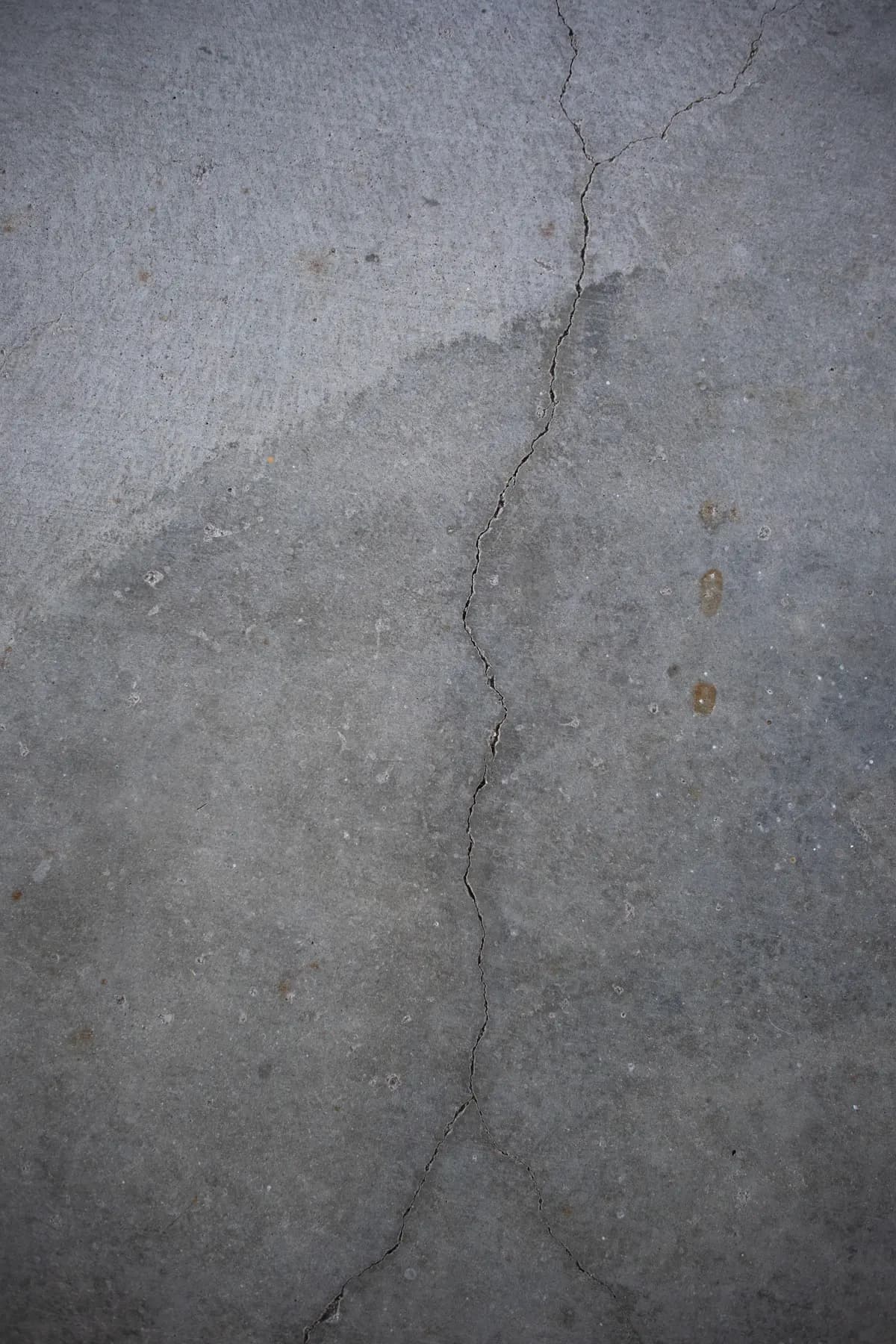
A ground slab should look uniformly matte with no shiny patches, which indicate areas the grinder missed or a sealer that remains. The surface should feel slightly rough, like medium sandpaper, and edges and corners should match the open floor rather than showing a darker band where a hand grinder was skipped. Cracks should be chased, cleaned and filled flush, and oil stains should be ground out or treated.
An etched slab looks less uniform. Some areas may be well opened while others remain smooth, especially where sealer, oil or trowel burnish was present. After etching, the surface should be neutral, thoroughly rinsed and completely dry before coating; a white residue or chalky film indicates incomplete rinsing. Whichever method is used, the slab should be vacuumed thoroughly, because fine dust left on the surface weakens the bond.
Ask the installer to walk you through the prepared floor before the first coat. Photograph it, including close-ups of repairs. If something looks inconsistent, ask about it then, because once the coating is down the preparation can no longer be checked. The garage flooring glossary explains terms such as concrete surface profile and laitance that installers may use during that walk-through.
Homeowner polls
No votes yet. Yours will be the first. · saved on this device
No votes yet. Yours will be the first. · saved on this device
No votes yet. Yours will be the first. · saved on this device
On new, uncoated, broom-finished concrete with no sealer or curing compound, a thorough etch and rinse can produce a usable surface for a thin coating. Even then it is inferior to grinding and leaves the moisture question unanswered. For any slab with history, grinding is the only reliable preparation.
It should feel like fine sandpaper, look uniformly dull with no shiny patches, and absorb a drop of water within seconds. Ask the installer to name the CSP target and to walk the floor with you before primer. Dark spots that reappear after grinding are oil and need more work.
Yes. Shot blasting propels steel shot at the surface and is common on large commercial floors. It profiles well and is fast, but residential garages often favor grinders because they handle edges better and are easier to bring in. Both are mechanical methods that remove weak surface material. Either is superior to acid etching for a durable garage coating.
No. Grinding removes only a very thin layer, usually the weak laitance and contaminants on top. That layer is weaker than the concrete beneath, so removing it improves bond strength. The structural capacity of a garage slab is not affected by normal surface preparation.
Sprinkle water on several spots. If it soaks in and darkens the concrete within a minute or so, the surface is probably open. If it beads or sits on top, there is likely a sealer or coating present. A sealed slab needs grinding, because acid cannot reach the concrete through the sealer.
Acid products used for etching can burn skin and eyes and release fumes, especially muriatic acid. Protective gloves, eye protection and ventilation are essential, and the rinse water must be neutralized and disposed of according to local rules. Many owners find renting a grinder with a vacuum simpler and safer than handling acid.
Yes, if you can be home. A properly ground slab looks uniformly matte with the top paste removed and no shiny patches. Ask the installer to show you the surface and any repairs before the first coat goes down. Photos at this stage are also useful for warranty records.
 ComparisonEpoxy coating vs Polyaspartic coating
Epoxy costs less upfront and builds thickness well but cures slowly, can yellow in sunlight and may need up to a week before parking.
 ComparisonBonded coating (epoxy or polyaspartic) vs Interlocking tiles
A bonded coating becomes part of the slab, gives a seamless easy-clean surface and usually lasts longest on sound, dry concrete.
 ComparisonProfessional epoxy installation vs DIY epoxy kit
A DIY epoxy kit costs a fraction of a professional floor in materials, but most kits are thinner or water-based, and most DIY failures start with preparation done without a diamond grinder.
 ComparisonInterlocking tiles vs Roll-out garage mats
Roll-out mats are the cheapest way to cover a garage slab and suit renters, parking-only bays and short-term needs, but they last only a few years and can trap water.
 Service guideEpoxy Garage Floor Coating
An epoxy garage floor coating is a two-part resin system applied in layers over ground, repaired concrete.
 Service guidePolyaspartic Floor Coating
A polyaspartic floor coating is an aliphatic polyurea system that cures within hours, resists UV yellowing, and tolerates lower application temperatures than epoxy.
 Service guideInterlocking Garage Tiles
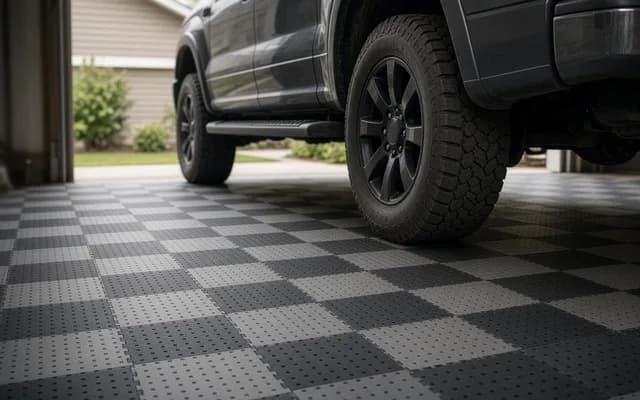
Interlocking garage tiles are rigid or flexible modular pieces, usually 12 to 16 inches square, that snap together over the existing concrete without adhesive or curing.
 Service guideConcrete Grinding & Prep
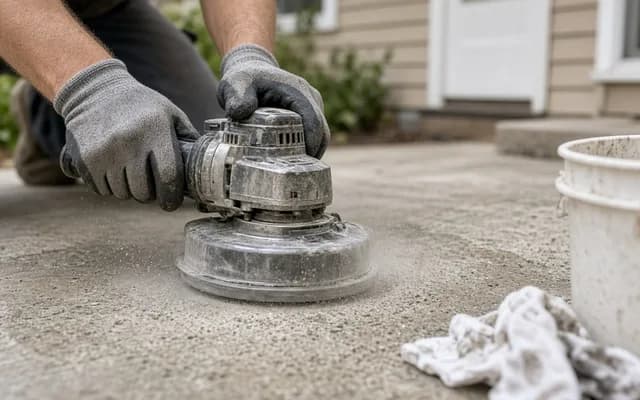
Concrete grinding and preparation means mechanically profiling a garage slab, removing old coatings and contamination, repairing cracks and spalls, and testing moisture so that a bonded coating can adhere.
 Free toolGarage floor cost calculator
Size, material tier and complexity in, a realistic budget range out.
 Free toolWhich garage floor fits your slab and schedule?
8 questions that show what you already know and what to check next.
 Free toolGarage floor polls: how other homeowners decided
See what other planners chose and add your vote.
Tell us the size, the condition of what is there now, and what you want to change. Garage Floor Brief passes your request to independent local professionals, who reply with written, no-obligation estimates. The service is free to use.